Cockroaches of the Pacific Northwest
Reviewed by TJ Jackson, Certified ACE · Updated 2026-09-22
Category: Cockroaches | 5 species covered | ✓ Covered under All Seasons Pest Plan
Not every cockroach means what you think it means. In the Pacific Northwest, the roach most people actually spot is a harmless outdoor wanderer, while the ones that signal a real problem tend to stay hidden. Telling them apart is the whole game: it is the difference between shrugging off a wood roach that blew in from the woodpile and moving fast on German cockroaches breeding behind the fridge.
★★★★★ 4.96 from 8,394 Google reviews across Oregon & Washington · Family-owned since 1963 · QualityPro certified
Local context: Oregon & Washington
Cockroach questions here climb through the warm months
Across Oregon and Washington, Google searches for cockroaches build through late spring and peak in the summer heat, when roaches are most active and most likely to turn up indoors. That is also when a harmless wood roach on the porch is easiest to confuse with something that actually needs treatment.
Each species page below breaks down the full local picture: how search demand for that roach lines up, month by month, with when Northwest homeowners actually call us. Pick your cockroach to see its trend.
Quick Answer: The Pacific Northwest sees several cockroaches, and they are not all the same problem. The German cockroach is the serious one: small, tan, marked with two dark stripes, and a fast breeder that infests kitchens and bathrooms. The American (“palmetto bug”) and Oriental (“water bug”) cockroaches are larger and tied to drains, sewers, and damp basements. The brown-banded roach prefers warm, dry, high spots. And the wood cockroach, the one PNW homeowners see most, is a harmless outdoor insect that wanders in but cannot infest.
Most important distinction: Finding one roach does not mean an infestation. A wood cockroach from the yard is a completely different situation than German cockroaches breeding in the kitchen. Identifying which one you have tells you whether to relax or act fast.
Common Cockroaches in Oregon & Washington Homes
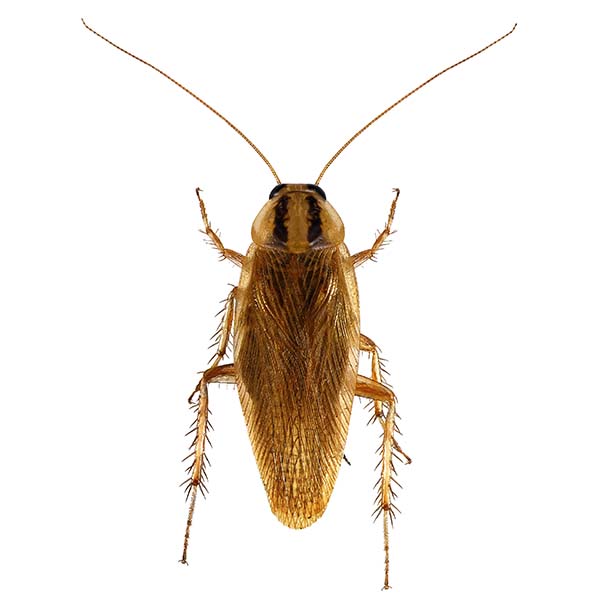
German Cockroach
Worst Indoor InfesterBlattella germanica
The one that means a real infestation. Small and tan with two dark stripes behind the head, it multiplies fast in warm, humid kitchens and bathrooms and is the hardest roach to get rid of.
- Size:
- 1/2″ to 5/8″
- Top ID:
- Two dark stripes behind head
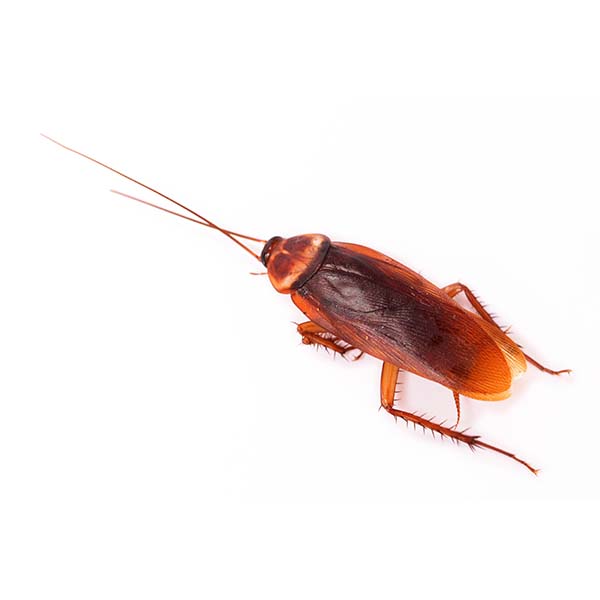
American Cockroach
Drains & SewersPeriplaneta americana
The big one, up to two inches and reddish-brown, sometimes called a palmetto bug. It lives in sewers, drains, and damp basements and occasionally wanders up into the house. It can even fly short distances.
- Size:
- 1.5″ to 2″
- Top ID:
- Large, reddish-brown, can fly
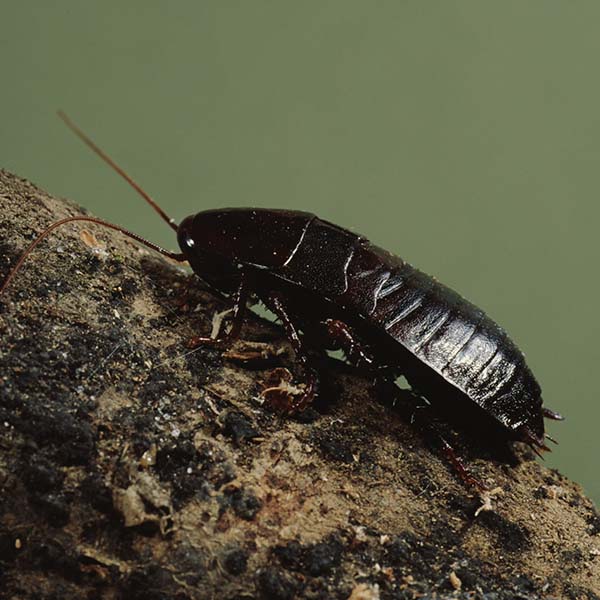
Oriental Cockroach
Damp AreasBlatta orientalis
Dark, almost black and shiny, and often called a water bug. It favors cool, damp spots like basements, drains, and crawlspaces, moves slowly, and tends to stay low to the ground.
- Size:
- 1″ to 1.25″
- Top ID:
- Shiny near-black, sluggish
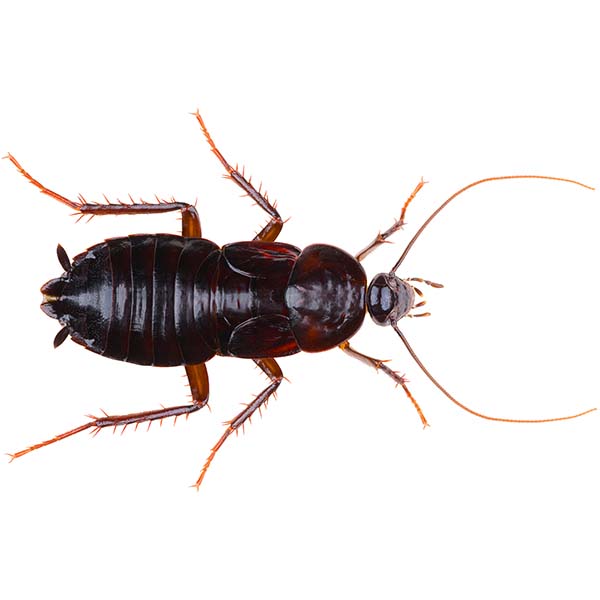
Brown-Banded Cockroach
Warm & DrySupella longipalpa
Small and light brown with two pale bands across the body. Unlike most roaches it prefers warm, dry, high spots: upper cabinets, closets, and behind electronics. Less common in the PNW, but it does turn up.
- Size:
- About 1/2″
- Top ID:
- Two pale bands across body
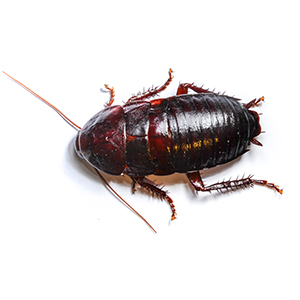
Wood Cockroach
Outdoor / HarmlessParcoblatta spp.
The one PNW homeowners actually see most. An outdoor roach from woodpiles and leaf litter that wanders in, especially in spring, but cannot infest your home. Harmless, and no sign of a problem indoors.
- Size:
- About 1″
- Top ID:
- Near woodpiles; males fly to lights
Cockroach Identification: FAQ
Quick answers to the questions we get most often.
What is the most common cockroach in the Pacific Northwest?
The roach most PNW homeowners actually see is the wood cockroach, an outdoor insect that wanders in from woodpiles and leaf litter but cannot infest a home. The most common true indoor infester is the German cockroach, which breeds rapidly in kitchens and bathrooms. Telling the two apart is the difference between a harmless visitor and a real problem.
How do I know if I have a cockroach infestation?
Signs include seeing live roaches, especially during the day, which usually means a heavy population, along with pepper-like droppings for smaller species or larger droppings for big ones, small capsule-shaped egg cases, a musty odor, and dark smear marks along baseboards. A single wood cockroach that wandered in is different from these signs of an established indoor population.
Are cockroaches dangerous?
The indoor species can be. Cockroaches contaminate food and surfaces and can spread bacteria such as salmonella and E. coli, and German cockroach droppings and shed skins are a well-documented trigger for allergies and asthma, especially in children. Wood cockroaches do not pose this risk because they do not live or breed indoors.
Does the All Seasons Pest Plan cover cockroaches?
Yes. Cockroaches are covered under the All Seasons Pest Plan, with scheduled service and free re-service between visits. German cockroach infestations are the toughest to eliminate and sometimes call for a more intensive, targeted treatment, which your technician will assess during the visit.
Plans That Keep Cockroaches Out
All Seasons Pest Plan
$39/month
Setup fee $260 for initial treatment
Year-round protection from the pests Pacific Northwest homeowners deal with most, cockroaches included, plus ants, spiders, wasps, box elder bugs, and more.
- Recurring interior & exterior treatments
- Seasonal pest coverage
- Free re-service between visits
Pest & Rodent Bundle
$47/month
Setup fee $280 for initial treatment
The most complete protection for your home. Full pest coverage, cockroaches included, plus active rodent monitoring. One plan, one team.
- Everything in the pest plan
- Active rodent monitoring too
- Best value for whole-home protection