You caught it out of the corner of your eye. A big, dark, fast spider, gone behind a box in the garage before you got a good look. Now every shadow looks like legs. If you’ve ever felt uneasy in your own home over a spider you couldn’t name, this guide is for you.
Most of that fear comes down to two things: not knowing which spiders actually matter, and a stack of decades-old myths like flesh-eating hobo spiders and brown recluses hiding in the closet. You shouldn’t feel on edge in your own home, especially over stories that aren’t even true.
We get it. Nobody wants to share their home with spiders, and that late-summer sprint across the floor makes anyone jump. Pacific Northwest families have called us about exactly this since 1963, and our technicians identify these spiders every day. So here’s the straight version: what’s actually in your home, what’s harmless, the one spider worth respecting, and how to stop worrying about the rest.
Ready to get it handled? Get a free spider control quote from Interstate Pest Management.
Your simple 3-step plan
You don’t have to become a spider expert to handle this. Here’s the whole plan:
- Identify what you’re looking at. Almost always, it’s harmless.
- Make your home less inviting. A few simple habits do most of the work.
- Call a pro for the ones that matter. So it stops coming back every fall.
Step 1: Figure out what you’re looking at
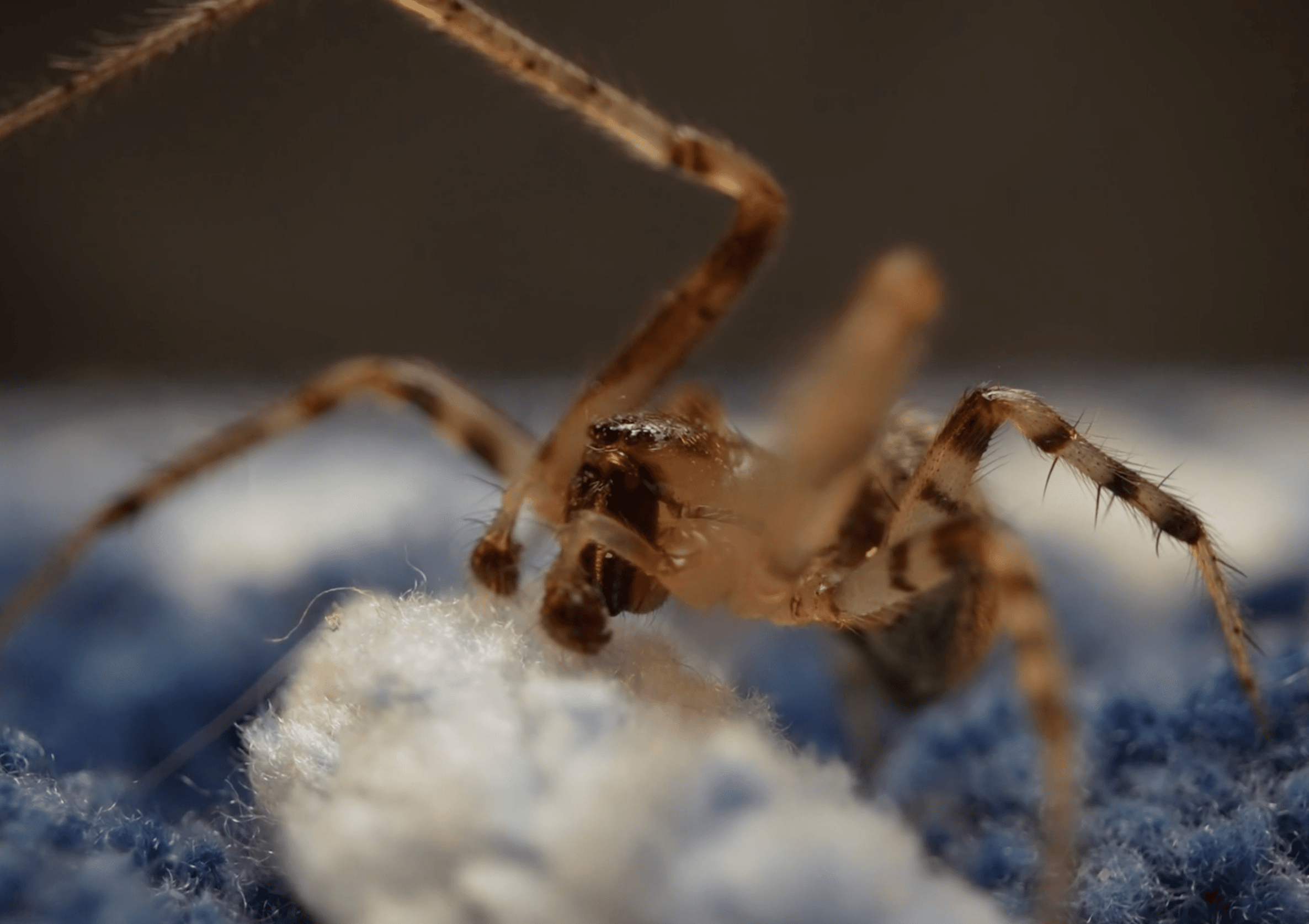
Some version of “big brown spider Washington state” is one of the most common things people search right before they find us, so let’s settle it first. That large, fast, brown spider most Washington homeowners see, usually in late summer and early fall, is the giant house spider (Eratigena atrica). It’s the biggest spider you’re likely to meet indoors here, with a leg span that can reach about 4 inches, and it builds a flat, funnel-shaped web in the corner of a garage, shed, basement, or crawl space.
Despite its size and speed, it isn’t dangerous, it isn’t aggressive, and its bite isn’t medically significant. It shows up everywhere in September for one plain reason: the males are out wandering, looking for a mate. Here’s the rest of the lineup you’ll actually run into.
| Spider | What it looks like | Where you’ll find it | Dangerous? |
|---|---|---|---|
| Giant house spider | Large, fast, brown; leg span up to 4 in; flat funnel web in corners | Garages, basements, crawl spaces | No |
| Hobo spider | Brown, funnel web; nearly identical to the giant house spider | Basements, crawl spaces, woodpiles | No (see below) |
| Wolf spider | Large, hairy, fast; hunts on the ground, no web | Floors, patios, leaf litter, garages | No (mild bite) |
| Cellar spider (“daddy long legs”) | Tiny body, very long thin legs; loose, messy web | Damp corners, basements, garages | No |
| Orb weaver (garden spider) | Round body; large circular web | Gardens, shrubs, eaves, near porch lights | No |
| Sac spider | Small, pale yellow-green; silk tube where wall meets ceiling | Baseboards, wall and ceiling joints | No (mild bite) |
| Jumping spider | Small, compact, big front eyes; turns to look at you | Windowsills, siding, sunny walls | No |
| Western black widow | Glossy black; red hourglass on the underside | Woodpiles, meter boxes, under decks, cluttered garages | Yes. Respect this one. |
The two myths behind most of the fear
Because we’re local, we hear the same two fears constantly. Both are worse than the spiders behind them.
“Isn’t the hobo spider flesh-eating?” This one has scared PNW families for decades, and the science has moved on. The hobo spider (Eratigena agrestis) got blamed for years for necrotic, skin-dying wounds. Study after study couldn’t reproduce that effect, and in 2017 the CDC removed it from its list of medically significant spiders. The Washington State Department of Health now states plainly that there’s no evidence hobo spider venom causes skin necrosis in people. A lot of the wounds once pinned on hobos turned out to be bacterial infections like MRSA. As arachnologist Rod Crawford of the University of Washington’s Burke Museum points out, even the old “aggressive house spider” nickname is a mistranslation. Agrestis means “of the field.” Hobo spiders flee when disturbed.
“Could it be a brown recluse?” Almost certainly not. As the Washington State Department of Health confirms, brown recluse spiders don’t live in Washington. There’s no established population here. A brown spider in your basement is far more likely a giant house spider or a hobo.
The one spider worth taking seriously
Clearing up the myths matters because it frees you to focus on the spider that does deserve caution: the western black widow. Adult females are glossy black with a red or orange hourglass on the underside of the abdomen, and a body about half an inch long. They’re most common in the drier, warmer parts of eastern and central Washington, with only small populations on the west side. In Oregon and Washington, the black widow is the one spider whose bite is a real medical concern.
Black widows are shy. Bites almost always happen when the spider gets pressed against skin, like reaching into a woodpile or pulling on a shoe that sat in the garage all winter. You’ll find them in the spots you rarely touch: stacked firewood, water-meter boxes, under a deck, the back corner of a garage or shed. If one bites you, clean the area and get medical care. The venom is neurotoxic and hits small children and older adults harder. It’s rarely life-threatening for a healthy adult, but it’s not one to wait out at home.
Step 2: Make your home less inviting
Most spider problems come down to two things: food and hiding spots. Take away both and spiders lose interest. Entomologists at Washington State University’s Puyallup Plant Clinic point to two simple mechanical steps as the most effective home approach: vacuum spiders when you see them, and seal up entry points. A realistic checklist:
- Cut the clutter. Cardboard boxes, woodpiles, and garage clutter give spiders places to hide. Store things in sealed bins and keep firewood away from the house.
- Seal the entry points. Weatherstrip doors, screen vents and crawl-space openings, and caulk gaps around pipes and window frames.
- Deal with the food supply. Spiders follow the insects. Swap white exterior bulbs for yellow “bug” lights so you’re not drawing moths to the porch every night.
- Sweep and vacuum. Knock down webs and egg sacs as you find them, especially in corners, under eaves, and around the garage.
- Keep the perimeter dry. Trim plants back from the foundation and fix damp spots. Cellar spiders and others like the humidity.
Do these consistently and you’ll see a real drop in spider traffic, especially heading into fall.
Step 3: Call a pro for the ones that matter
The checklist handles the everyday stuff. Here’s when it’s worth handing off:
- You’re finding black widows around the house, deck, or outbuildings.
- Spiders keep coming back no matter how much you clean and seal.
- They’re getting in through a crawl space, attic, or basement you can’t easily reach.
- You’re seeing egg sacs, which means the next generation is already on the way.
- You just want it handled and off your plate.
A professional treatment targets the hiding spots and entry points you can’t reach, cuts down the insects spiders feed on, and puts up a barrier that keeps them out. Spider control is covered under our All Seasons Pest Plan, with exterior web removal on every visit and free re-service if they come back between treatments.
What’s at stake if you leave it
Leave it alone and one of two things usually happens. You spend another fall on edge, jumping at every dark corner over spiders that were never a threat. Or you wave off the black widow because it got lumped in with all the harmless ones. And a few spiders in the garage today, with egg sacs and a steady food supply, become a lot more spiders by next season.
What it looks like once it’s handled
Here’s the payoff. You walk into the garage without flinching. When something scuttles past, you know what it is and whether it matters, and most of the time it doesn’t. You give the black widow the space it deserves and stop losing sleep over the rest. Your home stays quiet through spider season, and you get your space back.
Want to get sharper at telling PNW spiders apart? Our Spiders of the Pacific Northwest guide has photos, sizes, and a video breakdown from our team for every spider you’re likely to meet in Oregon and Washington. If you’re ever unsure, send us a photo and we’ll identify it for free.
And if you’re seeing more spiders than you’d like, whatever the species, we’ve helped Pacific Northwest homeowners handle exactly that since 1963. Reach out any time for a free quote, or book your first appointment online. The best solution is just down the road.
Frequently asked questions
What is the big brown spider in my house in Washington?
It’s almost always the giant house spider, the largest spider people run into indoors in the Pacific Northwest, with a leg span up to about 4 inches. It’s fast and startling, but it isn’t dangerous or aggressive. You see them most in late summer and early fall, when the males wander looking for a mate.
Are hobo spiders dangerous?
No. Hobo spiders were once blamed for necrotic wounds, but repeated studies couldn’t reproduce that, and in 2017 the CDC removed the hobo spider from its list of medically significant spiders. The Washington State Department of Health says there’s no evidence their venom causes skin necrosis. A bite, if it happens, is usually mild and short-lived.
Are there brown recluse spiders in Washington State?
No. Brown recluse spiders don’t have an established population in Washington, and the Washington State Department of Health confirms it. A brown spider in a Washington basement is far more likely a giant house spider or a hobo spider.
What is the most dangerous spider in Washington State?
The western black widow. It’s the one spider in Oregon and Washington whose bite is a real medical concern. Females are glossy black with a red hourglass on the underside, and they turn up in woodpiles, meter boxes, and under decks. Don’t handle one, and get medical care if you’re bitten.
Why are there so many spiders in my house in the fall?
Two things happen at once. Spiders that hatched in spring are now full-grown and easier to see, and the males leave their webs to search for mates, so they wander indoors more. Fall is peak spider season across Oregon and Washington, and the most common time people call us about spiders.
How do I keep spiders out of my house?
Cut clutter, store items in sealed bins, and keep firewood away from the house. Seal gaps around doors, windows, vents, and pipes. Swap white porch bulbs for yellow bug lights to draw fewer insects, and sweep down webs and egg sacs when you find them. If they keep coming back, a professional treatment and exterior barrier will hold longer.