From September into October, stink bugs start gathering in groups on the sides of houses around Portland, Vancouver, Salem, Olympia and Kelso, and then they find their way inside. In our area, that activity peaks in early to mid-October. If you’re figuring out how to keep stink bugs out of your house, this is the moment that counts. The sealing you do in the next couple of weeks decides how many you share your home with this winter, and most of it costs nothing.
Why Stink Bugs Show Up on Your House in Fall
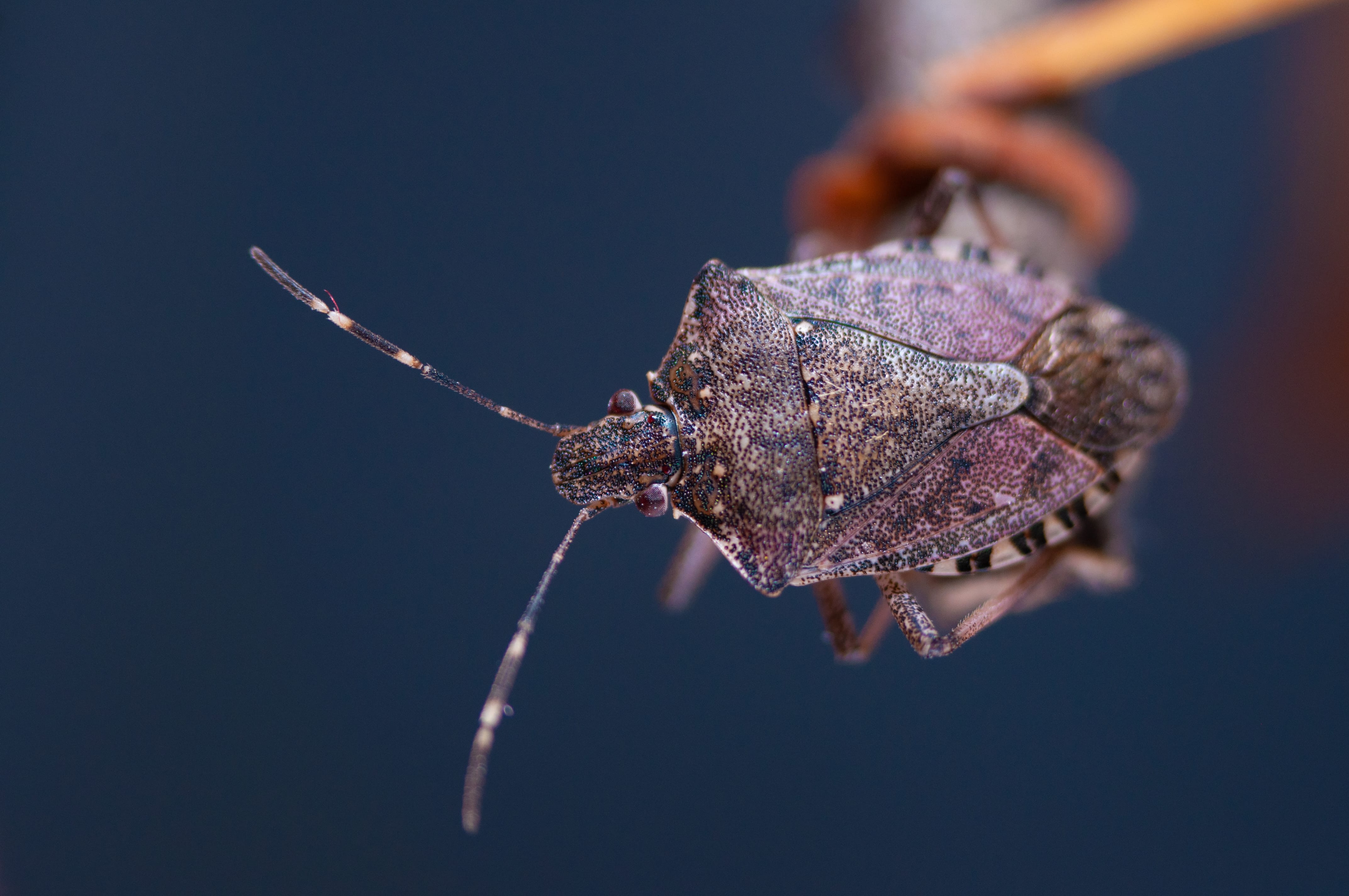
The stink bug most of us find on our siding is the brown marmorated stink bug. Adults are about half an inch to two-thirds of an inch long (12 to 17 mm). Look for light bands on the antennae, a banded edge along the sides of the abdomen, and smooth “shoulders” just behind the head. Our native stink bugs have toothed shoulders and solid-colored antennae. If you’re not sure whether you have stink bugs or boxelder bugs, our guide to whether boxelder bugs are stink bugs walks through the difference.
Fall is when they go looking for a place to spend the winter. Adults overwinter in houses, sheds and barns, often in large numbers. Large groups form on the outside walls of buildings beginning in September, and the adults then move indoors. Once they’re inside, they can wake up and fly around the house on warm or sunny winter days. That is why some people first notice them in December or January, months after the bugs actually moved in.
This is a fairly new neighbor here. The brown marmorated stink bug reached the Portland area around 2004. The Oregon Department of Agriculture now describes it as established statewide, and Oregon State University says it is most common in the Willamette Valley. In Washington, the first established populations were in Vancouver, and it has since been recorded in 21 Washington counties, mostly in western Washington and along the Columbia River.
Outdoors, it feeds on more than 170 kinds of plants, including tree fruit, vegetables, grapes, berries, nuts and ornamental plants. It can have one to two generations a year, and on fruit trees it is considered more damaging than our native stink bugs because it eats such a wide range of plants. The Oregon Department of Agriculture releases a tiny wasp, the samurai wasp, to help keep its numbers down outdoors. Indoors, it is a nuisance that gives off an unpleasant odor. That smell, and how many can end up in one house, is what makes them hard to ignore.
How to Keep Stink Bugs Out: What You Can Do First
You can do most of the prevention yourself. The groups on your outside walls are a sign the bugs are looking for a way in, so the earlier in October you start, the better.
- Seal cracks. Walk around the outside of your home and seal the cracks you find. Every gap you close is one less way in.
- Mend your screens. Repair torn or loose window and door screens so they fit snugly.
- Screen your vents. Make sure vents have screening that keeps adult stink bugs from getting through.
- Vacuum groups as they form. When you see stink bugs bunching up indoors, vacuum them up right away rather than letting the group grow. Keep doing it through the winter whenever a few wake up on a warm day.
- Skip the traps. It is tempting to buy a trap, but the Oregon Department of Agriculture says there are no effective trapping methods for this stink bug. Your time is better spent on sealing and vacuuming.
None of these steps are complicated, and together they are what Washington State University Extension recommends for keeping this stink bug out of homes.
When It Is Worth Calling a Professional
If you’ve sealed what you can reach and you’re still vacuuming up stink bugs every week, it is worth having a professional take a look. Interstate is third-generation, family-owned since 1963, with a QualityPro-certified team and offices in Portland, Vancouver, Salem, Olympia and Kelso. We use Integrated Pest Management: we find out why pests are getting in, fix what we can, and treat only where it’s needed. Even for our technicians, vacuuming is still the main tool for stink bugs that are already inside. Stink bug control is included in our All Seasons Pest Service, which is $39 a month with a $260 setup, and you get free re-services between scheduled visits if pests come back. Stink bugs that spend the winter in your house tend to show up again in March, so year-round prevention covers you for the spring wave too.
Local proof · Portland · Vancouver · Salem · Olympia · Kelso
Pacific Northwest Stink Bug Help From a Family-Owned Team
The brown marmorated stink bug is a fairly new neighbor here, and fall is when it moves in. Our technicians start where you would: finding where the bugs are getting in. We use Integrated Pest Management: we find out why pests are getting in, fix what we can, and treat only where it’s needed.
For stink bugs that are already inside, vacuuming is still our main tool. Stink bug control is part of All Seasons Pest Service, so the same plan covers you when overwintered bugs show up again in March.
1963
Third-generation, family-owned since 1963
5
Local offices in Oregon and Washington
Free
Re-services between scheduled visits if pests come back
QualityPro
Certified team of licensed technicians who know Pacific Northwest pests

“Every October, someone tells me the stink bugs came out of nowhere. They didn’t. They were gathering on your siding first, looking for a way in. So walk around your house now. Seal the cracks, fix the screens, and make sure your vents are screened. And save your money on traps. The Oregon Department of Agriculture says they don’t work for this bug. Once they’re inside, a vacuum is still the main tool, even for us.”
TJ Jackson · Associate Certified Entomologist (ACE), Director of Operations
★★★★★
4.96
average across 8,394 Google reviews
As of September 2026
Family-owned since 1963 · QualityPro certified · Free re-services between scheduled visits
Call your local office
- Portland, OR503-782-1899
- Vancouver, WA360-996-1442
- Salem, OR503-461-0259
- Olympia, WA360-526-8004
- Kelso, WA360-515-3882
- Toll-free888-844-4476
Stink Bug Questions We Hear Every Fall
When do stink bugs come into houses in Oregon and Washington?
Brown marmorated stink bugs start gathering in groups on the outside walls of buildings in September, then move indoors to spend the winter. Around Portland, Vancouver, Salem, Olympia and Kelso, that activity peaks in early to mid-October.
How do I tell a brown marmorated stink bug from a native stink bug?
Adults are about half an inch to two-thirds of an inch long (12 to 17 mm), with light bands on the antennae, a banded edge along the sides of the abdomen, and smooth “shoulders” just behind the head. Native stink bugs have toothed shoulders and solid-colored antennae.
Why do I see stink bugs in the house in winter?
Adults spend the winter inside houses, sheds and barns. On warm or sunny winter days they can wake up and fly around the house, so many people first notice them in December or January, months after the bugs moved in.
Do stink bug traps work?
The Oregon Department of Agriculture says there are no effective trapping methods for the brown marmorated stink bug. Sealing cracks, mending screens, screening vents and vacuuming groups as they form are a better use of your time.
What problems do stink bugs cause indoors?
Indoors, the brown marmorated stink bug is a nuisance that gives off an unpleasant odor. The smell, and how many can end up in one house, is what makes them hard to ignore.
Does Interstate’s pest plan cover stink bugs?
Yes. Stink bug control is included in All Seasons Pest Service, which is $39 a month with a $260 setup. You get free re-services between scheduled visits if pests come back.
Schedule a Fall Inspection
Schedule a fall inspection and a local technician will show you where stink bugs are getting in. Prefer to talk it through? Call us toll-free at 888-844-4476.