Hymenoptera · Order-Level Field Guide
Wasps of the Pacific Northwest: A Pest Nerd’s Field Guide
Reviewed by TJ Jackson, Certified ACE · Updated 2026-05-18
Educational guide | Family group: Wasps | ~100,000 species worldwide | 6 PNW species covered
Wasps share the Hymenoptera order with ants and bees, but they are the easiest of the three to pick out by sight. Smooth bodies, sharply pinched waists, four membranous wings, and a stinger that doubles as an egg laying tube in the females. They are also the most misunderstood insect in the Pacific Northwest. Most of the roughly 100,000 wasp species worldwide are solitary, harmless to humans, and quietly responsible for keeping crop pests in check. The handful of social wasps you actually meet on your back patio (yellowjackets, paper wasps, hornets) are a tiny fraction of that, but they are the ones that drive most of the calls we get. This page is the biology background. For identification and treatment of a wasp problem at your house, head to our Stinging Insects guide.
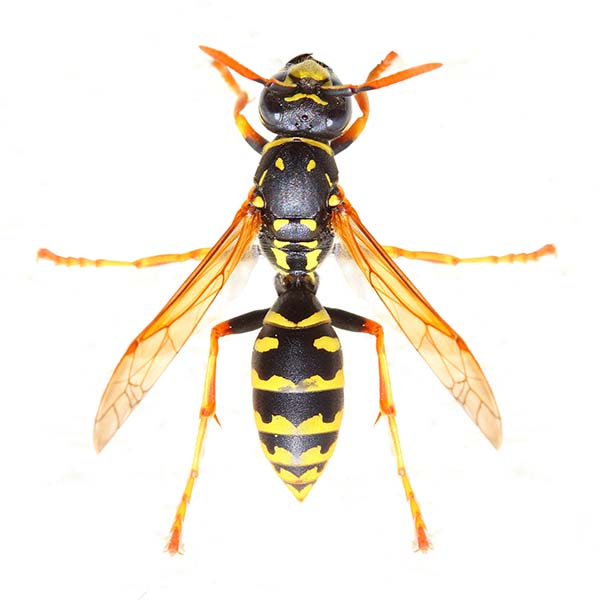
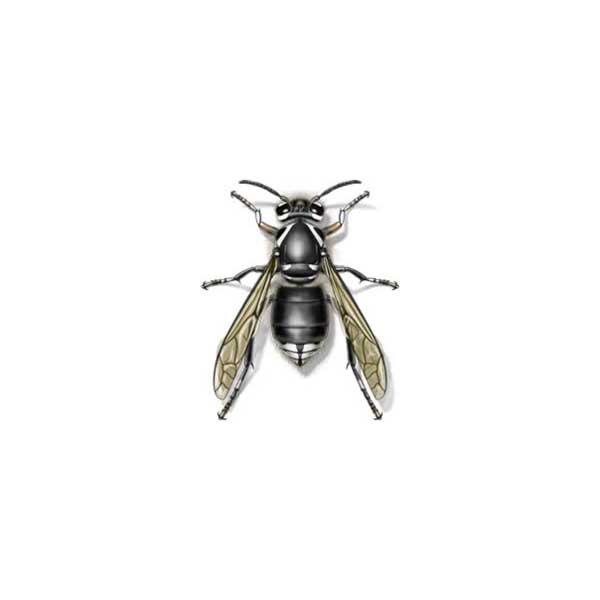
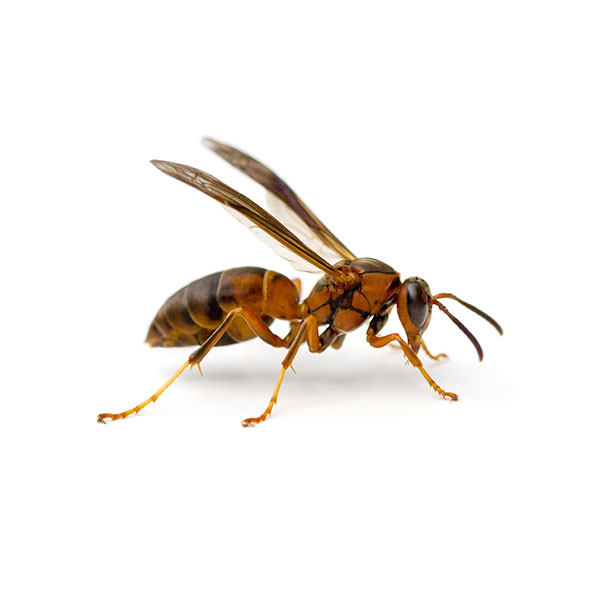
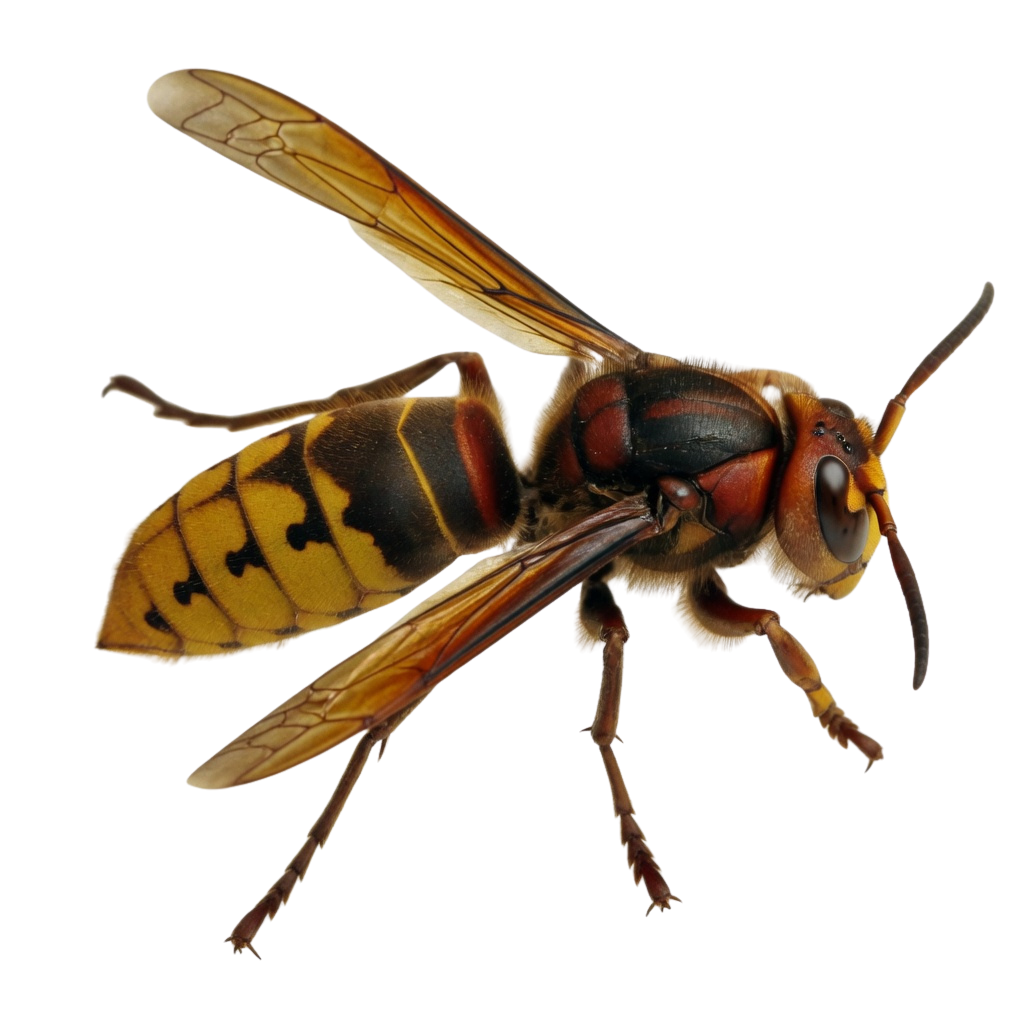
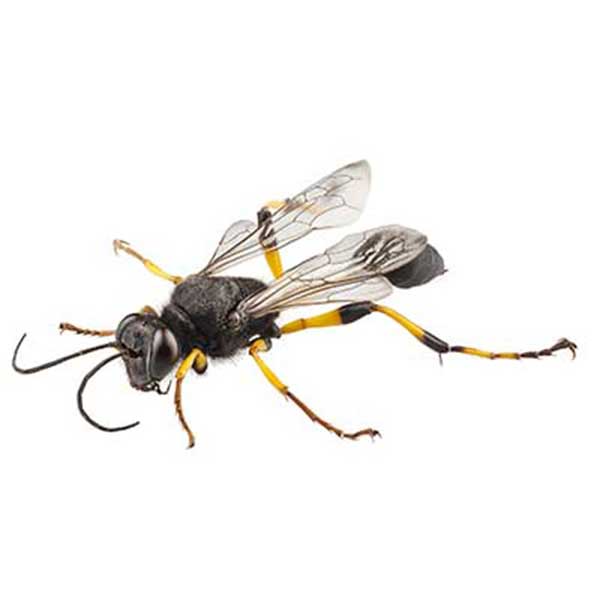
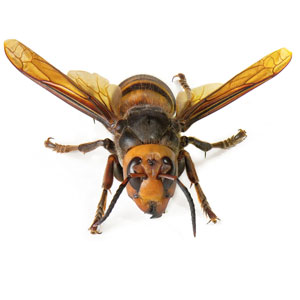
Quick Answer: Wasps are smooth bodied Hymenoptera distinguished from bees (which are fuzzy) and ants (which are usually wingless). They are predators or parasitoids, not flower specialists. The Pacific Northwest hosts six common wasp species: yellowjackets (the most common stinger), paper wasps (umbrella nests), bald-faced hornets (big gray football nests), European hornets (active at night), mud daubers (solitary, mud tube nests), and the Asian giant hornet (eradicated from Washington State in 2024 and included here as a reference). Most wasps are solitary and beneficial. Only the social species mob defenders aggressively.
Most important distinction: Most of the world’s wasps will never bother you. The few that will (yellowjackets, hornets, paper wasps) are the ones that dominate news coverage and pest calls. Both facts can be true at once.
What Makes a Wasp a Wasp
Four traits separate wasps from their closest Hymenoptera cousins. Get these straight and you will rarely misidentify one in the wild.
1. Smooth body, no fuzz
Wasps have shiny, smooth bodies with minimal hair. This is the fastest way to tell a yellowjacket apart from a honeybee at picnic distance. Bees have hair to catch pollen on every flower visit. Wasps do not need it, because they are not in the pollen business. If you see fuzz, you are almost certainly looking at a bee.
2. A sharply pinched waist (and only one segment of it)
The Hymenoptera “wasp waist” is most pronounced in wasps. The constriction between thorax and abdomen is dramatic and forms a single narrow segment (the petiole). Ants share this trait but add a second or third visible “knot” segment. Bees have a pinch but it is hidden under fluffy hair and looks chunkier overall.
3. A stinger that is anatomically an egg laying tube
In female wasps the stinger is structurally an ovipositor, an egg laying organ. Parasitoid wasps still use it that way, drilling eggs into host insects (and they do not sting humans). In social wasps the same organ delivers venom instead. Male wasps lack an ovipositor entirely, which is why only females sting. Wasp stingers are smooth (unlike a honeybee’s barbed stinger), so they slide in and out easily, which is why one wasp can sting many times in a row.
4. A predatory or parasitic feeding style
Wasps are hunters and parasitoids. Yellowjackets and paper wasps hunt other insects to feed their larvae, then sip nectar as adults. Mud daubers stuff their nests with paralyzed spiders. Parasitoid wasps inject eggs into living hosts. There is no wasp species that lives on flower products the way bees do.
Social vs. Solitary Wasps
This is the most important divide in the wasp world, and the one most people never hear about. The species that scare you in your backyard are a small social minority. The vast majority of wasps work alone, quietly, and never sting a human in their lives.
Solitary Wasps
The quiet majority you never notice
Each female builds her own small nest, stocks it with food for her larvae, lays an egg, and seals it. There is no colony to defend, so solitary wasps almost never sting humans. Most of the roughly 100,000 wasp species worldwide are solitary.
PNW examples:
- Mud daubers (small mud tube nests on walls)
- Cicada killers (large solitary wasps that hunt cicadas)
- Potter wasps (build tiny pot shaped clay nests)
- Thousands of parasitoid wasp species (most go completely unnoticed)
Key trait:
Beneficial garden allies. They kill enormous numbers of pest insects and almost never sting humans.
Why Wasps Actually Matter
Strip away the picnic raids and the news coverage and wasps do a tremendous amount of work in the ecosystem. Most of it is invisible. Some of it is the reason your tomatoes have leaves.
Reason 01
Free biological pest control
Social wasps hunt caterpillars, aphids, and flies by the thousands to feed their larvae during the spring and early summer brood-rearing season. A single paper wasp colony can clear a backyard’s worth of garden pests over the course of a season. Take the wasps away and you typically see a spike in the soft bodied insects they were eating. WSU’s Natural Enemies guide (authored by Dr. David G. James, WSU Entomology) treats both stinging wasps and parasitic wasps as recognized biological control agents in PNW gardens and farms.
Reason 02
Parasitoid wasps: the silent army
Parasitoid wasps lay eggs inside or on living insects (caterpillars, beetle larvae, aphids), and the wasp larvae consume the host as they grow. There are tens of thousands of species, almost all of them solitary, almost all tiny, and almost none of them noticed by homeowners. They are one of the largest natural pest control services on Earth and a major reason commercial agriculture is even feasible without orders of magnitude more pesticide.
Reason 03
Incidental pollination and scavenging
Adult wasps sip nectar, and as they move from flower to flower they pollinate plants incidentally. Wasps are the only pollinator for figs (a fascinating specialized relationship that lets figs reproduce at all). Yellowjackets are also active scavengers of dead animals, which makes them part of the cleanup crew in any natural area.
A note from TJ Jackson, Pest Nerd and our DOO (Director-of-Operations)
“My favorite wasp question to get is ‘why are they so mean?’ My favorite answer is that 99% of them are not. The yellowjacket on your soda is a single species behaving badly during a five week window when the colony has no more brood to feed. Meanwhile a parasitoid wasp the size of a poppy seed is keeping the aphids off your roses and asking nothing in return. Same broad group of insects. Wildly different stories.”
TJ Jackson, Certified ACE · Interstate Pest Management
The Six Wasps PNW Homeowners Meet Most
Each card links to a full species page with size, nesting habits, threat level, and treatment guidance.
PNW Wasps FAQ
The biology questions we get most often.
Frequently Asked Questions About PNW Wasps
What is the difference between a wasp and a bee?
Wasps are smooth and shiny with a sharply pinched waist. Bees are fuzzy, with fluffier bodies designed to catch and carry pollen. Wasps eat other insects (or scavenge meat) and only sip nectar as adults. Bees eat pollen and nectar for their whole lives. Behavior is the fastest tell in a backyard setting. A bee on a dandelion ignores you. A yellowjacket on your soda can does not.
Are wasps useful?
Yes. The vast majority of wasp species are solitary and beneficial. Parasitoid wasps lay their eggs inside or on other insects (caterpillars, aphids, beetle larvae), and the wasp larvae consume the host as they grow. This is one of the largest natural pest control services in agriculture. Solitary mud daubers stock their nests with spiders. Even social wasps like yellowjackets and paper wasps are predators that hunt enormous numbers of garden pests during the spring and early summer brood rearing season.
What is the difference between social and solitary wasps?
Social wasps live in colonies with a queen, workers, and a defended nest. Yellowjackets, paper wasps, bald-faced hornets, and European hornets are the social species PNW homeowners meet. They can sting repeatedly and will mob defenders if the nest is threatened. Solitary wasps each build their own small nest and have no colony to defend. They almost never sting humans. Mud daubers and the many parasitoid wasps in PNW gardens are solitary. Most of the world’s roughly 100,000 wasp species are solitary.
Can wasps sting multiple times?
Yes. Wasp stingers are smooth, so they slide in and out without catching on skin. A single yellowjacket or hornet can sting several times in a row. This is the opposite of honeybees, whose stingers are barbed and tear loose when used on a mammal. The smooth wasp stinger is one of the practical reasons social wasp colonies are more dangerous to provoke than a bee swarm. A mobilized yellowjacket colony can produce dozens of stings in seconds.
Why do wasps get aggressive in late summer?
Spring and early summer are the brood building season, when worker yellowjackets and paper wasps hunt other insects to feed protein hungry larvae. The colony is mostly out hunting, not loitering around your picnic. In August and September the colony shifts. The queen produces fewer larvae, the workers no longer get a steady flow of larval nectar in return for protein, and the whole colony goes looking for high carbohydrate food like sugary drinks, ripe fruit, and meat. That is the season when yellowjackets crash backyard barbecues. By October most colonies die off with the first hard frost.
Do all wasps build nests?
All female wasps build something, but the structures vary wildly. Social wasps build the recognizable paper nests (umbrella combs under eaves for paper wasps, football shaped gray nests for bald-faced hornets, hidden multi layer combs for yellowjackets). Mud daubers build small tube nests out of wet mud, usually stuck to walls. Parasitoid wasps do not build separate nests at all. The host insect’s body is the nursery. Some solitary wasps dig burrows in soil, or use abandoned beetle holes in wood.
Are Asian giant hornets (murder hornets) a threat in the PNW anymore?
No. The Asian giant hornet was first detected in Whatcom County, Washington in 2019. The Washington State Department of Agriculture eradicated the known population and declared the species eradicated from Washington State in December 2024 after three consecutive years with no confirmed sightings. Nothing similar has been confirmed in Oregon. If you think you have seen one, photograph it from a safe distance and report it to WSDA, but in practice you have almost certainly seen a European hornet, bald-faced hornet, or queen yellowjacket.
I have a wasp problem at my house. Where do I go?
This is the biology page. For identifying which wasp you have and getting it treated, head to our Stinging Insects guide. The All Seasons Pest Plan covers yellowjacket, hornet, paper wasp, and mud dauber treatment year round, with re-services included as needed if they come back. You can also call us at 360.382.2451.
Plans That Cover PNW Wasps Year Round
All Seasons Pest Plan
$39/month
Setup fee around $260 for initial treatment
Year round protection from the pests Pacific Northwest homeowners deal with most. Yellowjackets, hornets, paper wasps, mud daubers, plus spiders, ants, box elder bugs, and more.
- Recurring exterior treatments
- Accessible nest removal
- Re-services included as needed between visits
Pest and Rodent Bundle
$47/month
Setup fee around $280 for initial treatment
The most complete protection for your home. Full pest coverage plus active rodent monitoring. One plan, one team, one less thing to worry about.
- Everything in Pest and Rodent plans
- Best value for whole home protection
- Re-service guarantee