Stinging Insects of the Pacific Northwest
Reviewed by TJ Jackson, Certified ACE · Updated 2026-05-18
Category: Stinging Insects | 9 species covered | ✓ Wasps, hornets & mud daubers covered under All Seasons Pest Plan
By mid-August in Oregon and Washington, yellowjackets are everywhere — raiding picnics, building unseen nests in wall voids, and turning routine yard work into a sprint to the door. They’re the species we get the most calls about. But yellowjackets are only one of nine stinging insects you’ll run into in PNW homes, and the differences matter: a bald-faced hornet nest is treated differently than a honeybee hive, and a mud dauber on your siding isn’t a threat at all. Below: the 9 stinging insects we deal with most, how to tell them apart, and when to call.
A note on Asian giant hornets (“murder hornets”): first detected in Whatcom County, WA in 2019 and declared eradicated from Washington State in December 2024. We keep the page live as a reference, but in practice you’ll almost never see one in the PNW today.
Quick Answer: The Pacific Northwest has 9 commonly encountered stinging insects: yellowjackets (the most common and most aggressive, behind most late-summer sting calls), bald-faced hornets (large gray football-shaped aerial nests), paper wasps (open umbrella combs under eaves), European hornets (large nocturnal hornets, increasing in the region), mud daubers (solitary, build mud tube nests, rarely sting), bumble bees (fuzzy ground-nesting pollinators), honeybees (golden-brown hive builders, protected and relocated), carpenter bees (wood-boring bumble bee look-alikes), and Asian giant hornets (eradicated from WA in 2024, included for reference). Identification by nest shape, color pattern, and behavior determines treatment — and bees are typically relocated rather than exterminated.
Most important distinction: If it’s fuzzy and round, it’s a bee — we relocate or leave it alone. If it’s smooth, sleek, and has a pinched waist, it’s a wasp or hornet — that’s a treatment job.
Common Stinging Insects in Oregon & Washington
What PNW Homeowners Say About Our Stinging Insect Service
Real reviews from real customers in Oregon and Washington.
“Was extremely nervous when I noticed a yellow jacket nest in my front yard. Interstate pest control was quick to reply and come out. Garret quickly tackled the wasp hive (which was underground), WITHOUT a bee suit. Thank you for helping evict these mean pests!”
“We had a ground nest of very aggressive yellow jackets under a grass planting in our landscape area. Camrin went above and beyond in dealing with the nest and attacking yellow jackets! He completed the job even after being stung several times through the bee suit.”
“Jeremy took care of a giant hornet nest in my eaves and then did a complete spray around the exterior of my house. No more bees and a noticeable decrease in insect activity around all my doors and windows.”
“Ryan identified the hive we thought as wasps to be yellow jackets. Friendly even after the challenge of finding our cabin.”
“We have a native back yard full of pollinator plants and pollinators — they were able to use a natural deterrent for the wasps that won’t disturb the pollinators in the yard. I definitely recommend this company.”
“IPM came to my house for wasps and I don’t have any wasps anymore. What more could you ask for? Reasonable price too!”
PNW Stinging Insect Identification — FAQ
Quick answers to the questions we get most often.
Frequently Asked Questions About PNW Stinging Insects
How do I tell a wasp from a bee in the Pacific Northwest?
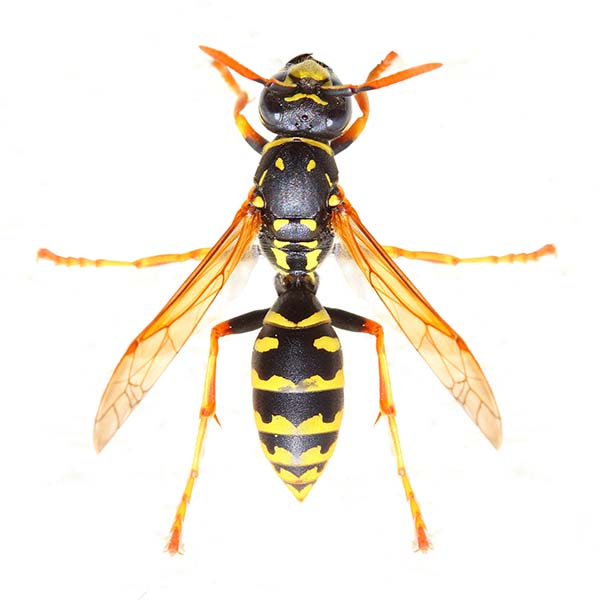
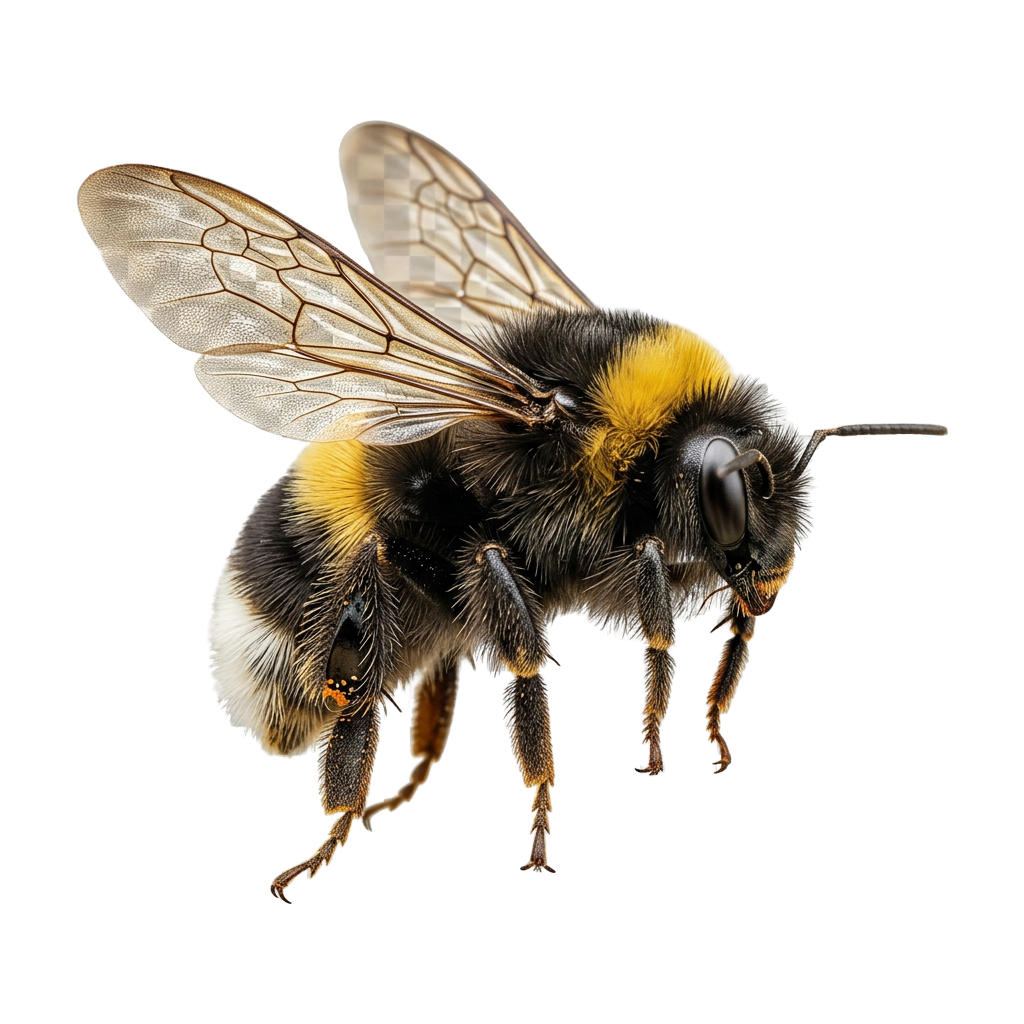
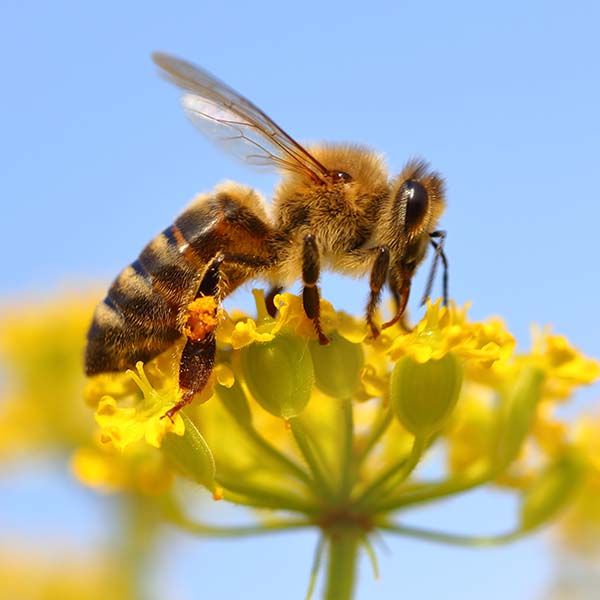
Bees are fuzzy and rounded; wasps are smooth and have a clearly pinched waist. Color helps too: honeybees are golden-brown, bumble bees are fuzzy black-and-yellow, and carpenter bees look like bumble bees but have a shiny bald black abdomen. Wasps and hornets are sleek and often have bright yellow, white, or red banding. Behavior is the fastest tell — bees forage on flowers and ignore your sandwich; wasps and yellowjackets are aggressive scavengers that swarm food and drinks at picnics, especially in August and September.
What’s the most common stinging insect call you get in Oregon and Washington?
Yellowjackets, by a wide margin. They drive the majority of our stinging-insect service calls — especially July through September when colonies hit peak size and become aggressive food scavengers. Ground nests in landscaping and wall-void nests in older homes are the two scenarios we see most often. Paper wasps and bald-faced hornets are the next most common, usually nesting under eaves or in trees near patios.
How do I identify a yellowjacket nest vs. a wasp or hornet nest?
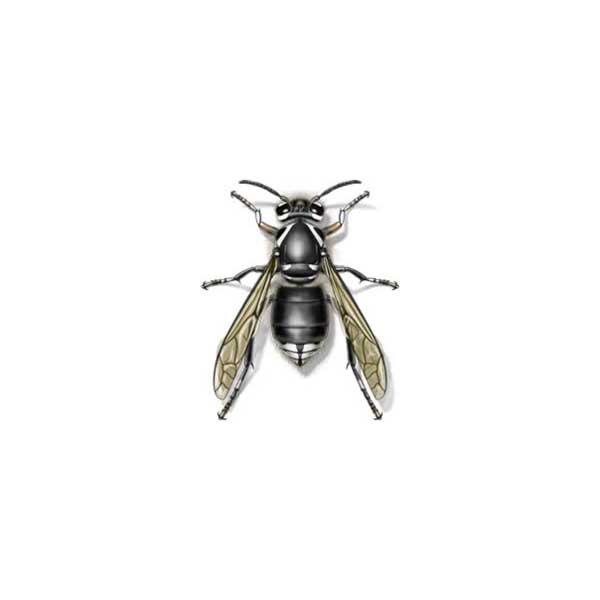
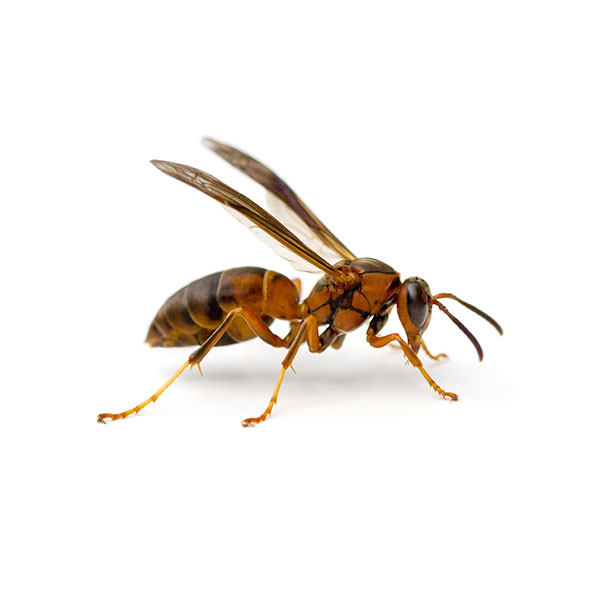
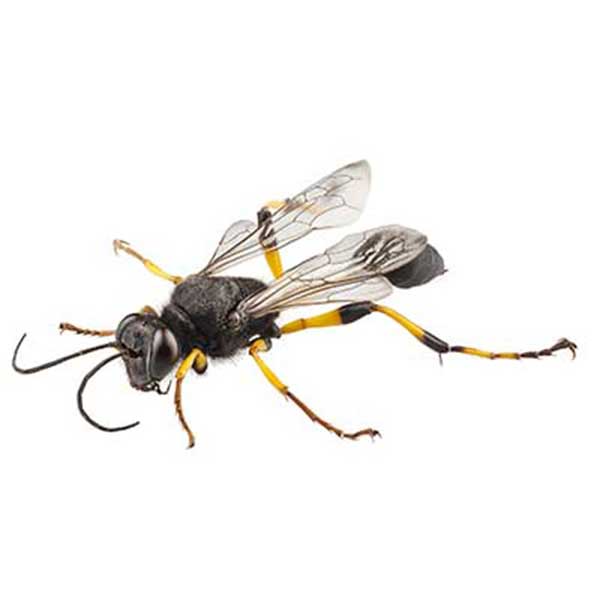
Nest shape and location are the giveaway. Yellowjackets typically nest underground (in old rodent burrows or landscaping voids) or inside wall voids — you’ll see a steady stream of insects coming and going from a small hole. Bald-faced hornets build large gray football-shaped aerial nests, often 2–3 feet across, hanging from tree branches or eaves. Paper wasps build small open umbrella-shaped paper combs (single layer of cells, visible from below) tucked under eaves, in mailboxes, or in shrubs. Mud daubers build distinctive mud tube nests on walls and rafters, usually no more than a few inches long.
Which stinging insects in the PNW are dangerous?
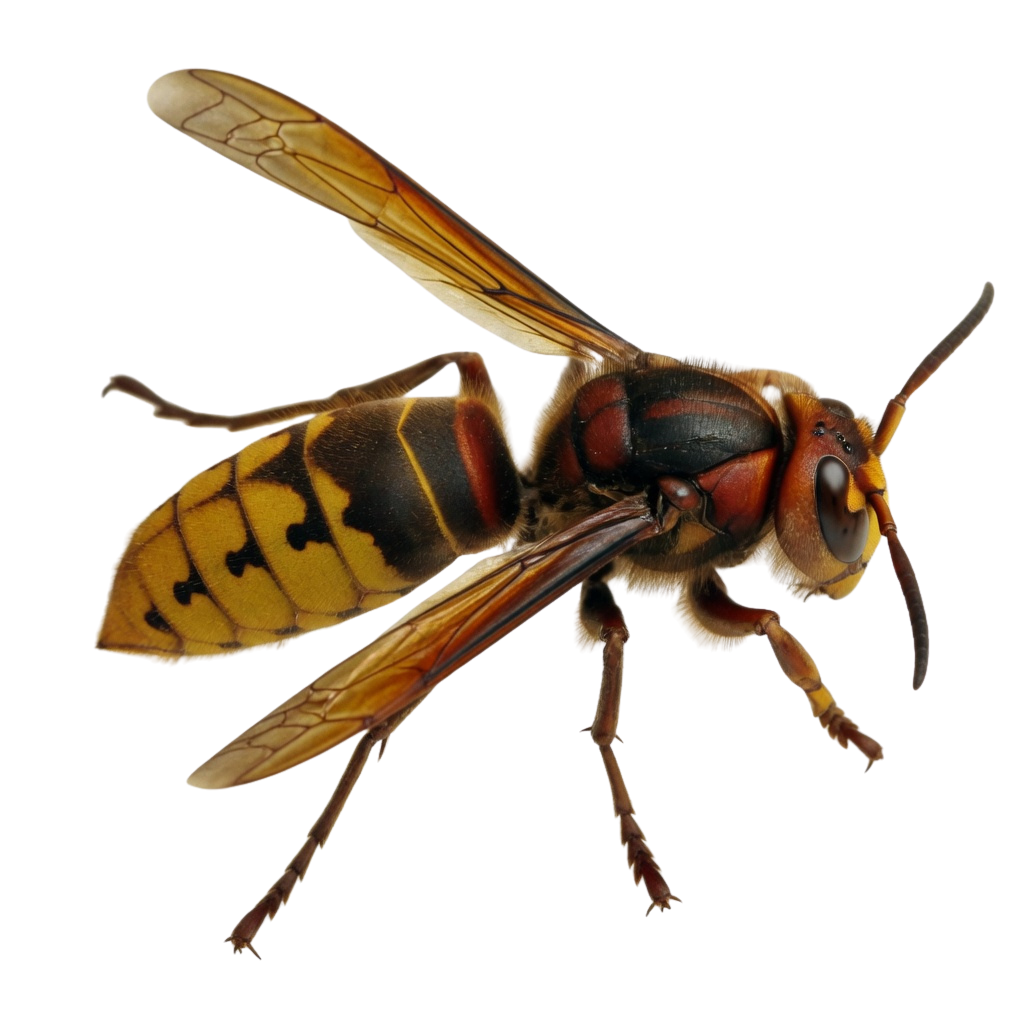
Yellowjackets, bald-faced hornets, and European hornets are the most dangerous — they’re aggressive defenders, will sting repeatedly (unlike honeybees), and produce nests with hundreds to thousands of workers. Paper wasps are less aggressive but still pack a painful sting when their nest is threatened. Carpenter bees and mud daubers rarely sting. Bumble bees and honeybees are docile away from their nests and only sting defensively. Any stinging-insect sting can trigger anaphylaxis in allergic individuals — if you have a known venom allergy, treat every nest as serious.
Are murder hornets still a threat in Washington and Oregon?
No. The Asian giant hornet (sometimes called “murder hornet”) was first detected in Whatcom County, Washington in 2019. The Washington State Department of Agriculture declared the species eradicated from the state in December 2024 after three consecutive years with no confirmed sightings. Nothing similar has ever been confirmed in Oregon. If you think you’ve seen one, photograph it from a safe distance and report it to WSDA — but in practice you’ve almost certainly seen a European hornet, bald-faced hornet, or queen yellowjacket. See our Asian giant hornet identification page for visual comparison.
What time of year are stinging insects most active in the PNW?
Stinging insect activity ramps up in May (when overwintering queens start new colonies), peaks in August and September (when colonies hit maximum size and food becomes scarce), and ends with the first hard frost in October or November. Late summer is when yellowjackets become aggressive scavengers — that’s when you’ll find them at your picnic, your soda can, and your trash bin. Most colonies die off completely each winter except the queens, which overwinter under bark, in attics, or in woodpiles.
Should I remove a wasp or hornet nest myself?
Only if the nest is small (golf-ball-sized or smaller), early in the season, located somewhere you can reach safely from the ground, and you’re not allergic. For anything larger, anything aerial, anything inside a wall, or anything involving yellowjackets — call a pro. Yellowjackets in particular can mobilize hundreds of defenders within seconds, and getting stung repeatedly is a real risk. Store-bought wasp sprays only kill the workers you see; surviving foragers return to a destroyed nest and become extremely aggressive.
Will Interstate Pest treat bees, or do you relocate them?
Our default for honeybee swarms and established hives is referral to a local beekeeper for relocation — honeybees are protected and ecologically critical. We do treat honeybees when relocation isn’t feasible (for example, an entrenched colony inside a structural wall). We do not exterminate bumble bee colonies in the ground unless they pose a direct safety threat to children or pets in a heavily-used area. Carpenter bees, which damage wood, are treated as a pest. For yellowjackets, hornets, paper wasps, and mud daubers, full treatment is the standard service.
Does the All Seasons Pest Plan cover stinging insect treatment?
Yes — the All Seasons Pest Plan covers yellowjacket, hornet, paper wasp, and mud dauber treatment, plus removal of accessible nests around the exterior of your home. Bumble bees and honeybees are referred to local beekeepers for relocation when possible (we do not exterminate protected pollinators by default). The plan also includes re-service visits as needed if stinging insects return between scheduled treatments.
Plans That Cover Wasps, Hornets & Mud Daubers
All Seasons Pest Plan
$39/month
Setup fee $260 for initial treatment
Year-round protection from the pests Pacific Northwest homeowners deal with most — yellowjackets, hornets, paper wasps, and mud daubers, plus spiders, ants, box elder bugs, and more.
- Recurring exterior treatments
- Accessible nest removal
- Re-services included as needed between visits
Pest & Rodent Bundle
$47/month
Setup fee $280 for initial treatment
The most complete protection for your home. Full pest coverage plus active rodent monitoring — one plan, one team, one less thing to worry about.
- Everything in Pest & Rodent plans
- Best value for whole-home protection
- Re-service guarantee
Get help with stinging insects in your area
Interstate Pest Management helps with stinging insects across Oregon and Washington. Choose your area to see local plans, pricing and the number for your nearest team.