Hymenoptera · Order-Level Field Guide
Bees of the Pacific Northwest: A Field Guide
Reviewed by TJ Jackson, Certified ACE · Updated 2026-05-18
Educational guide | Family group: Bees | ~20,000 species worldwide | 500 to 700 native PNW species
Bees share the Hymenoptera order with wasps and ants, but they are the fuzzy, flower specialist branch. Their bodies are built to catch and carry pollen. Their diet is pollen and nectar from larva to adult. And they are the dominant pollinators of most of the plants on your dinner plate. The honeybee is the only bee most people can name, but in the Pacific Northwest there are somewhere between 500 and 700 native bee species. The ones in your yard are mostly the quiet ones. This page is the biology overview. When bees are actually causing a problem at your house, our default move is to relocate them rather than exterminate.
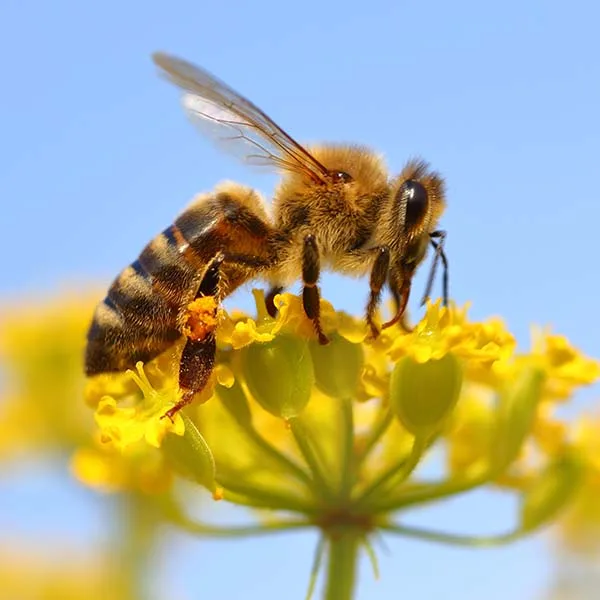
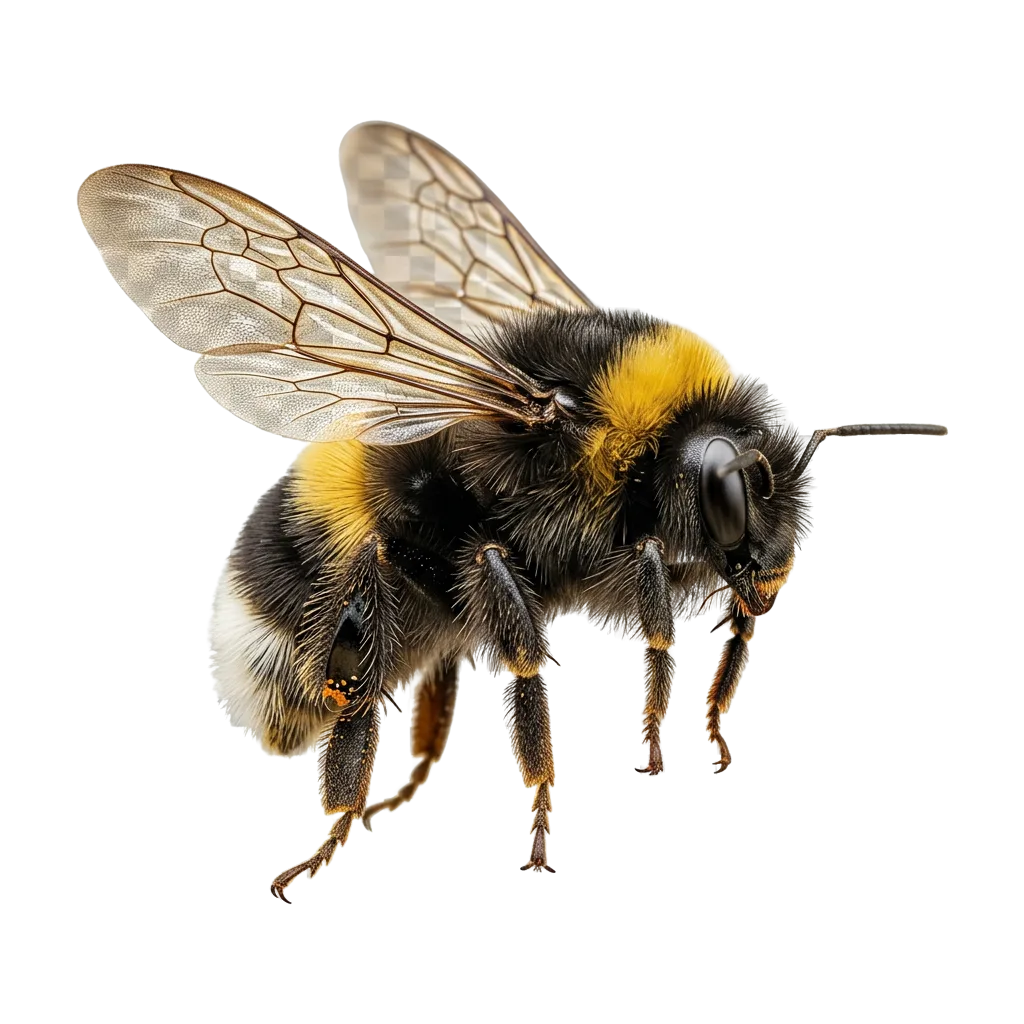
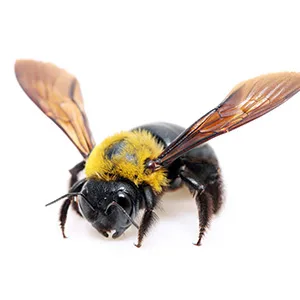
Quick Answer: Bees are the fuzzy, pollen specialist branch of the Hymenoptera order. About 20,000 bee species are known worldwide, with somewhere between 500 and 700 of them native to the Pacific Northwest. The three species PNW homeowners actually meet are honeybees (golden brown, hive based, not native), bumble bees (fat, fuzzy, ground or cavity nesting, native), and carpenter bees (bumble bee look-alikes with shiny black abdomens that bore into wood). Most bee species are solitary, docile, and beneficial. Our default response to a bee call is identification first, relocation second, treatment only when relocation is not feasible.
Most important distinction: Honeybees are not native. Bumble bees are. Carpenter bees damage wood. Mason bees, mining bees, and leafcutter bees are critical native pollinators almost nobody notices. The species matters more than the panic.
What Makes a Bee a Bee
Four traits separate bees from their wasp and ant cousins. Get these straight and you will almost never confuse a bee with a wasp in the field.
1. Fuzz, everywhere
Bees are coated in fine, branched hairs from head to leg. Under a microscope those hairs look like tiny brushes. The whole point is pollen capture. Every time a bee lands on a flower, pollen sticks to her fuzz, and she carries it to the next flower (or back to the nest). Wasps and ants do not have this kind of fuzz because they do not collect pollen. If you can see fuzz with the naked eye, you are almost certainly looking at a bee.
2. Specialized pollen-carrying body parts
Female bees have dedicated structures for hauling pollen back to the nest. Honeybees and bumble bees have pollen baskets (corbicula) on their hind legs, which look like little yellow saddlebags when full. Many native solitary bees use a scopa instead, which is a dense brush of long hairs on the belly or hind leg. No other Hymenoptera has this kit. Spotting bright yellow leg-loads of pollen on an insect is a dead giveaway: bee.
3. A pollen and nectar diet from start to finish
Bee larvae eat pollen and nectar that their mother packs into the nest. Adult bees eat the same. This is the cleanest split between bees and wasps. Wasps feed their larvae other insects. Bees feed their larvae plant products. The entire bee body plan (the fuzz, the pollen baskets, the long tongue) is built around making that one switch work.
4. A “wasp waist” you can barely see
Bees still have the Hymenoptera pinched waist between thorax and abdomen, but it is largely hidden under fluffy hair. A side-by-side comparison with a yellowjacket makes this obvious. The wasp looks sleek and pinched. The bee looks rounded and fluffy. Same anatomical structure, very different visual effect.
Social vs. Solitary Bees
Most people picture bees as social insects with hives and honey. The truth is the opposite. Most bee species are solitary, and the social ones (especially honeybees) are the exception, not the rule.
Solitary Bees
The quiet majority you never notice
Each female builds her own small nest, stocks it with pollen and nectar provisions, lays an egg, and seals it. There is no colony to defend, so solitary bees almost never sting humans. The vast majority of bee species worldwide and in the PNW are solitary.
PNW examples:
- Mason bees (nest in hollow stems and crevices, exceptional pollinators)
- Mining bees (dig small burrows in bare soil)
- Leafcutter bees (line nests with neat circles cut from leaves)
- Sweat bees (small, often metallic green, attracted to perspiration)
- Carpenter bees (mostly solitary, bore into unpainted wood)
Key trait:
Beneficial garden allies that pollinate native plants and ignore humans. Usually so unobtrusive most people never notice them.
Why Bees Actually Matter
Bees are the single most important pollinator group on Earth. The PNW agricultural economy, the wild plants that hold our hillsides together, and a long list of items in your grocery store all depend on bee pollination in some form.
Reason 01
Pollination of the food supply
Bees pollinate around 75% of the major crops grown for human food and 35% of the global food supply by volume. In the PNW that includes apples, pears, cherries, blueberries, blackberries, raspberries, almonds (whose California crop relies on PNW honeybee colonies trucked south every winter), squash, and most of the brassicas. Native mason bees are now used in PNW commercial orchards as supplemental pollinators alongside honeybees.
Reason 02
Pollination of native plants and ecosystems
Most flowering plants in PNW forests, meadows, and shrub-steppe depend on native bees, not honeybees. Bumble bees pollinate huckleberries, salmonberries, and Oregon grape. Mining bees and sweat bees handle a long list of native wildflowers. When native bee populations drop, the seed set on those plants drops too, which cascades into less food for birds, mammals, and the rest of the food chain.
Reason 03
Honey, wax, and the only honey-producing insect in your backyard
Honeybees are the only PNW insect that produces honey at any meaningful scale. A typical hive produces 50 to 100 pounds of honey in a good year. The wax they secrete to build their combs is the basis for candles, furniture polish, and a long list of natural products. None of which works without thriving honeybee colonies. WSU’s Pollinators guide (authored by Dr. David G. James, WSU Entomology) has detailed PNW-specific identification and habitat support information for the major pollinator groups.
Mostly invisible, mostly critical PNW Native Solitary Bees You Are Probably Sharing a Yard With
If you have a yard with any kind of flowering plants, you almost certainly host several native solitary bee species. Most are small, fast, and unobtrusive. None of them sting. All of them are pollinators.
- Mason bees (Osmia spp.): blue-black and metallic, around the size of a housefly. They nest in hollow stems, bee houses, and natural crevices. Roughly 20 times more efficient at pollinating fruit trees than a honeybee, which is why PNW orchardists actively cultivate them.
- Mining bees (Andrena spp. and others): small ground-nesting bees that excavate burrows in bare, well-drained soil. The little volcano-shaped piles of dirt you sometimes see in the lawn in spring are mining bee work. Active for a few weeks then gone for the year.
- Leafcutter bees (Megachile spp.): cut neat half-circle pieces out of leaves (rose leaves especially) to line their nests. The leaf damage is purely cosmetic. The pollination value is significant.
- Sweat bees (Halictidae): tiny, often metallic green or bronze. Attracted to perspiration for the salt content. Rarely sting and the sting is mild. Major pollinators of wildflowers.
- Long-horned bees, polyester bees, plasterer bees, and more: the PNW hosts hundreds of additional native species, most of them solitary, most of them ignored by homeowners, all of them contributing to the local pollination economy.
Default policy: do not treat native solitary bees. We are not removing your pollinators.
A note from TJ Jackson, Pest Nerd and DOO (Director-of-Operations)
“When people call us about ‘a bunch of bees on my house,’ the first thing I ask for is a photo. About a quarter of the time it’s actually carpenter bees boring into siding, which is a real wood damage problem. About a quarter is bumble bees that nested in a cavity, which we usually leave alone. About a quarter is honeybees swarming or hiving, which we hand off to a local beekeeper for relocation. And the last quarter is something else entirely: yellowjackets, paper wasps, even bald-faced hornets. The species matters more than the panic.”
TJ Jackson, Certified ACE · Interstate Pest Management
The Three Bees PNW Homeowners Meet Most
Each card links to a full species page. Identification first, then the right response.
PNW Bees FAQ
The biology questions we get most often.
Frequently Asked Questions About PNW Bees
What is the difference between a bee and a wasp?
Bees are fuzzy, with branched body hairs that catch pollen on every flower visit. Wasps are smooth and shiny with a much more visible pinched waist. Bees eat pollen and nectar their entire lives, including the larvae. Wasps are predators or parasitoids, and only the adults sip nectar. Behavior is the fastest tell in a backyard. A bee on a dandelion ignores you. A yellowjacket on your soda can does not.
Are bees actually in danger?
Yes, particularly native bees. Pacific Northwest native bumble bee populations have declined sharply over the past two decades, with several species now listed as at risk or endangered. Habitat loss, pesticide exposure, and climate stress are the main drivers. Honeybees (which are not native to North America) get more attention because of Colony Collapse Disorder, but the bigger biodiversity concern is the hundreds of native bee species most homeowners never see. This is one of the reasons we relocate honeybees rather than exterminate, and we leave bumble bee colonies in place whenever it is safe to do so.
How do I tell a bumble bee from a carpenter bee?
Look at the abdomen. Bumble bees have a fuzzy abdomen all the way down. Carpenter bees look like bumble bees from the front, but their abdomen is shiny, hairless, and black. Behavior helps too: bumble bees forage on flowers and ignore your house, while carpenter bees hover around eaves, fascia, and unpainted wood looking for places to drill half-inch round holes. If you find perfectly round half-inch holes in your siding, that is a carpenter bee.
Do you treat bees, or do you relocate them?
Default policy: honeybee swarms and established hives are referred to a local beekeeper for relocation. Bumble bee colonies in the ground are left alone whenever they are not in a heavily used area. Carpenter bees, which damage wood, are treated as a pest. Treatment of honeybees or bumble bees happens only when relocation is not feasible (for example, an entrenched colony deep inside a structural wall) and the colony poses a direct safety risk.
Are honeybees native to the Pacific Northwest?
No. Apis mellifera, the western honeybee, was brought to North America by European settlers in the 1600s. It has been here long enough to be culturally familiar, but it is not a native species in the PNW. The bees that actually pollinated PNW plants before honeybees showed up are the hundreds of native species: bumble bees, mason bees, mining bees, leafcutter bees, sweat bees, and many more. Most of them are solitary, small, and quietly going about their business in your yard.
Which bees actually sting humans?
Very few. Honeybees can sting defensively when they perceive a threat to the hive, and the act usually kills the bee because their stinger is barbed and tears loose. Bumble bees can sting but rarely do, and only in extreme self-defense. Most male carpenter bees hover aggressively but cannot sting at all (males of every Hymenoptera species lack a stinger). Female carpenter bees can sting but almost never do. The thousands of solitary native bees in the PNW essentially never sting humans.
I have bees in my wall. What do I do?
Call us, then send a photo if you can. The right next step depends on which bee: honeybees in a wall are referred to a beekeeper for relocation, bumble bees are usually left in place if the location is not dangerous, and carpenter bees are treated as a pest. Do not try to seal the entrance hole. Trapped honeybees can chew through drywall to escape into the interior of the house, and trapped bumble bees can do similar damage. Always identify before you act.
I have a bee problem at my house. Where do I go?
This is the biology page. For ID help and the right treatment plan for an active bee situation around your home, head to our Stinging Insects guide, or call us at 360.382.2451 for same-week visits throughout OR and WA. Photo first if you can manage it safely.
Pest Coverage From a Team That Actually Likes Pollinators
All Seasons Pest Plan
$39/month
Setup fee around $260 for initial treatment
Year round protection from the pests Pacific Northwest homeowners deal with most. Wasps, hornets, spiders, ants, box elder bugs, and more. Honeybee and bumble bee relocation referrals included.
- Recurring exterior treatments
- Honeybee and bumble bee relocation referrals
- Re-services included as needed between visits
Pest and Rodent Bundle
$47/month
Setup fee around $280 for initial treatment
The most complete protection for your home. Full pest coverage plus active rodent monitoring. One plan, one team, one less thing to worry about.
- Everything in Pest and Rodent plans
- Best value for whole home protection
- Re-service guarantee