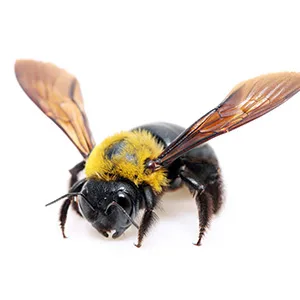
Carpenter Bees
Reviewed by TJ Jackson, Certified ACE · Updated 2026-05-18
Xylocopa spp. | Category: Bees | ✓ Covered: All Seasons Pest Plan
Carpenter bees look like bumble bees from the front but have a shiny, hairless black abdomen that almost looks polished. They are mostly solitary, but females often nest near one another, and they bore perfectly round half-inch holes into unpainted softwood to lay eggs. The bees themselves are docile to humans. The damage is the problem, and it compounds dramatically year over year as returning females reuse and extend existing tunnels. Cedar siding, fascia boards, and unpainted decks are the most common PNW targets.
| Size | 5/8 to 1 inch long |
|---|---|
| Color | Yellow-fuzzy thorax, shiny hairless black abdomen, dark legs |
| Top ID Marker | Shiny black abdomen and perfectly round 1/2 inch holes in unpainted wood |
| Active Season | April through September outdoor peak; adults overwinter inside galleries |
| Nest Sites | Tunneled into unpainted softwood: eaves, fascia, soffits, deck rails, fence posts, cedar siding |
| Colony Size | Mostly solitary, one female per tunnel; multi-year gallery reuse compounds damage |
| Plan Coverage | ✓ Covered under All Seasons Pest Plan |
Need help with this pest?
Get A QuoteQuick Answer: Carpenter bees (Xylocopa spp.) are large bees, 5/8 to 1 inch long, that look almost identical to bumble bees from the front but have a shiny black hairless abdomen instead of fuzz. Females bore perfectly round half-inch holes into unpainted softwood (cedar, redwood, fir, pine) to create egg-laying galleries. They are docile to humans, male carpenter bees cannot sting at all and females almost never do, but their wood damage compounds dramatically year over year because returning females reuse and expand existing tunnels rather than starting fresh.
Key facts at a glance: Size: 5/8 to 1 inch · Color: yellow thorax, shiny black abdomen · Tell-tale sign: round 1/2 inch holes in unpainted wood · Bites: rarely · Damage: significant, compounds yearly · Plan coverage: Yes, All Seasons Pest Plan.
What You Need To Know About Carpenter Bees
Short PNW field clip showing a carpenter bee at an active tunnel entry. Note the shiny abdomen and the perfectly round hole.
Frequently Asked Questions
How do I tell a carpenter bee from a bumble bee?
Look at the abdomen. Bumble bees are fuzzy from head to tail. Carpenter bees have a shiny, hairless black abdomen that almost looks polished. From the front they are nearly identical. Behavior helps too: bumble bees forage on flowers and ignore your house, carpenter bees hover around eaves and unpainted wood looking for places to drill.
Do carpenter bees sting?
Rarely. Male carpenter bees hover aggressively to defend territory but they cannot sting at all because males of every Hymenoptera species lack a stinger. Females can sting but almost never do unless physically grabbed. The threat is the wood damage, not the sting.
What does carpenter bee damage look like?
Perfectly round half-inch entry holes drilled into unpainted softwood. The holes look like someone used a drill. Look for coarse sawdust on the ground below the hole, yellowish staining on the wood under the hole, and faint scratching or buzzing sounds from inside the wood.
Why does carpenter bee damage get worse every year?
Carpenter bees reuse and extend existing tunnels rather than starting fresh. A first-year tunnel might be 4 to 6 inches long. By year three, the same tunnel system can stretch 10 feet or more inside a single board with branching galleries. New females nest near their birthplace, so a small year-one problem becomes a structural year-three problem. Woodpeckers also learn the locations and tear the wood open to feed on the larvae.
What wood do carpenter bees prefer?
Soft, unpainted, weathered wood. In the PNW that means cedar, redwood, fir, or pine. Common targets are eaves, fascia boards, soffits, deck rails, fence posts, outdoor furniture, and the underside of cedar siding. Painted and pressure-treated wood is much less attractive. Hardwoods like oak are largely safe.
Can I just plug the holes?
Not on its own. Plugging an active hole traps adults and larvae inside, which can drive them to chew sideways out of the wood, sometimes into the interior of the structure. The right sequence is to treat the gallery first, wait for activity to stop (a week or two), then plug the hole and paint or seal the exposed wood.
Does the All Seasons Plan cover carpenter bees?
Yes. Carpenter bees are one of the few bee species we treat as a pest because of the wood damage. Coverage includes residual gallery treatment, hole plugging once activity has stopped, and recommendations for sealing or painting vulnerable surfaces to discourage re-infestation next season.
When are carpenter bees most active in the PNW?
Adults emerge in April or May, mate, and the females begin excavating or expanding tunnels. They are most visible from May through July when males are patrolling territories around eaves. New adults emerge in late summer and feed on flowers before overwintering inside the tunnel system.
Signs You Have Carpenter Bees
Most homeowners notice the holes before they notice the bees. Here’s what to look for, in the order it usually shows up:
1. Perfectly round half-inch holes
Clean, smooth-edged 1/2 inch entry holes in unpainted cedar, redwood, fir, or pine. The holes look so precise they appear drilled. Most common on eaves, fascia, and the underside of deck rails.
2. Coarse sawdust below entry holes
Small piles of light-colored chewed wood (frass) directly below an active hole. The pile grows daily during active excavation in May and June.
3. Yellow-brown staining on siding
Streaks of bee waste running down the wood below the entry hole. The stain is darker than the surrounding wood and harder to wash off than a normal water stain.
4. Large bees hovering near eaves
In spring and early summer, male carpenter bees defend small territories around active tunnels by hovering aggressively at anything that comes close, including people. The males cannot sting, but the hover patrol is intimidating.
5. Scratching or buzzing inside wood
Females actively excavating produce a faint scratching sound. With several holes in a single board, you may hear muffled buzzing from inside the wood on warm afternoons.
6. Fresh woodpecker damage
Once carpenter bee tunnels are established, woodpeckers learn the locations and tear the wood open to feed on the larvae. Ragged irregular tears next to old round holes are the woodpecker tell, and the point where a minor problem becomes a real one.
Behavior, Biology & Lifecycle
Understanding how carpenter bees use the wood is the single biggest reason professional treatment succeeds where DIY plug-and-pray usually fails. Here’s what makes this species different:
Master wood excavators
Females drill a perfectly round half-inch entry, tunnel inward about an inch, then make a sharp turn and run parallel to the wood grain for 4 to 6 inches in year one. Inside that tunnel they build 6 to 8 cells separated by chewed wood pulp.
Mostly solitary, but social-adjacent
Each female builds and provisions her own nest. There is no queen, no workers, and no defended colony. But returning females often nest right next to their mother’s tunnel, which creates dense clusters of holes in the same piece of wood within a few years.
Lifecycle: about 7 weeks egg to adult
Eggs hatch in 10 to 12 days, larvae develop on pollen provisions for 30 to 40 days, pupae transform for 7 to 10 days. New adults emerge in late summer, feed on flowers, then overwinter inside the tunnel system to start the cycle again the following spring.
Diet: pollen and nectar only
Carpenter bees do not eat the wood they drill. They are pollen and nectar feeders like every other bee. The tunnels are purely for egg laying and overwintering shelter. This is also why painting and sealing wood is so effective: it makes the surface unappealing as a nest site without affecting the bees’ food supply at all.
Native to the Pacific Northwest
Per UC IPM, several Xylocopa species are native to western North America, including the PNW. They are important pollinators of native plants and crops, which is why treatment focuses on protecting the wood rather than wiping out local populations.
Multi-year compounding damage
The same tunnel system is reused and expanded every year. A year-one tunnel of 6 inches can become a year-three tunnel system of 10 feet with branching galleries. Boards that look fine on the outside lose structural integrity. This is the single biggest reason early treatment is so much cheaper than late treatment.
DIY Homeowner Steps
Paint or stain vulnerable wood
Apply paint, varnish, or polyurethane to exposed cedar, redwood, fir, or pine on eaves, fascia, decks, and fence posts. Carpenter bees strongly prefer bare or weathered wood. Sealed surfaces dramatically reduce attractiveness.
Hang carpenter bee traps before May
Carpenter bee traps mimic ideal nesting wood and attract females in spring. Place traps near eaves and other previously affected areas before the April-May emergence. Empty captured bees weekly during peak activity.
Do not plug active holes yet
Plugging an active hole traps live bees and brood inside, which can drive them to chew sideways through the wood. Wait until you have treated the gallery and activity has stopped for at least one week before sealing the entry.
Plug inactive holes and seal the surface
Once activity has stopped, plug each entry hole with a wood plug or steel wool plus exterior sealant. Then paint or stain the surface to discourage next year’s emerging females from finding a familiar starting point.
Carpenter Bees vs. Other PNW Bees
Not sure which bee you have? Here’s a side-by-side of the four bees PNW homeowners notice most often:
| Feature | Carpenter Bee | Bumble Bee | Honey Bee | Mason Bee |
|---|---|---|---|---|
| Size | 5/8 to 1 inch | 1/2 to 1 inch | 3/8 to 5/8 inch | 3/8 to 1/2 inch |
| Abdomen | Shiny black, hairless | Fuzzy head to tail | Golden brown, fuzzy | Metallic blue-black |
| Damages wood? | Yes, bores into softwood | No | No | No (uses existing cavities) |
| Typical nest site | Tunneled into unpainted wood | Old rodent burrows, brush piles | Tree cavities or beekeeper hives | Hollow stems and existing crevices |
| Colony structure | Mostly solitary | Social, 50 to 400 workers | Social, up to 50,000 workers | Solitary |
| Sting risk | Very low (males cannot sting) | Low | Low away from hive, high at hive | Essentially zero |
| Plan coverage | ✓ All Seasons | Relocation referral | Beekeeper relocation | Leave alone (beneficial) |
Plans That Cover Carpenter Bees
All Seasons Pest Plan
$39/month
Setup fee about $260 for initial treatment
Year-round protection from the pests Pacific Northwest homeowners deal with most. Carpenter bees, wasps, hornets, spiders, ants, box elder bugs, and more.
- Carpenter bee gallery treatment
- Hole sealing and prevention advice
- Re-services included as needed between visits
- No contracts
Pest & Rodent Bundle
$47/month
Setup fee about $280 for initial treatment
The most complete protection for your home. Full pest coverage plus active rodent monitoring, one plan, one team, one less thing to worry about.
- Everything in Pest & Rodent plans
- Best value for whole-home protection
- Re-service guarantee
- No contracts
What Our Customers Are Saying
Real Results From Real Customers
Get help with carpenter bees in your area
Interstate Pest Management helps with carpenter bees across Oregon and Washington. Choose your area to see local plans, pricing and the number for your nearest team.