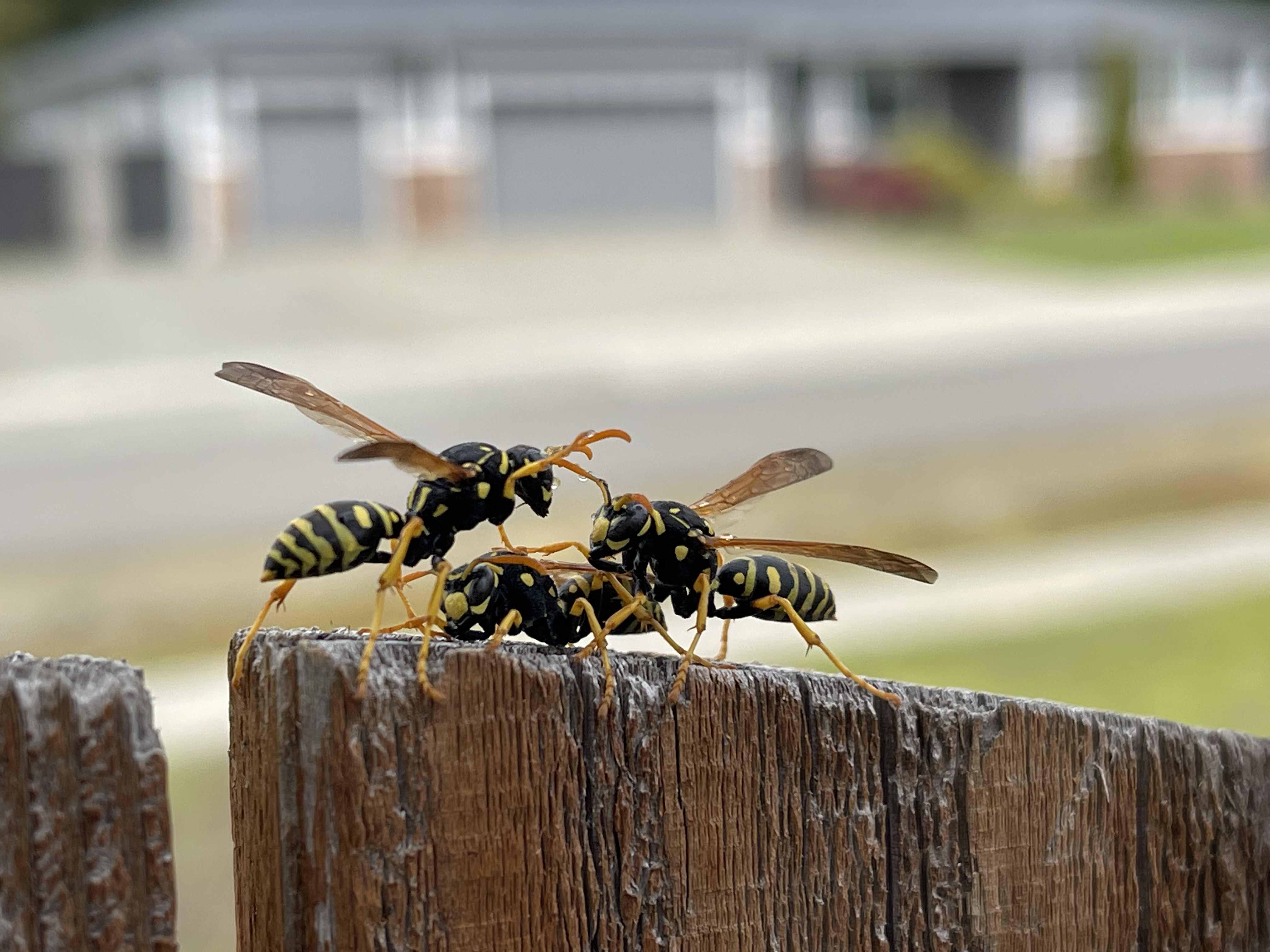
If you have been outside lately, you have probably noticed it already: this summer is shaping up warm and dry across the I-5 corridor. Forecasters at NOAA’s Climate Prediction Center are leaning toward a warmer-than-normal summer for the Pacific Northwest, with below-average rainfall expected across much of the region. For most of us, that means more evenings on the deck and more weekends at the lake. For wasps and yellowjackets, it means about the same thing it means for us: a longer, busier season outdoors.
We wanted to get ahead of it. Here is what a hot, dry summer tends to do to stinging insects in our area, and a few simple things you can do now to keep your backyard comfortable for the people in it.
We have been a family-owned part of the Pacific Northwest since 1963, and stinging-insect season is one where small habits in June and July make a real difference by August. Here is what homeowners should know, what you can do this week, and when it makes sense to bring us in.
Short answer: Warm, dry summers across the Pacific Northwest mean stinging insects get an earlier start, build larger colonies, and scavenge more aggressively around outdoor food and drinks. Most stings are preventable with simple habits, and small nests caught early are far easier to handle than the late-summer colonies they grow into. Yellowjackets, paper wasps, and bald-faced hornets are the most common stinging insects along the I-5 corridor – honey bees and bumble bees are not pests and should be left alone or relocated by a beekeeper.
Why Do Hot, Dry Summers Bring More Wasps?
Short answer: Warmer, drier weather lets more queens survive winter, gives colonies a head start in spring, and dries up natural food sources like nectar and fruit. That combination means wasp populations grow larger earlier in the year and scavenge more aggressively around grills, picnic tables, and trash bins by mid-summer.
Stinging insects are weather-driven. When winters stay mild and spring warms up early, more queens survive to start nests, and those nests get a head start on the season. By the time most of us notice the activity, a colony has often had weeks of warm weather to grow.
Dry weather adds a second wrinkle. As summer wears on and natural food sources like nectar and soft fruit dry up, yellowjackets in particular start scavenging for protein and sugar wherever they can find it. That often means your grill, your picnic table, the kids’ juice boxes, and the recycling bin. A warm, dry stretch can push that scavenging behavior earlier in the year and make it more noticeable than in a cooler, wetter season.
None of this is cause for alarm. It simply means the season may start a little sooner and run a little stronger than average, so a few small steps in June and July go a long way by August.
What Stinging Insects Should I Watch For?
Short answer: The three stinging insects most common along the I-5 corridor are yellowjackets (fast, black-and-yellow, the most aggressive scavengers), paper wasps (longer-legged, build umbrella-shaped nests under eaves), and bald-faced hornets (build large gray football-shaped nests in trees and shrubs). Honey bees and bumble bees are not pests – they are pollinators that should be relocated by a beekeeper if needed.
Most of the stinging insects people call us about along the I-5 corridor fall into a few familiar groups:
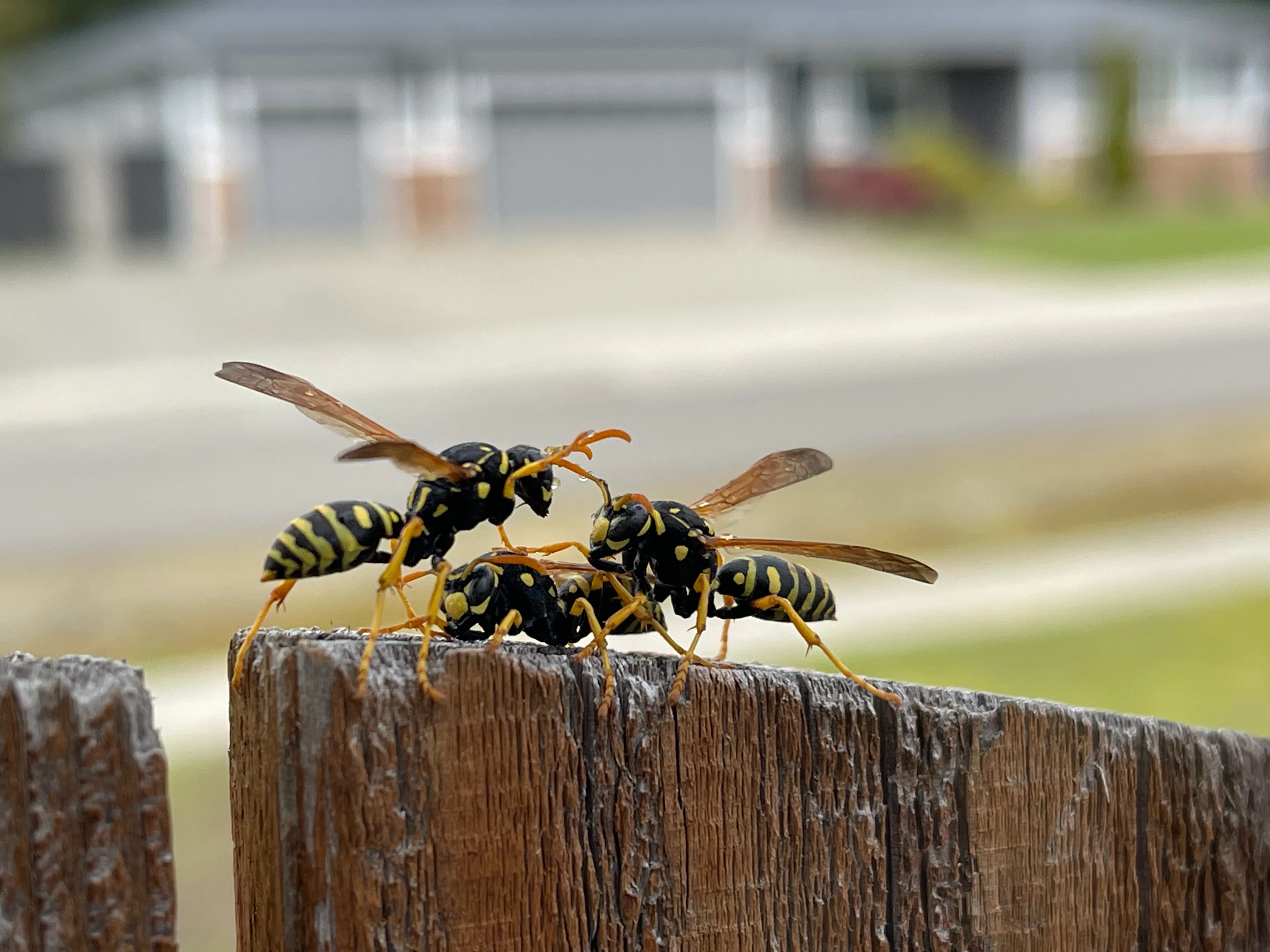
Yellowjackets are behind the majority of stings. They are fast, black and yellow, often nest in the ground or in wall voids, and they are the boldest scavengers around food and drinks.
Paper wasps are longer-legged and build open, umbrella-shaped nests under eaves, railings, and play structures. They tend to be calmer unless their nest is bumped or disturbed.
Bald-faced hornets build the large gray, football-shaped paper nests you sometimes see in trees and shrubs. They are very protective of that nest and are best admired from a distance.
A quick and important note: honey bees and bumble bees are not on that list. They are pollinators we want to protect, not pests. We do not treat them, and if you come across a honey bee swarm, the right move is a local beekeeper who can relocate it safely. If you are not sure what you are looking at, send us a photo and we will help you tell the difference.
How Can I Keep My Family Safe From Wasps This Summer?
Short answer: The most effective wasp prevention costs nothing. Cover food and drinks outdoors, glance into open cans before sipping, pick up fallen fruit, keep trash and recycling lids closed, and do a calm walk-around early in the season looking for small nests. Do not swat at wasps – it releases an alarm scent that calls in more – and do not seal a nest yourself.
The good news is that most stings are preventable with habits that cost nothing. Here is where we would start:
- Cover food and sweet drinks outdoors, and glance into open cans before you take a sip. An unattended soda is a yellowjacket’s favorite find.
- Stay on top of water and food sources. Pick up fallen fruit, rinse recyclables, and keep trash and recycling lids closed. Dry summers concentrate insects around whatever water and food they can reach.
- Do a calm walk-around early in the season. Check eaves, soffits, under decks and railings, dense shrubs, and any ground holes where you notice wasps coming and going. Small, early nests are far easier to handle than late-summer ones.
- Do not swat, and do not seal a nest yourself. Swatting releases an alarm scent that calls in more wasps, and plugging a nest opening often just sends them looking for a new way out, sometimes into your wall or living space.
- Dress simply for outdoor gatherings. Light colors and skipping heavy floral scents both help.
- Teach kids to stay calm and walk away rather than flail. Quick, panicked movement is usually what turns a curious wasp into a defensive one.
If anyone in your home has a known stinging-insect allergy, keep their prescribed epinephrine on hand during outdoor activities, and let hosts and coaches know. A little planning makes summer a lot less stressful for everyone.
When Should I Call a Professional About a Wasp Nest?
Short answer: Call a professional for nests near where your family actually lives – by doors, walkways, patios, play areas, or inside wall voids you cannot safely reach. Ground nests in the lawn and large aerial nests up high are also better left to someone with the right equipment. Earlier is always easier, calmer, and less expensive than waiting for the peak in late summer.
Plenty of small nests in out-of-the-way corners can simply be left alone. The ones worth handling sooner are the nests near where your family actually lives: by a door, along a walkway, over a patio, near a play area, or tucked into a wall void you cannot safely reach. Ground nests in the lawn and large aerial nests up high are also better left to someone with the right equipment, because those are the situations where multiple stings tend to happen.
There is no need to call the moment you spot a single wasp. But if a nest is growing somewhere your family passes every day, earlier is easier, calmer, and usually less expensive than waiting for the peak in late summer.
For homeowners who would rather not think about it at all, our All Seasons Pest Plan includes quarterly visits timed to the Pacific Northwest season, with our team knocking down accessible wasp nests and treating common nesting spots before activity peaks.
Frequently Asked Questions About Wasps and Yellowjackets
Bees, including honey bees and bumble bees, are fuzzy, pollen-collecting pollinators that should be protected, not exterminated. Wasps (including yellowjackets, paper wasps, and hornets) have smoother bodies, narrower waists, and are predators or scavengers. If you are seeing a swarm of fuzzy yellow-and-black insects around a flower or tree branch, that is likely a honey bee swarm – call a local beekeeper for relocation rather than a pest control company.
By late summer, colonies are at peak size, natural food sources are drying up, and worker wasps are stressed and protective of the nest. Yellowjackets in particular shift to aggressive scavenging behavior around human food and drinks as wild food sources disappear. This is why early-season prevention is so much easier than late-summer reaction.
Small, early-season nests in out-of-the-way corners can often be left alone if they are not in a high-traffic area. Nests near doors, walkways, patios, play areas, or in wall voids are worth handling – earlier is always easier than later. Do not swat at wasps coming and going from a nest, and do not try to seal the opening yourself; both responses tend to make things worse.
We generally do not recommend it. Over-the-counter wasp sprays can be effective on small, accessible nests if used correctly at dusk – but ground nests, large aerial nests, and nests inside wall voids are situations where multiple stings tend to happen. If you have any doubt about access, size, or location, calling a professional is the safer choice.
No. Honey bees and bumble bees are pollinators, not pests, and we do not treat them. If you find a honey bee swarm in your yard (often a temporary cluster on a branch), the right move is to contact a local beekeeper who can relocate them safely. If you are not sure whether you are looking at bees or wasps, send us a photo – we will help you tell the difference.
Open food and sweet drinks, fallen fruit, unsealed trash and recycling bins, sugary spills on outdoor furniture, and standing water all draw wasps in. Dry summers concentrate them around whatever moisture and food they can find, so the basic steps – cover drinks, pick up fruit, keep lids closed – become more important during hot, dry stretches.
A Comfortable Backyard, One Step at a Time
Stinging-insect season is mostly about timing. Small habits in early summer prevent the busy late-season scrambles. Small nests caught in June are far easier to handle than the late-August colonies they grow into. If a nest shows up where your family actually lives, or you just want a second set of eyes before a backyard event, we are here to help.
The best solution, as always, is just down the road.
Trusted Pest Control Across Oregon and Washington
Interstate Pest Management has been a family-owned part of the Pacific Northwest since 1963, and our certified technicians live and work in the same neighborhoods you do. Our teams cover Vancouver, Portland, Olympia, Kelso, and Salem – and if wasps, yellowjackets, or any other pest are giving you trouble this summer, we would love to meet you.
Give us a call at 1-888-844-4476 or schedule online to get started. We will take a look and tell you exactly what is going on.