You flick on the garage light and something close to the size of your palm bolts across the floor. Or it’s waiting in the bathtub in the morning, parked right where the drain is. Late September is when we get those calls at Interstate Pest Management, and they tend to open with the same question: where did all these spiders suddenly come from?
Here’s the part most people have backwards. The big spiders showing up in your garage and basement this month didn’t march in from the yard to get out of the cold. That’s the story everyone repeats, and it isn’t true. Most of them have lived in and around your house all year. What changed is the calendar. The mature males have left their webs to go looking for a mate, and a spider sprinting across an open floor is a lot easier to notice than one sitting in a corner web you never look at.
So the September surge isn’t an invasion. It’s mating season, and it eases off as fall goes on.
The spiders you’re most likely to see this fall
A handful of species account for almost every “what is this thing?” photo we get this time of year. For a fuller identification rundown with photos, our guide to common spiders in Oregon and Washington is worth keeping open alongside this one.
Giant house spider
This is the one that makes people jump, and it’s the largest you’ll find indoors here. The leg span can reach close to four inches, the body is a mottled brown, and the legs are banded. It’s quick, capable of short bursts of nearly two feet per second, and it builds a flat, funnel-shaped web in corners, basements, and garages. For all that bulk, it won’t hurt you, and it actually handles some of your pest control for you by hunting other spiders, hobo spiders included. Our giant house spider page has the full rundown.
Hobo spider
The hobo gets mistaken for the giant house spider constantly, since the two look alike and both spin funnel webs. Hobos are brown with a faint chevron pattern running down the abdomen, and they stay lower to the ground. Their reputation is worse than they are, which we get into on the hobo spider page.
Yellow sac spider
Small and pale, somewhere between yellow and light green. You’ll usually catch one wandering a wall or ceiling at night rather than sitting in a web. Here’s the yellow sac spider up close.
Orb weavers
Those big, geometric webs strung across your porch or doorway overnight are the work of orb weavers. They’re harmless, they stay outside, and they eat a startling number of the insects you’d rather not have around.
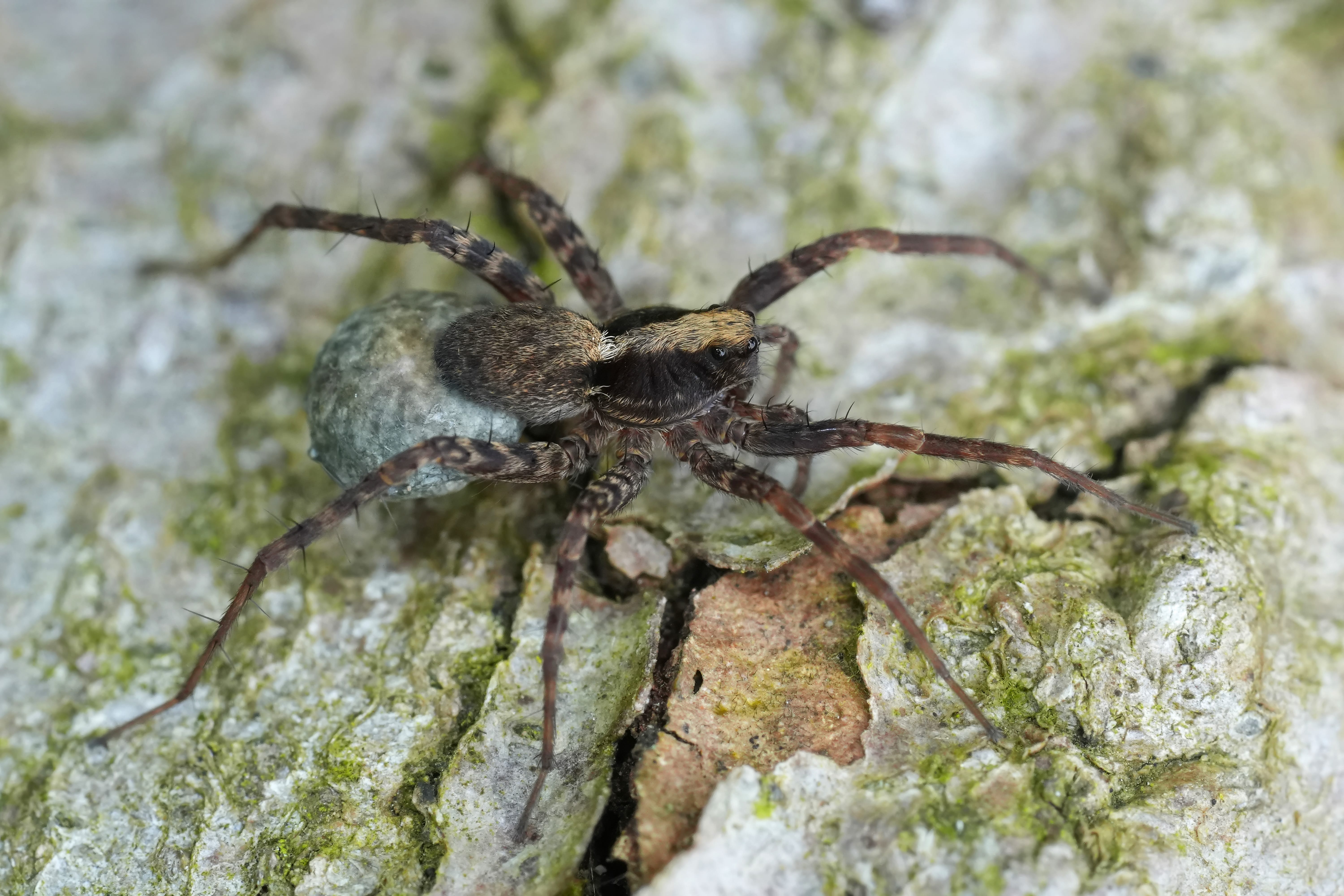
Wolf spiders
The fast, hairy, ground-hunting kind that build no web at all. Alarming to come across. No threat to you or your pets. You can see all of these in our Pacific Northwest spider guide.
Are these spiders dangerous?
For the large majority, no. Spiders are simply part of life in Oregon and Washington, and most of the ones you’ll meet this fall are harmless. A fair number are useful, quietly working through the flies and mosquitoes around your home.
The one that earns real respect is the western black widow. It isn’t common in our wetter areas, and it keeps to undisturbed spots: woodpiles, crawl spaces, the back corner of a shed. The hobo spider is the one people ask about most, usually because they’ve heard it leaves flesh-eating wounds. That claim has been walked back for years now. The research behind it never held up (spider researchers at UC Riverside have spent years correcting the record), and the hobo was dropped from the CDC’s list of medically threatening spiders. A giant house spider bite, on the rare occasion one happens at all, feels about like a mosquito.
Seeing a spider isn’t an emergency. Seeing them week after week usually just means your home is giving them a reason to stay.
How to keep spiders out this fall
Spiders come inside for two things: shelter and something to eat. Take away both and they lose interest. A few steps that genuinely help:
- Close the gaps. Spiders slip through surprisingly small openings, so replace worn weatherstripping, seal cracks around windows and the foundation, and check where pipes and cables pass through the wall.
- Deal with the other bugs first. Spiders follow their food, so getting ants, flies, and similar insects under control leaves the spiders with less reason to stay.
- Rethink the outdoor lighting. Porch and entry lights pull in the insects that pull in spiders. Yellow-toned bulbs or motion-activated fixtures thin out that crowd.
- Clear webs and clutter. Sweep webs as you find them, keep garages and storage corners from turning into hiding spots, and move woodpiles away from the house.
- Tidy the perimeter. Trim plants back off the foundation and don’t let leaves pile against the walls.
None of this is complicated. During peak spider season, though, it only goes so far on its own, especially in older Portland-area homes with plenty of gaps and mature landscaping around them.
When to call Interstate Pest Management
If you’re clearing spiders faster than you can keep up, if the webs return within days of knocking them down, or you’ve spotted something you’d rather not have near your kids or pets, that’s the point to bring in help.
Our residential spider control goes after the spiders you can see and the insects drawing them in, with treatments built around how spiders actually behave in Pacific Northwest homes. Most homes here do better on a recurring plan than on one-off treatments, because pest pressure changes with every season. If spiders show up between visits, we come back and re-treat at no charge.
We serve the full Portland metro, plus Vancouver, Salem, Olympia, and Kelso/Longview.
Frequently asked questions about spider season
Why am I suddenly seeing so many spiders in my house?
It’s mating season. In late summer and fall the mature male spiders leave their webs to look for females, so they turn up out in the open where you notice them. Most of them have lived in and around the house all year. The number of spiders didn’t jump overnight, the visible ones did.
Do house spiders come inside to escape the cold?
Mostly no. That’s the popular explanation, but the common indoor species live inside year-round and aren’t migrating in from the yard when the weather turns. What you’re seeing in September is males on the move for a mate, not a cold-weather march indoors.
Are giant house spiders dangerous?
No. They look alarming and they move fast, but a bite is rare and feels about like a mosquito. They’re actually useful indoors, since they hunt other spiders, hobo spiders among them.
Is the hobo spider dangerous?
Far less than its reputation suggests. The old claim that hobo bites cause flesh-eating wounds didn’t hold up to later research, and the hobo was dropped from the CDC’s list of medically threatening spiders. The one in our region that genuinely warrants caution is the western black widow, which is uncommon and keeps to undisturbed spots like woodpiles and crawl spaces.
How do I keep spiders out of my house in the fall?
Take away shelter and food. Seal gaps around windows, the foundation, and where pipes enter; get the insects they eat under control; switch exterior bulbs to yellow-toned or motion-activated; sweep webs as they appear; and keep woodpiles and leaf litter away from the walls. During peak season that reduces the traffic but rarely stops it completely, which is where a treatment helps.
What are the big spiders with funnel-shaped webs in the Pacific Northwest?
Almost always the giant house spider or the hobo spider. Both build flat, funnel-shaped webs in corners, basements, and garages, and the two are easy to confuse. The giant house spider is larger and harmless, and it preys on hobos.
Get ahead of spider season
Spider season won’t last forever, but you don’t have to wait it out. A little sealing and cleanup now means fewer sightings through the fall and a calmer house by the time the rain settles in.
If you’d rather have someone else handle it, we do this every day. Contact Interstate Pest Management, book online, or call (503) 782-1899. We’ll tell you exactly what we find and what it’ll take to fix it.