Pest Library · Order Level Guide
Hymenoptera: Wasps, Ants and Bees of the PNW
Reviewed by TJ Jackson, Certified ACE · Updated 2026-05-18
Educational guide | Order: Hymenoptera | ~150,000 named species | 3 PNW relevant family groups
When you swat a yellowjacket off your sandwich, watch a bumble bee work a lavender flower, or notice carpenter ants trailing along your countertop, you are looking at three relatives from the same insect order. Hymenoptera is the taxonomic order that groups wasps, ants, and bees into one of the weirdest and most ecologically important insect families on Earth. This page is the bird’s eye view. The linked pages below go deeper into each branch.
Quick Answer: Hymenoptera (pronounced hy-men-OP-ter-uh) is the insect order that includes wasps, ants, and bees. About 150,000 species have been named, and biologists think the real total is over a million, more than any other animal group on Earth. All three groups share key anatomical features (the narrowed waist, two pairs of membranous wings when winged, and a stinger that is anatomically a modified egg laying organ) along with the same unusual haplodiploid genetics, but they fill very different ecological roles. Most Hymenoptera are solitary and harmless. The aggressive social species (yellowjackets, hornets, paper wasps, honeybees) get most of the attention, but they are the minority.
Why the homeowner cares: The right pest control response depends on which Hymenoptera you have. Bees get relocated. Mud daubers get left alone. Carpenter ants get treated structurally. Yellowjackets get treated as a colony.
The Three Branches You Will Meet
Hymenoptera is enormous, but in the Pacific Northwest three groups dominate homeowner experience. Click into any of them for a deeper biology and identification guide.
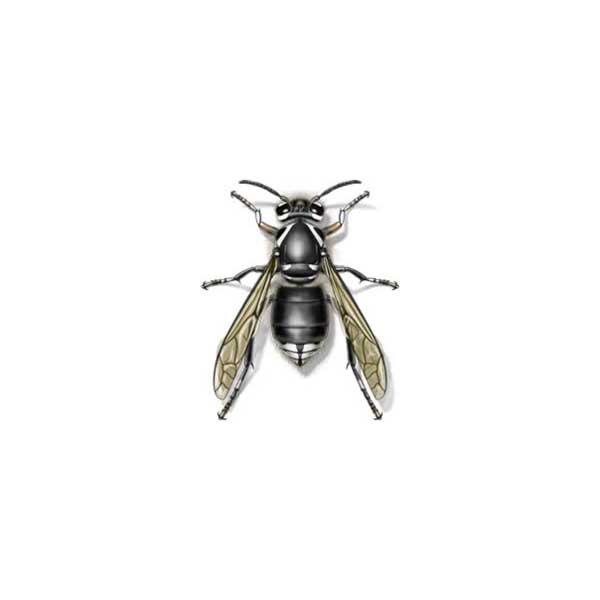
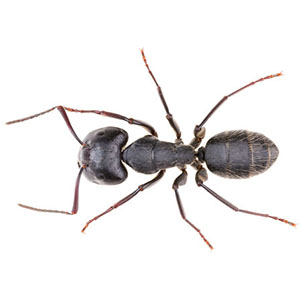
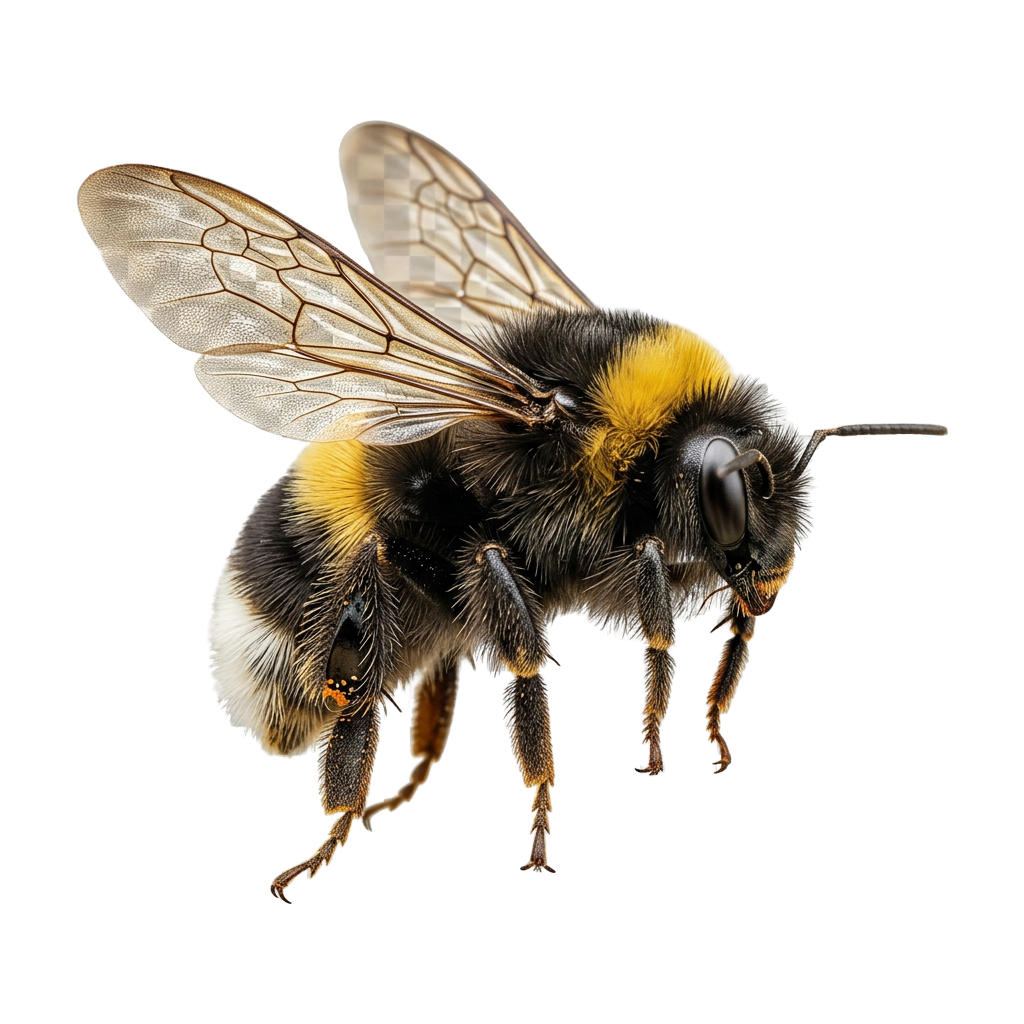
What Unites Them
If wasps, ants, and bees seem like different animals, look closer. They share four telltale signatures.
1. The wasp waist (petiole)
Almost every Hymenoptera has a sharply narrowed waist between the thorax and abdomen. In ants it is so pronounced it forms a separate “knot” segment, sometimes two. This is the easiest field marker for the whole order.
2. Two pairs of membranous wings (when winged)
Hymenoptera literally means “membrane winged.” Both pairs of wings are clear and joined by tiny hooks (hamuli) into a coordinated flight system. Worker ants are wingless, but the reproductive ants you see swarming in summer have these wings, betraying the family connection.
3. Haplodiploid sex determination
This is the weird one. In Hymenoptera, fertilized eggs become female and unfertilized eggs become male. The queen controls the colony’s sex ratio by deciding which eggs to fertilize. The math of this system produces an unusual genetic result: female workers share 75% of their genes with their sisters but only 50% with their own daughters. Helping mom raise sisters spreads a worker’s genes more efficiently than having her own offspring would, which lines up neatly with the colony-with-queen structure you see across so many Hymenoptera species.
4. A stinger that is anatomically a modified egg laying organ
The stinger of a worker wasp, bee, or ant is structurally an egg laying tube (an ovipositor). Parasitoid wasps still use theirs for laying eggs into host insects (and they do not sting humans). That is why only females have stingers. Males do not have an ovipositor. The next time a yellowjacket hits you, you are being attacked by an egg laying tube doing double duty as a venom delivery system.
What Sets Them Apart
Quick visual and behavioral cheat sheet for telling a wasp, ant, or bee apart at a glance.
| Trait | Wasps | Ants | Bees |
|---|---|---|---|
| Body texture | Smooth, shiny | Smooth, often shiny | Fuzzy |
| Waist shape | Pinched, single segment | Pinched plus 1 or 2 visible “knots” | Less obviously pinched, fluffy |
| Wings | 4, clear, present in adults | Workers wingless. Reproductives winged. | 4, clear, present in adults |
| Antennae | Straight, thread like | Sharply elbowed | Straight, thread like |
| Diet | Predatory. Adults sip nectar. | Omnivorous | Pollen and nectar |
| Pollen carrying | No specialized structures | No | Yes (leg “baskets” or belly hair) |
| Behavior on you | May land on food, drinks, sweat | Forage on the ground in trails | Ignore you unless threatened |
| Default policy | Treat aggressive social species | Treat the colony, not the trail | Relocate when possible |
A note from TJ Jackson, Pest Nerd and DOO
“The reason a yellowjacket can sting you repeatedly but a honeybee dies after one sting is not bee fragility. Honeybee stingers are barbed, which works well against thicker skinned insect rivals defending a hive. Against your skin, those barbs catch and the bee disembowels itself. Yellowjacket stingers are smooth, which is why they can sting again and again without coming apart. Same body part, two very different designs.”
TJ Jackson, Certified ACE · Interstate Pest Management
Hymenoptera FAQ
The order level questions we get most often.
Frequently Asked Questions About Hymenoptera
What is Hymenoptera?
Hymenoptera is the insect order that includes wasps, ants, bees, and sawflies. About 150,000 species have been named worldwide, and biologists estimate the true total may exceed 1 million. Most have a distinctive narrow waist between the thorax and abdomen, two pairs of membranous wings (when winged), and a chewing and licking mouthpart structure. Many species are social, living in colonies with a queen. The order is famous for the variety of social species it contains and for being the major pollinator group on Earth.
How are wasps, ants, and bees related?
Wasps, ants, and bees all share the order Hymenoptera. They have the same general body plan (narrowed waist, four membranous wings when winged, chewing and licking mouthparts) and the same unusual haplodiploid genetics. The biggest differences are diet and lifestyle. Wasps are predators or parasitoids. Ants are wingless and live in colonies on the ground. Bees specialize on pollen and nectar with fuzzy bodies designed to carry pollen.
Why does the order even matter for pest control?
Three reasons. First, identification. People misidentify carpenter bees as bumble bees, mud daubers as yellowjackets, and queen yellowjackets as Asian giant hornets, and the right treatment depends on which it is. Second, ecology. Bees and many wasps are protected pollinators or natural predators of other pests, so we relocate or leave them alone whenever possible. Third, behavior. Solitary species like mud daubers almost never sting, while social species (yellowjackets, paper wasps, honeybees) can mobilize a colony to defend a nest. Understanding the order helps you make the right call before you swat.
Are all Hymenoptera dangerous?
No. The vast majority of Hymenoptera species are solitary, harmless to humans, and ecologically beneficial. Of the roughly 150,000 known species, only a small fraction are aggressive defenders capable of multiple stings. These are primarily the social wasps (yellowjackets, hornets, paper wasps), aggressive ant species like thatching ants, and honeybees when defending a hive. Most parasitoid wasps do not sting humans at all and are critical natural pest control agents in agriculture.
Which Hymenoptera do Pacific Northwest homeowners encounter most?
For wasps, yellowjackets dominate stinging insect calls in OR and WA, especially August and September. Paper wasps, bald faced hornets, and mud daubers follow. For ants, odorous house ants are the #1 indoor ant, followed by carpenter ants (which cause real structural damage) and pavement ants. For bees, honeybees and bumble bees are both common, generally docile, and protected, so we refer beekeepers for relocation when possible. Carpenter bees, which damage wood, are the exception we treat as a pest.
Why are there so many social species in this one insect order?
Hymenoptera is the insect order with the most social species by a wide margin. At least 12 distinct groups of wasps, ants, and bees live in colonies with queens, workers, and a strict division of labor. Scientists associate this pattern with the order’s unusual haplodiploid genetics. Female workers share 75% of their genes with their sisters but only 50% with their own daughters, so a worker who helps her mother raise more sisters spreads her own genes more efficiently than she would by having her own offspring. The math of relatedness lines up well with the colony structures you see across the order.
I am not here for biology. I just want to get rid of one of these. Where do I go?
No problem, this is the educational page. For identification and treatment of stinging insects, head to our Stinging Insects guide. For ants, see the Ants guide. Or call us at 360.382.2451 for same week appointments throughout OR and WA.
PNW Pest Coverage From a Team That Actually Likes Bugs
All Seasons Pest Plan
$39/month
Setup fee around $260 for initial treatment
Year round protection from the pests Pacific Northwest homeowners deal with most. Ants, wasps, hornets, spiders, box elder bugs, and more.
- Recurring exterior treatments
- Honeybee and bumble bee relocation referrals
- Free re service between visits
Pest and Rodent Bundle
$47/month
Setup fee around $280 for initial treatment
The most complete protection for your home. Full pest coverage plus active rodent monitoring. One plan, one team, one less thing to worry about.
- Everything in Pest and Rodent plans
- Best value for whole home protection
- Free re service guarantee