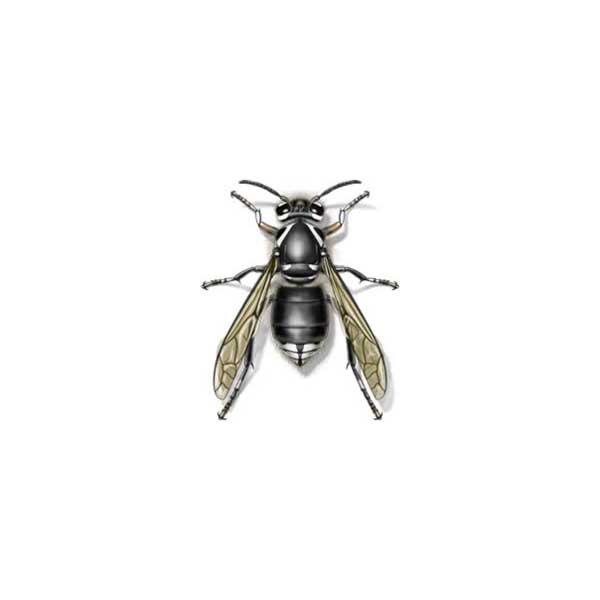
Bald-Faced Hornets
Reviewed by TJ, ACE Certified Technician · Updated 2026-05-19
Dolichovespula maculata | Category: Stinging Insects | ✓ Covered: All Seasons Pest Plan
If you’ve spotted a grey, papery football-shaped nest tucked into a tree, eave, or shrub, you’re looking at a bald-faced hornet nest, and it deserves your respect. These are the largest, most defensive wasps most Pacific Northwest homeowners ever encounter. They’re also one of the few pests we’ll plainly tell you not to handle yourself. Here’s how to identify them accurately, understand the actual sting risk, and figure out the safest next step.
| Size | Workers 12–15 mm (about 1/2″); queens slightly larger |
|---|---|
| Color | Black with ivory-white face, thorax, and last 3 abdominal segments |
| Top ID Marker | Large grey, papery, football-shaped aerial nest |
| Active Season | Spring through fall; peak July–September |
| Nest Sites | Trees, shrubs, eaves, soffits, playground equipment, usually 3+ ft up |
| Colony Size | 100–400 individuals at peak; nests die off each fall |
| Plan Coverage | ✓ Covered under All Seasons Pest Plan |
Need help with this pest?
Get A QuoteQuick Answer: Bald-faced hornets (Dolichovespula maculata) are large (12–15 mm) black-and-white wasps, technically aerial yellowjackets, not true hornets, that build distinctive grey, football-shaped paper nests in Pacific Northwest trees, eaves, and shrubs. They are highly defensive of their nests in late summer (July–September), can sting multiple times, and inject venom that causes intense localized pain. For people with insect-sting allergies, stings can be life-threatening. DIY nest removal is responsible for a substantial share of stinging-insect ER visits each summer and is not recommended.
Key facts at a glance: Size: 12–15 mm · Color: black with white face · Nest: grey paper football, aerial · Multiple stings: yes · Anaphylaxis risk: yes (for allergic individuals) · Colony lifespan: annual · Reuses old nests: no · Plan coverage: Yes, All Seasons Pest Plan.
Safety note: If you or someone in your household has a known insect-sting allergy, treat any bald-faced hornet nest near the home as an urgent issue. Symptoms of anaphylaxis after a sting, difficulty breathing, throat swelling, hives away from the sting site, rapid pulse, or dizziness, are a medical emergency. Call 911. Use a prescribed epinephrine auto-injector if available.
What You Need To Know About Bald-Faced Hornets
Our ACE Certified Technician TJ breaks down bald-faced hornets, what they actually are, why their nests are different, and what to do if you find one.
Frequently Asked Questions
What do bald-faced hornets look like?
Large for a wasp, workers about 1/2″ long, black with bold ivory-white markings on the face, thorax, and last three abdominal segments. The white face is the easiest field tell. Their grey football-shaped nest is the giveaway from a distance.
Are they actually hornets?
No, they’re aerial yellowjackets (Dolichovespula maculata), not true hornets. The name comes from their larger size. Their behavior follows the yellowjacket pattern, not the European hornet pattern.
Are their stings dangerous?
For most people: intense pain and swelling that resolves in 24 hours. For people with insect-sting allergies: stings can trigger anaphylaxis and require emergency care. Unlike honey bees, bald-faced hornets can sting many times in a single defensive episode.
Should I remove the nest myself?
Honestly, no, not even with a can of wasp spray. Over-the-counter sprays often don’t reach hornets inside a mature nest and reliably provoke swarming. DIY removal is responsible for a substantial share of stinging-insect ER visits each summer. This is one of the few pests we tell people to leave alone.
Will they come back next year?
Not the same colony, entire bald-faced hornet colonies die in late fall. Only newly mated queens overwinter, and they always start fresh nests in new locations. But if your property has favorable sites, new queens may build nearby next spring.
Does my All Seasons Plan cover nest removal?
Yes, bald-faced hornets and all other stinging insects (yellowjackets, paper wasps, European hornets) are fully covered. Includes assessment, safe removal, and site treatment to deter rebuilding.
When are they most active?
Late July through September is peak. Colonies are largest, most defensive, and most likely to sting during this stretch. By late October the colony has died and only new queens remain.
How do I tell them apart from yellowjackets?
Color is the easy tell: bald-faced hornets are black and white; yellowjackets are yellow and black. Nest location is the other tell: bald-faced hornet nests hang in the air; yellowjacket nests are usually in the ground or in wall voids.
Signs You Have Bald-Faced Hornets
Most homeowners discover bald-faced hornets the same way: they see the nest. Here’s what to look for and what it tells you about the situation:
1. The grey paper football
The defining sign. Grey, papery, football- or teardrop-shaped, usually 3+ feet off the ground in a tree, shrub, eave, or soffit. Can reach the size of a basketball or larger.
2. Steady traffic at one entrance
A single entrance hole near the bottom of the nest with workers continuously coming and going. This is how you confirm it’s an active colony.
3. Black-and-white wasps near the nest
If the wasps are clearly black and white (not yellow and black) and they’re patrolling the area, it’s bald-faced hornets. The white face is visible at closer range.
4. Defensive responses to ground vibration
If hornets appear suddenly when you mow under a tree or trim a hedge, there’s a nest close by. Vibration is one of their primary threat triggers.
5. Nest size growing rapidly in July–August
If you noticed a small nest in June and it’s the size of a football by August, that’s normal, and it’s also the riskiest stretch. Late summer is peak defensiveness.
6. Wasps hunting other insects nearby
Bald-faced hornets are predators, they hunt flies and other wasps to feed their larvae. Watching one snatch a fly out of the air is a strong species clue.
Behavior, Biology & Lifecycle
Understanding the bald-faced hornet lifecycle is the single biggest help in deciding what to do, and when:
Annual colonies, one season only
A single overwintered queen starts a fresh nest each spring. The colony grows through summer, peaks in late summer, and the entire population dies off by late fall. Only newly mated queens survive winter, hidden in protected sites like leaf litter or wall voids.
The nest is chewed wood, not wax
Workers chew wood fibers and plant material into a paper-like pulp that builds the grey, layered envelope and internal combs. A fully mature nest can be over 14 inches across, well beyond what is in safely reachable range for a homeowner with a step stool.
Aerial yellowjacket, not true hornet
Dolichovespula maculata is in the same family as ground-nesting yellowjackets. They are not closely related to the European hornet. The name is historical, not taxonomic, their behavior follows the yellowjacket pattern, not the hornet pattern.
Predators that help, until they don’t
Bald-faced hornets are beneficial predators in the broader ecosystem, they hunt flies, other wasps, and pest insects to feed their larvae. The problem is location. A colony in a remote tree is doing useful work; a colony in your eave is a household risk.
Defensive range and triggers
They will defend the nest aggressively against anything they perceive as a threat within roughly 8–10 feet. Common triggers: ground vibration, rapid movement, dark colors, CO2 (breathing), and perfumes or scented products. Workers can sting multiple times.
Sting venom and allergy risk
For most people, a sting causes intense localized pain, redness, and swelling for 24 hours. For people with insect-sting allergies, a small but significant share of the population, stings can trigger systemic reactions including anaphylaxis. Carry an auto-injector if you’ve been prescribed one.
Homeowner Safety Steps
These steps are about safety until removal happens, not DIY nest removal.
Keep 15–20 ft of distance
Stay well outside their defensive range until removal. Slow movement is safer than fast movement if you do need to walk near the area.
Brief everyone in the household
Tell kids exactly where the nest is and to stay away. Move outdoor furniture out of the flight path. Keep pets indoors when near the area.
Don’t spray, hose, or strike the nest
Store-bought sprays usually fail and reliably provoke swarming. Hosing or hitting the nest with a stick has caused serious injuries. If you’ve already tried, retreat and call us.
If anyone has a sting allergy, prioritize
A documented insect-sting allergy in the household makes this an urgent issue. Confirm any auto-injectors are current. Request same-day or next-day service.
Save old nests for after they die off
If you find a nest in late fall or winter, the colony has died. Empty nests are safe to remove and won’t be reused. Live nests in spring through fall need professional removal.
Bald-Faced Hornets vs. Other Stinging Insects
Misidentification is common with stinging insects, and it matters, because different species need different approaches. Here’s how to tell them apart:
| Feature | Bald-Faced Hornet | Yellowjacket | Paper Wasp | European Hornet |
|---|---|---|---|---|
| Size | 12–15 mm | 10–15 mm | 15–20 mm | 25–35 mm (largest) |
| Color | Black with ivory-white face | Yellow & black banded | Brown with yellow markings | Reddish-brown with yellow |
| Nest type | Grey paper football, aerial | Underground or in wall voids | Small open umbrella under eaves | In tree hollows or attics |
| Aggression at nest | Very high | Very high | Moderate | Moderate |
| Multiple stings? | Yes | Yes | Yes | Yes |
| Colony lifespan | Annual | Annual | Annual | Annual |
| DIY removal advisable? | No | No | Sometimes (small nests) | No |
| Plan coverage | ✓ All Seasons | ✓ All Seasons | ✓ All Seasons | ✓ All Seasons |
Plans That Cover Bald-Faced Hornets
All Seasons Pest Plan
$39/month
Setup fee $260 for initial treatment
Year-round protection from the pests Pacific Northwest homeowners deal with most, including stinging insect nest removal for hornets, yellowjackets, and wasps.
- Recurring exterior treatments
- Stinging insect nest removal
- Re-services included as needed between visits
Pest & Rodent Bundle
$47/month
Setup fee $280 for initial treatment
The most complete protection for your home. Full pest coverage plus active rodent monitoring, one plan, one team, one less thing to worry about.
- Everything in Pest & Rodent plans
- Best value for whole-home protection
- Re-service guarantee
What Our Customers Are Saying
Real Results From Real Customers
Get help with bald-faced hornets in your area
Interstate Pest Management helps with bald-faced hornets across Oregon and Washington. Choose your area to see local plans, pricing and the number for your nearest team.