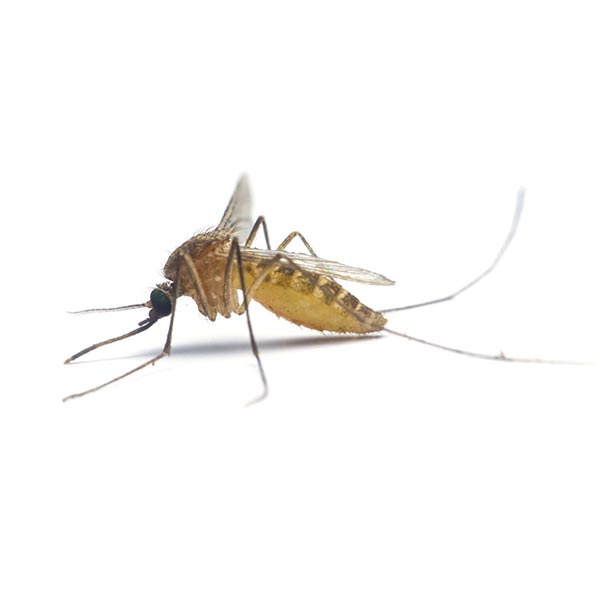
Mosquitoes
Reviewed by TJ Jackson, Associate Certified Entomologist · Updated 2026-10-09
Family Culicidae | Category: Biting pests | A standing-water problem that starts in the yard
Mosquitoes are heavily searched every Northwest summer, and they are rarely a problem inside the house. They breed in standing water that lasts more than a few days, and a bucket, clogged gutter or birdbath can produce hundreds. For most homes, dumping standing water every week does more than a spray, and county programs handle wetlands and neighborhood-wide sources.
Dumped the standing water and still getting bitten?
4.96 stars from 8,394 Google reviews · Family-owned since 1963
| Size | Small, delicate fly with long, thin legs |
|---|---|
| Color | Gray to brown, scales on the wings |
| Top ID Marker | Long, slender beak (proboscis) on biting females |
| Habitat | Standing water: buckets, gutters, birdbaths, tires, ponds, wetlands |
| Activity | Most active dusk to dawn; season runs spring to fall, peaking June and July |
| Bite Risk | Females bite; West Nile virus is monitored in both states |
| Plan Coverage | Not part of the All Seasons Plan; yard treatment quoted separately |
Quick Answer: Mosquitoes are small, long-legged flies with scaled wings; only the females bite, using a long, slender beak. Washington has more than 40 species, including Culex mosquitoes that can carry West Nile virus and floodwater Aedes mosquitoes. They develop in any standing water that lasts more than four days, and in summer can go from egg to adult in about a week. In Oregon and Washington they peak in June and July and are most active from dusk to dawn. The most effective control is removing standing water around the home every week, using Bti mosquito dunks in water you cannot drain, keeping screens in good repair and using an EPA-registered repellent. Clark County and Multnomah County run public mosquito control programs.
Key facts at a glance: Long legs and beak · Only females bite · Breed in standing water · Egg to adult in about a week in summer · Peak June and July · Most active dusk to dawn · Plan coverage: quoted separately.
In Clark County or the Portland area? The Clark County Mosquito Control District takes resident service requests from April through October, and Multnomah County Vector Control monitors and treats breeding sites. They are the first call for wetlands, ditches and neighborhood-wide problems.
Frequently Asked Questions
Where do mosquitoes in my yard come from?
Standing water. Mosquitoes can develop in any water that sits for more than four days, and Multnomah County notes a single small bucket can produce up to 1,000 mosquitoes. Check buckets, plant saucers, clogged gutters, birdbaths, tires, kids’ toys, tarps and rain barrels.
When is mosquito season in Oregon and Washington?
Roughly April through October, peaking in June and July. In Clark County, Aedes mosquitoes are most active June to August and Culex from June to mid-September. In our two states, 56% of mosquito sightings logged on iNaturalist fall in May, June and July.
Do all mosquitoes bite?
No. Only females bite; they need blood to produce eggs. Males feed on plant sugars. Most biting happens from dusk to dawn, though some species bite during the day.
Is West Nile virus a concern in the Pacific Northwest?
It is monitored closely and human cases are uncommon. Washington first detected the virus in 2002, and about 8 in 10 infected people never get sick. Oregon detects the virus every year, mostly in mosquito samples. People over 60 face higher risk of severe illness. If you have symptoms after mosquito bites, contact your healthcare provider.
Are crane flies giant mosquitoes?
No. Crane flies, sometimes called mosquito hawks, have bodies about an inch long and do not bite or sting. Despite the nickname, they do not eat mosquitoes. Mosquitoes are much smaller and have a long beak and scales on their wings.
What are Bti mosquito dunks and are they safe?
Bti is a naturally occurring bacteria that kills mosquito larvae. Dunks float in water you cannot drain, such as a pond or rain barrel. OSU Extension describes them as inexpensive and safe around mammals, birds, fish and amphibians.
Which mosquito repellent works best?
Use an EPA-registered repellent with DEET, picaridin, IR3535, oil of lemon eucalyptus, PMD or 2-undecanone, and follow the label. The CDC notes oil of lemon eucalyptus and PMD should not be used on children under 3. The EPA has a search tool to find the right product.
Does Interstate Pest treat for mosquitoes?
We can, but we rarely need to. Mosquitoes are not part of the All Seasons Plan, and for most Northwest homes the standing water fixes on this page do more than a spray. Call us if you have done those and still cannot use your yard, and we will look at the breeding sites and quote a treatment if it makes sense.
Signs You Have a Mosquito Problem at Home
1. Bites at dusk in the yard
Getting bitten every evening on the patio, especially in June and July, points to breeding water nearby.
2. Wigglers in standing water
Look into buckets, saucers and birdbaths. Mosquito larvae, called wigglers, hang at the surface and dart down when disturbed.
3. Water that sits more than four days
Clogged gutters, tarps, tires, toys, plant saucers and uncovered rain barrels all hold water long enough to raise a generation.
4. Mosquitoes resting in shade
Adults rest in shady, sheltered spots during the day: under decks, in dense shrubs and along north sides of the house.
5. Indoors at night
Mosquitoes inside usually came through a torn screen or open door. They do not live or breed indoors.
6. A neighborhood-wide problem
If the whole block is bitten, the source may be a wetland, ditch or flooded field. That is a job for the county mosquito control program.
Behavior, Biology & Lifecycle
Dozens of local species
Washington has more than 40 mosquito species, and Clark County alone has 19 established species across five groups: Aedes, Anopheles, Coquillettidia, Culex and Culiseta.
Four stages in water and air
Eggs, larvae (wigglers) and pupae (tumblers) all live in water. In summer the trip from egg to biting adult can take a week or less, depending on water temperature.
Floodwater and container breeders
Floodwater mosquitoes such as Aedes vexans lay eggs on ground that floods later, and those eggs can wait for years. Culex mosquitoes lay floating rafts of up to 300 eggs in still water, including backyard containers.
Only females bite
Females need a blood meal to produce eggs. Males feed on plant sugars. Most biting happens from dusk to dawn.
Weak fliers
Screens in good repair keep them out of the house, and a fan on the patio can help keep them off you.
West Nile is watched
Health departments in both states trap and test mosquitoes each season for West Nile virus. Culex pipiens and Culex tarsalis are the local species that can carry it.
Local Context: Oregon and Washington
Mosquitoes are one of the most searched pests of a Northwest summer. They almost never show up on our service calls.
Of the 1,343 verifiable mosquito sightings logged on iNaturalist in Oregon and Washington over the last five years, 56% fall in May, June and July. Google searches for mosquito in the two states peak in the same weeks, with 39% of the year’s searches in June and July alone.
Our service records barely register them. Across five years of service records in Portland, Vancouver, Salem, Olympia and Kelso, mosquitoes were recorded on fewer than 1 in 5,000 visits, and not one new customer in that period called us first about mosquitoes. The summer calls we do get are ants, rodents, spiders and wasps.
Mosquitoes are an outdoor, standing-water problem, and the fix is usually in the yard. Multnomah County notes mosquitoes can develop in any water that sits more than four days, and public programs such as the Clark County Mosquito Control District handle wetlands and neighborhood-scale sources.
Sightings and searches rise and fall together, peaking in June and July.
Each series is its share of the annual total, so the two are directly comparable. Both lines are public data; mosquitoes are too rare in our records to chart.
Dashed line: verifiable iNaturalist observations of mosquitoes (Culicidae) in Oregon and Washington, grouped by the month observed. See the records on iNaturalist. Solid line: Google Trends.
A short, sharp season
From May through August, the two lines carry about two thirds of the year. That window is when dumping standing water every week pays off most. Recorded sightings grew from 133 in 2021 to 430 in 2025, though some of that is more people using the app.
Worth knowing before you book
If you are reading this in July with a yard full of mosquitoes, start with water. Walk the property and dump anything holding it, put Bti dunks in ponds and rain barrels, and clean the gutters. In a week or two the next generation should be noticeably smaller.
If the whole neighborhood is being bitten, the source is likely a wetland, ditch or flooded field, and that is what county programs are for. In Clark County, residents can request service from April through October. If the source is on your property and the basics have not worked, call us and we will give you a straight answer on whether a treatment will help.
What Northwest homeowners call us about in summer
Share of new customers whose first visit fell in June, July or August, over the last five years, by pest recorded. A first visit can record more than one pest.
Portland, Vancouver, Salem, Olympia and Kelso/Longview. Shares add to more than 100% because many first visits record several pests.

“Mosquitoes can wreck a summer evening, and I understand wanting someone to spray. Before you pay anyone, walk the yard. Mosquitoes breed in standing water that sits more than a few days: a clogged gutter, a tarp, a bucket, a birdbath. Dump it every week for a month and most people see a big difference. If the source is a wetland or the whole neighborhood, the county mosquito programs are set up for that. If you have done the basics and it is still bad, call us and we will take a look.”TJ Jackson · ACE, Director of Operations, Interstate Pest Management
Mosquito work is quoted separately. Ants, spiders, wasps and other summer pests are covered on the All Seasons Pest Plan, with re-services included as needed between visits. QualityPro certified.
Call your local office
- Portland503-782-1899
- Vancouver360-996-1442
- Salem503-461-0259
- Olympia360-526-8004
- Kelso / Longview360-515-3882
Sources: Interstate Pest Management service records, over the last five years, all completed visits and new customers’ first visits in June to August. Sightings: public iNaturalist records of mosquitoes (Culicidae) for Oregon and Washington, over the last five years. Search interest: Google Trends for mosquito, Oregon and Washington, over the last five years, combined in proportion to population. Biology and health: UC Statewide IPM Program, Clark County Mosquito Control District, Multnomah County, Washington State Department of Health, Oregon Health Authority, CDC, U.S. EPA. Updated October 2026.
DIY Homeowner Steps
Dump standing water weekly
Once a week, empty, scrub, turn over or cover anything that holds water: buckets, saucers, toys, tarps, tires and pet dishes left outside.
Clear gutters and change birdbath water
Clean gutters in spring and fall, change birdbath water at least twice a week, and fix leaky faucets and sprinkler heads that pool water.
Use Bti in water you cannot drain
Put Bti mosquito dunks in ponds, water features and rain barrels, and use rain barrels with screens that keep mosquitoes out.
Screens, fans and yellow lights
Repair window and door screens, run a fan on the patio, and use yellow outdoor bulbs, which draw fewer insects.
Wear an EPA-registered repellent
Use DEET, picaridin, IR3535, oil of lemon eucalyptus, PMD or 2-undecanone at dusk and dawn, following the label. Do not use oil of lemon eucalyptus or PMD on children under 3.
Mosquitoes vs. Common Look-Alikes
| Feature | Mosquito | Crane Fly | Midge | Fungus Gnat |
|---|---|---|---|---|
| Size | Small and slender | Body about 1 in, very long legs | Small and slender | 1/16 to 1/8 in, dark |
| Beak | Long, slender proboscis | No biting beak | No beak | No beak |
| Wings | Scales on the wing veins | Long, clear | No scales | Clear, small |
| Bites? | Yes, females | No | No | No |
| Where you see it | Yard at dusk, near standing water | Lawns and walls, late summer and fall | Near ponds and lights, in swarms | Houseplants and windows |
| What it means | Remove standing water, use repellent | Harmless, leave it | Harmless, leave it | Let houseplant soil dry |
How We Can Help
Mosquitoes
Yard check and quote
If standing water fixes have not worked, we will look for the breeding sites on your property and tell you whether a treatment is worth it. Mosquito work is quoted separately.
Call 360.382.2451Everything else that bugs you in summer
All Seasons Pest Plan
Ants, spiders, wasps and the other pests that fill our summer schedule are covered on the All Seasons Pest Plan, $39 a month after setup, with re-services included as needed between visits.
See the All Seasons PlanWhat Our Customers Are Saying
Real Results From Real Customers
Get help with mosquitoes in your area
Interstate Pest Management helps with mosquitoes across Oregon and Washington. Choose your area to see local plans, pricing and the number for your nearest team.