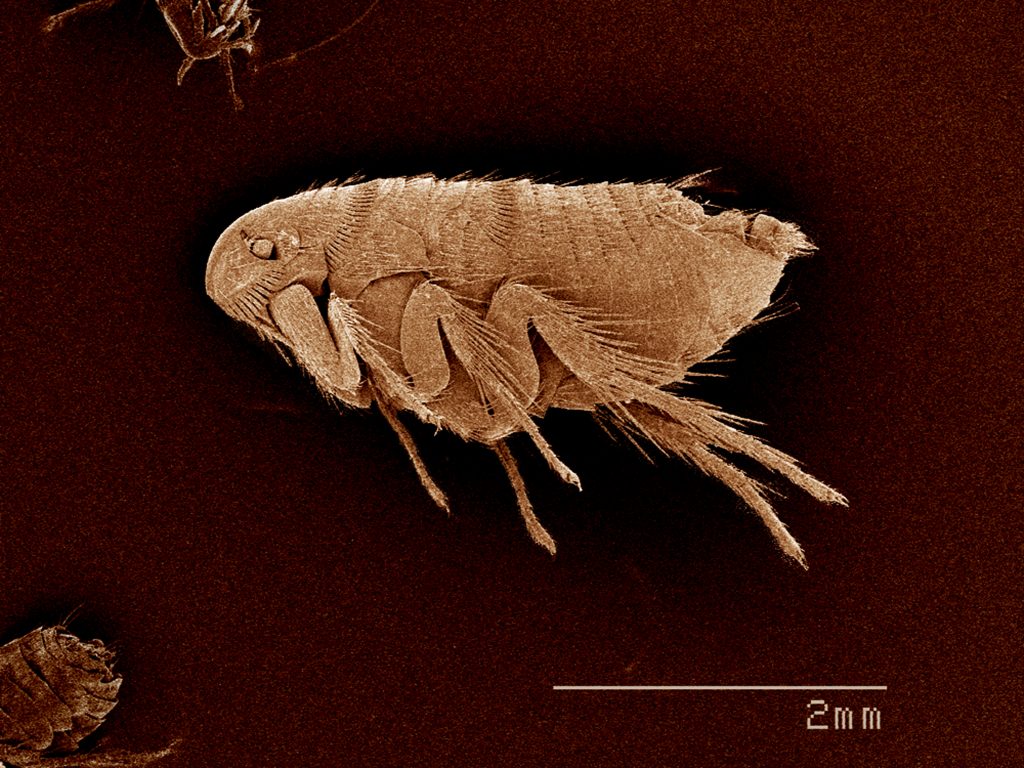
Fleas
Reviewed by TJ Jackson, Associate Certified Entomologist · Updated 2026-10-09
Ctenocephalides felis | Category: Biting pests | Most of the problem lives in the carpet
The fleas biting ankles in Northwest homes are almost always cat fleas, the usual flea on dogs as well as cats. The adults you see are only about 5% of the problem. The rest are eggs, larvae and pupae in carpet, bedding and furniture, which is why one round of spray rarely finishes the job. A full treatment covers the pets and the home in the same week, with a follow-up if fleas keep hatching.
Bites around your ankles? Pets scratching?
4.96 stars from 8,394 Google reviews · Family-owned since 1963
| Size | Up to 1/8 in |
|---|---|
| Color | Reddish brown, no wings |
| Top ID Marker | Body flattened side to side; jumps 8 to 10 inches |
| Habitat | On pets; eggs, larvae and pupae in carpet, pet bedding, furniture and shaded yard spots |
| Activity | Year-round indoors; peaks in late summer and early fall |
| Bite Risk | Bites itch, usually on ankles and lower legs |
| Plan Coverage | Covered by the All Seasons Pest Plan; one-time flea service also available |
Quick Answer: Fleas in Oregon and Washington homes are almost always cat fleas (Ctenocephalides felis), reddish-brown, wingless insects up to 1/8 inch long that jump and bite, usually around the ankles. Only about 5% of a home’s flea population is adults; the other 95% is eggs, larvae and pupae in carpet, pet bedding and furniture. Pupae can wait in their cocoons for months and hatch when they sense footsteps, which is why an empty house or a return from vacation can bring sudden bites. Control takes three things at once: a veterinarian-recommended product on every pet, daily vacuuming, and a treatment with an insect growth regulator, with follow-up because new adults keep emerging for about two weeks.
Key facts at a glance: Up to 1/8 inch · Reddish brown, no wings · Jumps 8 to 10 inches · 95% of the population is off the pet · Peaks in late summer · Needs pet treatment plus home treatment · Plan coverage: All Seasons Pest Plan.
Treat the pet the same week. A home treatment without a vet-recommended product on every dog and cat in the house will not hold. The pet keeps bringing new adults back, and the eggs they lay fall right back into the carpet.
Frequently Asked Questions
How do I know if I have fleas?
Look for small itchy bites on the ankles and lower legs, pets scratching or chewing, and flea dirt: dark specks like fine pepper in your pet’s fur that turn reddish-brown on a wet paper towel. For a quick check, walk slowly through the rooms where pets rest wearing white socks pulled up high. Any fleas will jump on and show up against the white.
Can I have fleas without a pet?
Yes. Flea pupae can survive for months in an empty home and hatch when new occupants move in, and fleas left by a previous tenant’s pets are a common cause. Wildlife and rodents nesting in or under the house, such as raccoons, opossums, squirrels and rats, can also bring them in.
Why did fleas show up after we got back from vacation?
Flea pupae wait in their cocoons until they sense warmth, footsteps or vibration. When a house sits quiet for a week or two, a crop of adults finishes developing and waits. The first people through the door get bitten.
Why do I still see fleas after treatment?
That is expected for about two weeks. Treatments do not kill pupae inside their cocoons, so new adults keep hatching and then die after contacting the treated surfaces. Keep vacuuming every day or two, since the vibration brings pupae out sooner. In our records, about 1 in 4 new flea customers needed a follow-up flea visit within five weeks.
Do I need to treat my pets and my house?
Yes, both, in the same week. Ask your veterinarian for a spot-on or oral flea product for every dog and cat, wash pet bedding in hot water, and treat the home. Skipping either side lets the cycle restart.
Are fleas dangerous?
Most bites are itchy but minor. Some pets develop flea allergy dermatitis, with intense itching and hair loss, and pets and occasionally young children can get tapeworm by swallowing an infected flea. The CDC notes flea-borne (murine) typhus is rare in the U.S. and occurs mainly in southern California, Texas and Hawaii. UC IPM notes cat fleas can carry a similar illness, cat flea rickettsiosis.
When is flea season in the Pacific Northwest?
Fleas can survive year-round indoors on pets, but our calls build through the summer and peak in August and September. Across five years, 44% of our new flea customers called in those two months.
Does the All Seasons Pest Plan cover fleas?
Yes. Fleas are covered under the All Seasons Pest Plan, and we also offer one-time flea service for a single problem. About a third of our new flea customers started with a one-time flea service.
Signs You Have Fleas
1. Itchy bites on ankles and lower legs
Small red spots with a red halo, often in clusters, mostly below the knee. Fleas jump onto whatever passes closest to the floor.
2. Pets scratching, chewing or losing hair
Constant scratching, biting at the base of the tail and thinning fur, especially on cats and dogs with flea allergies.
3. Flea dirt in the fur
Dark specks like ground pepper near the base of the tail. Put them on a damp white paper towel; if they smear reddish-brown, it is digested blood.
4. Fleas on white socks
Walk slowly through pet resting areas wearing white socks pulled up high. Fleas jump on and are easy to see.
5. Bites after the house sat empty
Moving into a home or coming back from a trip and getting bitten within a day or two is a classic sign of pupae waking up.
6. Activity near pet beds and favorite spots
Fleas concentrate where pets sleep and rest: pet beds, couches, under furniture and shaded spots outside along the foundation or under the deck.
Behavior, Biology & Lifecycle
Mostly cat fleas
The cat flea is the flea found on most cats and dogs. The dog flea looks and acts much the same but is less common. Adults are up to 1/8 inch, reddish brown and wingless, flattened side to side so they slip through fur.
Built to jump
The back pair of legs is made for jumping, and an adult flea can clear 8 to 10 inches. That is how they reach ankles and move between pets and furniture.
The 95% you do not see
In a typical home, about 50% of the flea population is eggs, 35% larvae, 10% pupae and only 5% adults. The adults ride on the pet; everything else is in carpet, bedding and furniture.
Eggs fall off the pet
A female can lay 20 to 50 eggs a day. The eggs fall off the pet into bedding and carpet and hatch in two to five days. Larvae feed on adult flea droppings and dried blood for one to two weeks, then spin cocoons.
Pupae that wait
In warm conditions the whole cycle takes about 18 days. In cool conditions, adults can stay in their cocoons for months, waiting for warmth, pressure or vibration to tell them a host is near.
Year-round indoors
Fleas prefer warm, humid months but survive all year on indoor pets. Outdoors they live in shaded, sheltered spots where pets rest, not out in the open lawn.
Local Context: Oregon and Washington
Flea searches climb all summer. Our flea calls arrive at the end of it, in August and September.
Google searches for fleas in Oregon and Washington follow the weather. They start rising in June and hold near their peak from July through October, with 48% of the year’s searches in those four months. Fleas are hard to photograph, so sighting records are too thin to chart, and search interest is the best public signal.
Our calls come later and sharper. Across five years of new flea customers in Portland, Vancouver, Salem, Olympia and Kelso, 44% called in August and September, and September alone carried 23%. Winter and early spring are quiet: January through April together brought in 11%.
The lag is the flea life cycle. Only about 5% of a home’s fleas are biting adults, according to WSU. The rest are eggs, larvae and pupae in the carpet, building up through the warm months until the bites are hard to ignore. Most of these calls are about fleas alone: 63% of new flea customers had no other pest on the first visit.
Searches build through the summer. Our flea calls peak at the end of it.
Each series is its share of the annual total, so the two are directly comparable. The orange line is new flea customers in our records.
Blue line: Google Trends weekly search interest for fleas, summed by month, Oregon and Washington blended by population. See the trend on Google Trends.
Why the calls come late
Fleas multiply quietly in carpet and bedding through the warm months. By late summer the adults hatching each day outnumber what a pet treatment alone can handle, and the bites start. If you can act in June or July, the problem is smaller.
Worth knowing before you book
Fleas are the rare pest where one visit often is not the end. About 1 in 4 of our new flea customers needed a second flea visit within five weeks, and the typical gap was about 17 days. That matches what UC IPM describes: pupae inside their cocoons survive treatment and keep hatching for about two weeks.
So plan for it. Treat every pet the same week, vacuum every day or two after the treatment, and expect to see a few fleas for a couple of weeks. If they are still biting after that, the follow-up visit is part of the job.
What our new flea customers looked like
Share of new flea customers, 2021 to 2025, Portland, Vancouver, Salem, Olympia and Kelso/Longview.
Follow-up means a second visit for fleas within 35 days of the first. Plan and one-time shares overlap with other first-visit services, so they do not add to 100%.

“Nobody sleeps well with fleas in the house, especially with kids and pets in the mix. Fleas run on a schedule, and late summer is our busiest flea season. A treatment works when everyone does their part the same week: we treat the home, your vet treats the pets, and you vacuum every day. You will still see a few for about two weeks while the last ones hatch. That is the plan working. If they are still biting after that, call us and we come back.”TJ Jackson · ACE, Director of Operations, Interstate Pest Management
Fleas are covered on the All Seasons Pest Plan, with free re-service between visits. One-time flea service is also available. QualityPro certified.
Call your local office
- Portland503-782-1899
- Vancouver360-996-1442
- Salem503-461-0259
- Olympia360-526-8004
- Kelso / Longview360-515-3882
Sources: Interstate Pest Management service records, 2021 to 2025, new flea customers and their follow-up visits. Search interest: Google Trends for fleas, Oregon and Washington, 2021 to 2025, combined in proportion to population. Biology and health: UC Statewide IPM Program, WSU PestSense, CDC, Purdue Extension, Texas A&M AgriLife Extension. Updated October 2026.
DIY Homeowner Steps
Treat every pet
Ask your veterinarian for a spot-on or oral flea product and use it on every dog and cat in the house, all at once. Wash pet bedding in hot water.
Vacuum every day or two
Vacuum carpets, rugs, furniture and cracks along baseboards, especially where pets rest. It removes adults, eggs and larvae, and the vibration brings pupae out of their cocoons. Empty the canister or toss the bag outside.
Keep going for at least two weeks
Expect to see a few fleas for about two weeks after any treatment as pupae hatch. That is normal: the last pupae are finishing the cycle.
Check the shady spots outside
Fleas outdoors live where pets rest: under decks, along foundations and in shaded, sheltered spots. Treating the whole lawn is rarely needed.
Look for a wildlife source
If you have no pets, check for raccoons, opossums, squirrels or rodents under the house, in the crawl space or in the attic. Plan to fix the entry point as well as treat the fleas.
Fleas vs. Common Look-Alikes
| Feature | Flea | Bed Bug | Springtail | Tick (nymph) | Carpet Beetle Larva |
|---|---|---|---|---|---|
| Size and shape | Up to 1/8 in, flattened side to side | About 1/5 in, flat oval, rusty red | About 1/16 in, soft | Tiny, eight legs | About 1/8 in, fuzzy |
| Movement | Jumps 8 to 10 in | Crawls, does not jump | Springs with a tail lever | Crawls slowly | Crawls slowly |
| Where you find it | Pets, pet beds, carpet | Mattress seams, bed frames, couches | Damp spots, houseplants | Skin after time outdoors | Lint, wool, under furniture |
| Bites people? | Yes, ankles and lower legs | Yes, while sleeping | No | Yes, attaches and feeds | No, but hairs can irritate skin |
| What it means | Treat pets and home together | Book an inspection | Find the moisture | Remove promptly, see a doctor if unwell | Find and remove the food source |
Plans That Cover Fleas
All Seasons Pest Plan
$39/month
Setup fee $260 for initial treatment
Year-round coverage for the pests Northwest homes deal with most, including fleas, spiders and ants, with free re-service if fleas come back between visits.
- Recurring treatments
- Fleas, spiders and ants covered
- Free re-service between visits
Pest & Rodent Bundle
$47/month
Setup fee $280 for initial treatment
The same coverage plus rodent protection. Rats and mice nesting in a crawl space or attic can carry fleas into a home that has no pets.
- Everything in the Pest Plan
- Rodent monitoring and control
- Free re-service between visits
What Our Customers Are Saying