Bed Bugs
Reviewed by TJ Jackson, Associate Certified Entomologist · Updated 2026-09-29
Cimex lectularius | Category: Biting pests | The indoor hitchhiker with no off-season
Bed bugs are small, flat, reddish-brown insects that hide in mattress seams, bed frames and couches and feed on people while they sleep. They do not come from dirt or clutter. They ride in on luggage, used furniture, clothing and bags, and a clean house is as easy a target as any other. Because they live indoors, they do not follow the outdoor seasons the way ants or spiders do. The good news is that bed bugs are not known to spread disease, and a lot of suspected bed bugs turn out to be something else. This page will help you tell the difference and decide what to do next.
| Size | 3/16 to 1/4 in, about the size of an apple seed |
|---|---|
| Color | Reddish-brown, lighter and nearly clear when young |
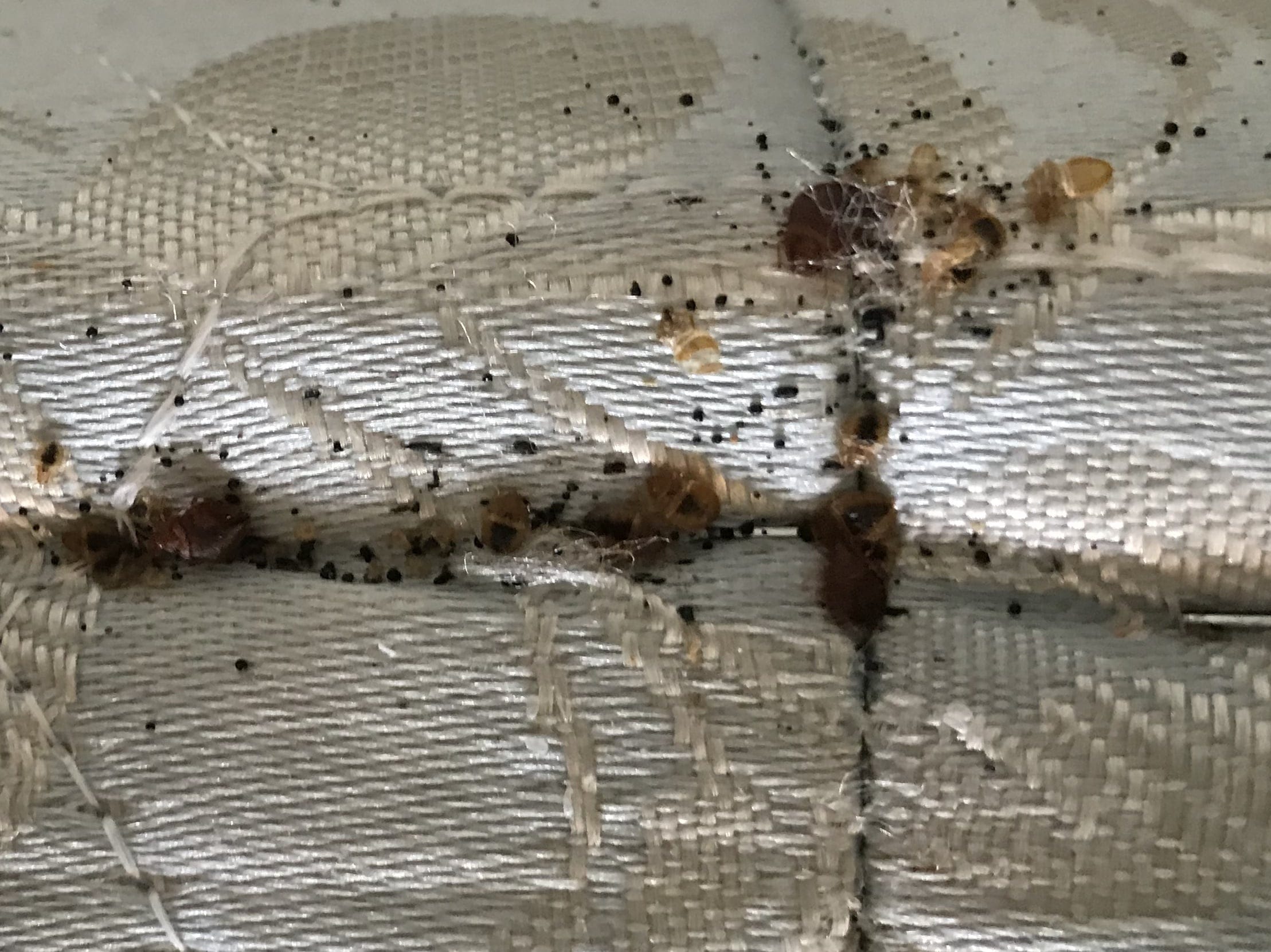
| Top ID Marker | Flat oval body, no wings, dark spotting on mattress seams |
| Habitat | Mattress seams, box springs, headboards, couches, within about 8 ft of where people sleep |
| Activity | Feeds at night, active year-round indoors |
| Bite Risk | Not known to spread disease, itchy reactions vary |
| Plan Coverage | Separate bed bug treatment program, not part of the All Seasons Plan |
Think you have bed bugs?
Book An InspectionQuick Answer: Bed bugs (Cimex lectularius) are wingless, apple-seed-sized insects that live in and around beds and couches and feed on human blood at night. In Oregon and Washington they arrive the same way they do everywhere: carried in on luggage, used furniture, clothing and bags. They are not known to spread disease, but their bites can itch and infestations grow quickly, since a female can lay 200 to 500 eggs in her life. The most reliable signs are live bugs, tiny white eggs, shed skins and dark fecal spots along mattress seams. Bites alone are not proof, because mosquito, flea and other bites look similar. Store-bought foggers do not work on bed bugs.
Key facts at a glance: Apple-seed size · Flat, reddish-brown, wingless · Hides in mattress seams and furniture · Feeds at night · Year-round indoors · Not known to spread disease · Plan coverage: separate treatment program.
Before you throw anything out: most mattresses and couches can be treated and saved. Dragging an infested mattress through the house can spread bugs into other rooms. Get the problem confirmed first. Over the last five years, only about 3 in 10 of the bed bug inspections we ran ended in a treatment.
Frequently Asked Questions
Can bed bugs make you sick?
Bed bugs are not known to spread disease to people. Their bites can cause itchy red welts, and some people react more strongly than others, while some show no reaction at all. Scratching can lead to a skin infection, so keep bites clean and talk to a doctor if a reaction is severe.
How did I get bed bugs?
Almost always by carrying them in. Bed bugs hide in the seams and folds of luggage, overnight bags, clothing, bedding and used furniture. Hotels, dorms, apartments, shelters and public transit are common places to pick them up. Having bed bugs does not mean your home is dirty.
Are these bites from bed bugs?
You cannot tell from the bites alone. Bed bug bites look a lot like mosquito and flea bites, and many people do not notice a bite for one to several days. Look for the bugs themselves, tiny white eggs, shed skins or dark spots on mattress seams. If you find nothing, have it inspected before you treat.
Should I throw out my mattress?
Usually not. A mattress can be treated and then sealed in a bed bug encasement, which traps any survivors inside until they die. Throwing it out rarely solves the problem, because the bugs are also in the bed frame, the headboard and nearby furniture.
Do bug bombs or foggers work on bed bugs?
No. Oregon State University Extension says foggers do not effectively control bed bugs. The spray does not reach the cracks and seams where bed bugs hide.
How long does bed bug treatment take?
Plan on more than one visit. Bed bug eggs hatch in about 6 to 15 days, so a single treatment rarely catches every stage. Our first follow-up usually lands about two to three weeks after the first treatment to catch the newly hatched bugs, and we keep coming back until the activity stops.
How long can bed bugs live without feeding?
Months. Adults and older nymphs can go a long time between meals, and in cool conditions some have survived more than a year in lab studies. That is why leaving a room empty for a few weeks does not get rid of them.
Does the All Seasons Pest Plan cover bed bugs?
No. Bed bugs are handled through a separate treatment program that starts with an inspection. Your technician will walk you through what the treatment involves before any work begins.
Signs You Have Bed Bugs
1. Dark spots on mattress seams
Bed bug droppings are digested blood. They show up as small dark brown to black dots, like a felt-tip marker tapped on fabric, along mattress seams, box spring edges and the corners of the bed frame.
2. Shed skins
Young bed bugs molt five times before adulthood, and each time they leave a pale, empty, bug-shaped skin behind. Clusters of these in seams and crevices mean bugs have been living there for a while.
3. Tiny white eggs
Eggs are about 1/20 inch, roughly the size of a period on this page, and pearly white. They are glued into cracks and seams in groups, often near the head of the bed.
4. Live bugs in seams and joints
Adults are flat, oval and reddish-brown. Check piping on the mattress, the underside of the box spring, screw holes and joints in the bed frame, and the back of the headboard with a flashlight.
5. Rusty smears on sheets
Small reddish stains on sheets and pillowcases can come from a bug crushed after feeding. On their own they do not prove anything, but together with spots or skins they point to bed bugs.
6. Bites that keep showing up after sleep
Bites in a line or a small cluster on skin that was exposed during sleep, arms, shoulders, neck and legs, are typical. Treat bites as a reason to look, not as proof, because many other bites look the same.
Behavior, Biology & Lifecycle
Built to hide
An adult bed bug is about 3/16 to 1/4 inch long and flat as a card before it feeds. That shape lets it tuck into mattress seams, screw holes, picture frames and the gap behind an outlet cover.
Night feeders
Bed bugs come out at night, feed for several minutes and go back into hiding. Most stay within about 8 feet of where people sleep, though the CDC notes they can travel more than 100 feet in a night.
Five stages to adult
A newly hatched bed bug is about 1.5 mm and nearly clear. It needs a blood meal before each of its five molts, which is why infestations grow fastest in rooms that are slept in every night.
Steady egg layers
A female lays roughly two to five eggs a day and 200 to 500 across her life. Eggs hatch in about 6 to 15 days at room temperature, and egg to adult takes five weeks to four months depending on temperature and food.
Long survivors
Bed bugs can go months without feeding, and lab studies have kept adults alive more than 400 days in cool conditions. Moving out of a room for a couple of weeks will not starve them.
Heat is their weak spot
Bed bugs start dying at 113°F, and all stages die at 140°F held for two hours. That is why steam and high-heat dryer cycles work on bedding and soft furniture, while cold snaps and room foggers do not.
Local context: Oregon and Washington
Bed bug bite searches spike every summer. Our bed bug calls barely move.
Across five years of bed bug service records in Portland, Vancouver, Salem, Olympia and Kelso, no month brought in more than 11.9% of our new bed bug customers, and the busiest three months together carried 31%. A perfectly flat year would be 25%. Bed bugs live indoors at room temperature, so they do not have a season the way outdoor pests do.
Search interest tells a different story. Searches for bed bug bites in Oregon and Washington climb every summer, and 41.5% of the year’s searches land in June, July and August. July brings nearly four times the searches February does. Summer is also mosquito, flea and yard work season, and plenty of those itchy red marks are something else.
Our inspection records back that up. Of 276 bed bug inspections we ran from 2021 to 2025, 30% led to a bed bug treatment within 30 days. The records do not say why each of the others stopped there, but a lot of suspected bed bugs turn out to be something else, like the Vancouver customer whose box of bugs turned out to be springtails.
Bite searches peak in summer. Our bed bug calls stay spread across the year.
Each series is its share of the annual total, so the two are directly comparable. The orange line is new bed bug customers in our records.
Blue line: Google Trends search interest for bed bug bites, Oregon and Washington combined in proportion to population. See the term in Google Trends.
Searches vs. confirmed bugs
Public sighting data is no help with bed bugs. iNaturalist holds just 21 verifiable bed bug records for Oregon and Washington in five years, because they live hidden inside homes. That leaves searches, which measure worry, and service records, which measure confirmed problems. Worry follows the summer. The bugs do not.
Worth knowing before you book
Bed bugs are one of the few pests where the do-it-yourself fixes can make things worse. Foggers do not reach them, sleeping on the couch can move them to the couch, and a mattress dragged down the hall can drop bugs along the way. Confirm first. A live bug, an egg cluster or a strip of seam spotting is worth a photo or a sample taped to a card.
The good news is on the chart to the right. Bed bugs behave like our other indoor pests, rodents and cockroaches, with calls spread evenly across the year. That means there is no bad time to deal with them, and no season to wait out. Waiting only gives a female more weeks to lay eggs.
Bed bugs have no off-season in our records
Share of each pest’s new customers that call in its busiest three months, Interstate Pest records 2021 to 2025. The dashed line is what a perfectly flat year would look like.
Outdoor pests crowd into a few months. The three indoor pests at the bottom, bed bugs, rodents and cockroaches, sit close to the 25% line for a flat year.

“Only about three out of every ten bed bug inspections we have done over the last five years turned into a treatment. A lot of the time the bites are from something else, fleas, mosquitoes, even a rash. So before you throw out a mattress or set off a bug bomb, have somebody look. When it is bed bugs, it is not a one-visit job. The eggs hatch after we leave, so we come back about two weeks later to get the ones that hatched, and we keep coming until they are gone.”TJ Jackson · ACE, Director of Operations, Interstate Pest Management
Inspection first, so you only pay to treat what is really there. Bed bug treatment is a separate program from the All Seasons Pest Plan, with follow-up visits built in. QualityPro certified.
Book a bed bug inspection
- Portland503-782-1899
- Vancouver360-996-1442
- Salem503-461-0259
- Olympia360-526-8004
- Kelso / Longview360-515-3882
Sources: Interstate Pest Management service records, 2021 to 2025, new bed bug customers only, and completed bed bug inspection, treatment and follow-up appointments. Search interest: Google Trends for bed bug bites, Oregon and Washington, 2021 to 2025, combined in proportion to population. Sightings: public iNaturalist records for Oregon and Washington, 2021 to 2025. Biology: Oregon State University Extension, UC Statewide IPM Program, CDC. Updated September 2026.
DIY Homeowner Steps
Keep sleeping in your own bed
It sounds backward, but moving to the couch or a guest room tends to give the bugs a second place to live. Stay put, and keep the bed pulled a few inches away from the wall with no bedding touching the floor.
Run bedding and clothes through a hot dryer
Wash what you can, then dry bedding, pillowcases and clothing from the bedroom on high heat for at least 30 minutes. Bag items in the room and carry them to the laundry sealed, so nothing drops on the way.
Vacuum seams, then empty it outside
Vacuum mattress seams, box spring edges, the bed frame and the baseboards around the bed. Seal the vacuum bag or contents in a plastic bag and put it in an outdoor trash can right away.
Encase the mattress and box spring
A zippered bed bug encasement traps anything already inside and gives the bugs one less place to hide. Leave it on for at least a year so trapped bugs die inside.
Check before it comes inside
After a trip, unpack on a hard floor, inspect the luggage seams and put clothes straight into the dryer. Look over used furniture and mattresses before they come through the door.
Bed Bugs vs. Common Look-Alikes
| Feature | Bed Bug | Bat Bug | Flea | Carpet Beetle Larva | Springtail |
|---|---|---|---|---|---|
| Looks like | Flat, oval, reddish-brown | Nearly identical to a bed bug | Tiny, dark, narrow side to side | Fuzzy, striped, carrot-shaped | Tiny, gray to white, soft |
| Size | 3/16 to 1/4 in | About the same | 1/16 to 1/8 in | 1/8 to 1/4 in | Under 1/16 in |
| How it moves | Crawls | Crawls | Jumps | Crawls slowly | Jumps |
| Where you find it | Mattress seams, bed frames, couches | Near bat roosts in attics and walls | Pets, pet bedding, carpet | Closets, baseboards, wool and stored fabric | Damp spots, bathrooms, houseplants |
| Bites people? | Yes, at night | Yes, when bats leave | Yes, usually ankles | No, but the hairs can irritate skin | No |
| What it means | Inspection and treatment | Bat exclusion plus treatment | Treat pets and home together | Clean up the food source | Fix the moisture |
How Bed Bug Treatment Works
Step 1
Inspection
A technician checks the bed, frame, headboard, nearby furniture and the room edges to confirm whether it is bed bugs and how far they have spread. If it is something else, we identify it.
Step 2
Treatment
Steam on mattress seams, furniture and fabric kills bugs and eggs on contact. Targeted products go into the cracks, voids and frame joints where steam cannot reach. We will recommend encasements for the mattress and box spring.
Step 3
Follow-up
Eggs laid before the first visit hatch over the next one to two weeks, so we return about two weeks later, and again as needed, until the activity stops.
What Our Customers Are Saying