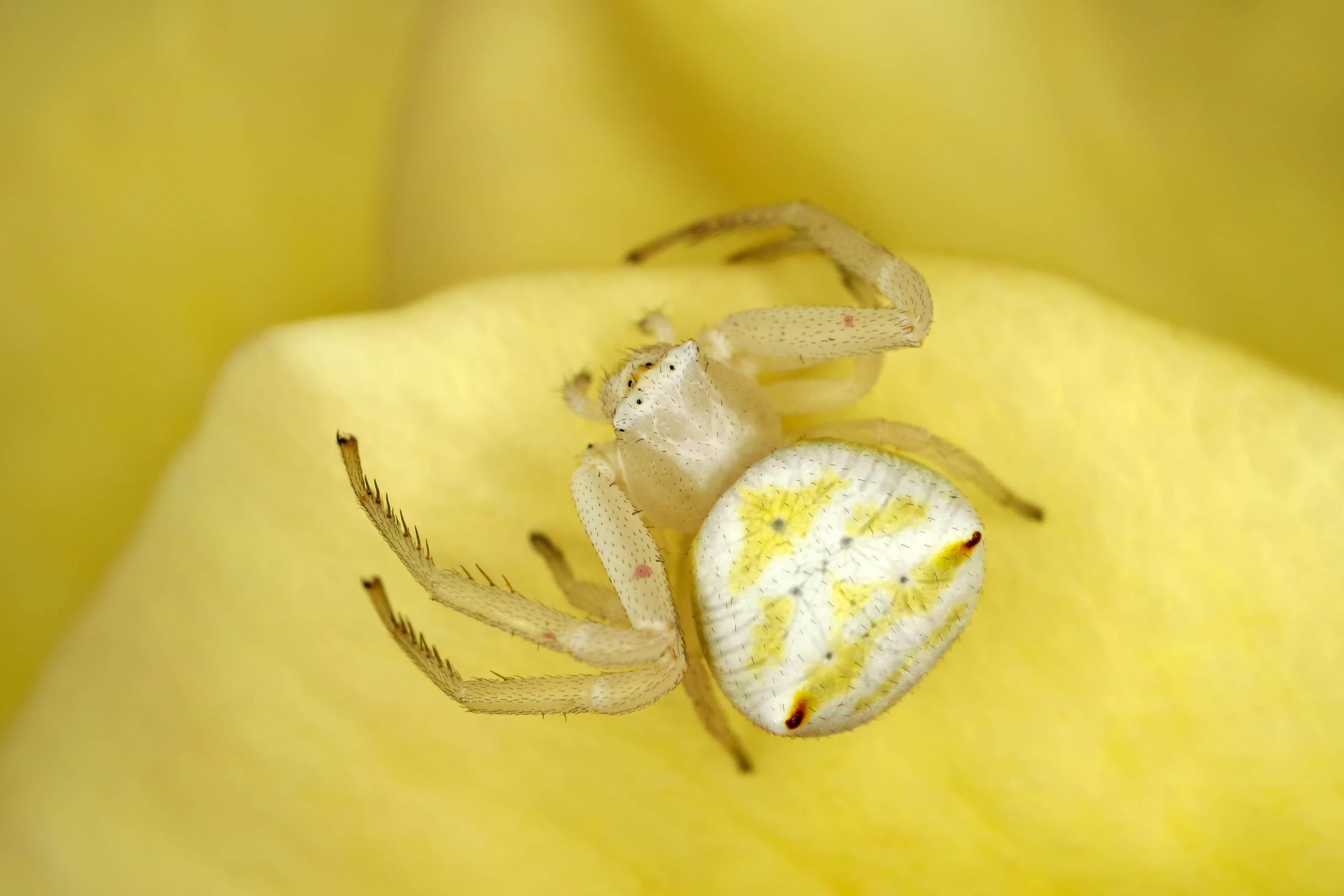
Crab Spider
Reviewed by TJ Jackson, Certified ACE · Updated 2026-07-24
Family Thomisidae | Category: Spiders | ✓ Covered: All Seasons Pest Plan
If you’ve ever spotted a small spider sitting dead still on a flower with its front legs spread wide like a crab, you’ve met a crab spider. They don’t build webs and they don’t chase prey. They wait — sometimes for hours — then ambush the bees and flies that land nearby. They’re harmless to people, common in PNW gardens, and one of the more fascinating spiders you’ll find outdoors.
What You Need To Know About Crab Spiders
Our ACE Certified Technician TJ breaks down crab spiders — how to ID them, why they walk sideways, and why they’re nothing to worry about.
Frequently Asked Questions
Why do crab spiders walk sideways?
Their two front pairs of legs are longer and angled outward, built for grabbing prey rather than running. That leg structure makes sideways and backward movement easier than moving forward — the same reason a crab moves the way it does, which is where the name comes from.
Can crab spiders really change color?
Some species can. The goldenrod crab spider, for example, slowly shifts between white and yellow over a few days to blend into the flower it’s hunting on. It’s a camouflage strategy that helps them ambush pollinators without being seen.
Are crab spiders dangerous?
No. Crab spiders are harmless to people. They can bite if handled, but bites are rare and cause only mild irritation. The only medically significant spider in the PNW is the black widow.
Do crab spiders come inside?
Rarely. They’re outdoor hunters that stay near flowers and vegetation. One might wander in by accident, but they don’t infest homes or build webs indoors. Regular indoor spiders are almost always a different species.
Does the All Seasons Pest Plan cover crab spiders?
Yes — all spider species are covered, with re-service visits as needed if activity returns between appointments.
Quick Answer: Crab spiders (family Thomisidae) are small, wide-bodied spiders that hold their front legs out to the sides and move sideways like a crab. They don’t build webs. Instead they sit motionless on flowers and foliage and ambush insects that land nearby, and some species can even change color to match the flower they’re on. They’re harmless to people, common in PNW gardens, and beneficial as predators of pest insects.
Bottom line: Crab spiders are harmless garden hunters. Treatment is almost never needed — they belong outdoors and rarely come inside.
Behavior & Biology
Crab spiders belong to the family Thomisidae, one of the largest spider families in the world with thousands of species. Several are common throughout the Pacific Northwest, most often noticed by gardeners who spot one perched on a bloom.
Unlike web-building spiders, crab spiders are pure ambush predators. They pick a spot — usually a flower where pollinators are likely to land — and wait, sometimes for hours, holding completely still with their front legs open. When a bee, fly, or butterfly comes within range, they strike with surprising speed and can subdue prey much larger than themselves.
Their most remarkable trait is camouflage. Several species, including the goldenrod crab spider, can slowly change body color between white and yellow over the course of a few days to match the flower they’re hunting on. This makes them nearly invisible to both their prey and to casual observers.
Crab spiders are active from spring through fall, peaking during bloom season when pollinators are most abundant. They’re strictly outdoor spiders and play a useful role in the garden, helping keep populations of nuisance insects in check.
What To Do If You Have Crab Spiders
Crab spiders are beneficial and belong outdoors, so in nearly all cases the answer is to leave them be. If one wanders inside or you’d rather not share the garden bed:
Leave them in the garden
Crab spiders eat pest insects and pose no risk. The simplest and best option is usually to let them do their job among the flowers.
Catch and release
If one comes indoors, a cup and a piece of paper is all you need. They’re slow to bite and easy to move back outside.
Seal entry points
Window screens and door sweeps keep accidental wanderers out, along with every other outdoor spider that might drift indoors.
Recurring exterior treatment
If you want to reduce spiders around the home overall, a recurring exterior plan manages the full spider population without singling out the beneficial ones.
Plans That Cover All PNW Spider Species
All Seasons Pest Plan
$39/month
Setup fee $260 for initial treatment
Year-round protection from the pests Pacific Northwest homeowners deal with most — spiders, ants, wasps, box elder bugs, and more. Includes exterior web removal with every visit.
- Recurring exterior treatments
- Exterior web removal
- Re-services included as needed between visits
Pest & Rodent Bundle
$47/month
Setup fee $280 for initial treatment
The most complete protection for your home. Full pest coverage plus active rodent monitoring — one plan, one team, one less thing to worry about.
- Everything in Pest & Rodent plans
- Best value for whole-home protection
- Re-service guarantee
Get help with crab spiders in your area
Interstate Pest Management helps with crab spiders across Oregon and Washington. Choose your area to see local plans, pricing and the number for your nearest team.