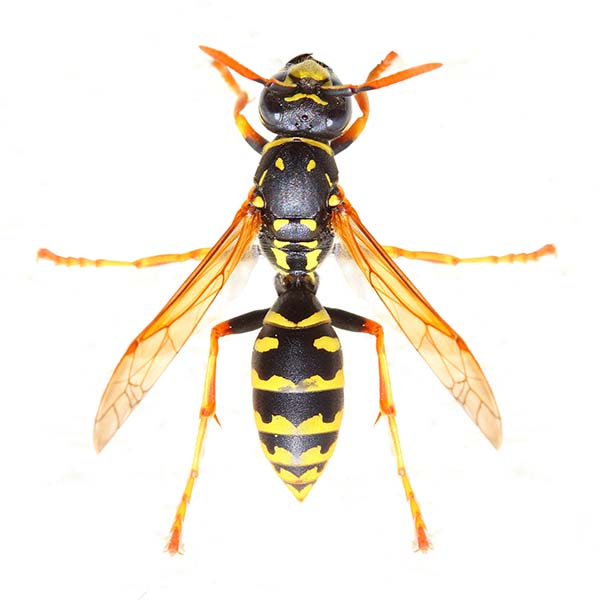
Yellow Jackets
Reviewed by TJ, ACE Certified Technician · Updated 2026-05-21
Vespula & Dolichovespula spp. | Category: Stinging Insects | ✓ Covered: All Seasons Pest Plan
If you’ve been chased away from a picnic, hit a hidden nest with the lawn mower, or watched a yellow-and-black wasp dive into a hole in your yard, you’ve had a yellow jacket encounter. They’re the most aggressive stinging insect most Pacific Northwest homeowners ever meet, and unlike bald-faced hornets, their nests are usually invisible until you’re right on top of them. We’ve been dealing with yellow jacket nests in OR and WA homes for over sixty years. Here’s what you actually need to know.
| Size | About 1/2″ long (workers); queens slightly larger |
|---|---|
| Color | Bright yellow-and-black banded abdomen, smooth (not fuzzy) body |
| Top ID Marker | Most nests are hidden, underground, in walls, or in cavities |
| Active Season | Spring through fall; peak aggression late July–October |
| Nest Sites | Ground (rodent burrows), wall voids, attics, eaves, siding gaps |
| Colony Size | 1,000–5,000 workers at peak; annual colonies die off each fall |
| Plan Coverage | ✓ Covered under All Seasons Pest Plan |
Need help with this pest?
Get A QuoteQuick Answer: Yellow jackets (Vespula and Dolichovespula spp.) are bright yellow-and-black wasps about 1/2 inch long, the most aggressive stinging insect in the Pacific Northwest. Despite the common name, they are not true hornets. Most species nest underground in rodent burrows, soil cavities, or under landscaping; some nest in wall voids and attics. Hidden ground nests are the real concern: hitting one with a lawn mower or string trimmer is one of the leading causes of multi-sting incidents in Oregon and Washington each summer. Colonies peak in late summer with 1,000–5,000 workers, and aggression and food-seeking behavior are both at their highest from late July through October.
Key facts at a glance: Size: 1/2″ · Color: bright yellow & black · True hornet: no · Most common nest: underground · Multiple stings: yes · Anaphylaxis risk: yes (for allergic individuals) · Peak aggression: late July–October · Plan coverage: Yes, All Seasons Pest Plan.
Safety note: Yellow jackets are responsible for most severe stinging-insect incidents in the PNW. If you have an insect-sting allergy, treat any suspected nest near the home as urgent. After a sting event: watch for anaphylaxis symptoms (difficulty breathing, throat swelling, hives away from sting sites, rapid pulse, dizziness) and call 911 immediately if any appear. Use a prescribed epinephrine auto-injector if available. For multiple stings (more than 10–15) even without obvious allergy symptoms, seek medical evaluation, venom dose accumulates and can be medically significant.
What You Need To Know About Yellow Jackets
Our ACE Certified Technician TJ breaks down yellow jackets, why hidden ground nests are the real concern, and what to do (and not do) if you find one.
Frequently Asked Questions
What do yellow jackets look like?
About 1/2″ long, bright yellow-and-black banded abdomen, smooth (not fuzzy) body. Easy to confuse with honey bees at a distance, yellow jackets are sleeker, brighter, and faster. The PNW has several species (Western, German, Common) that all look similar from a homeowner’s perspective.
Are they actually hornets?
No, yellow jackets are wasps, not true hornets. The only true hornet in the US is the European hornet. Bald-faced hornets are technically aerial yellowjackets, which is why they’re actually closely related.
Where do they nest?
Most commonly underground, in old rodent burrows, soil cavities, hollow tree bases, under landscaping. They also nest in wall voids, attics, and gaps in siding. The hidden nest is the dangerous part: you usually don’t see it until you’re right on top of it.
How dangerous are they?
The most aggressive stinging insect in the PNW. They can sting many times, swarm in coordinated defensive responses, and account for most multi-sting incidents we see. For people with sting allergies, that means real anaphylaxis risk. Even for non-allergic people, 10+ stings warrants medical evaluation.
Why are they ruining my picnic?
By late summer, the queen stops laying eggs and there are fewer larvae to feed. Workers shift from collecting protein for the brood to seeking sugar for themselves. That’s why they suddenly show up around your soda, fruit, and ice cream in August. Cover food and drinks, and always check open cans before sipping.
What if I hit a nest with the mower?
Get away fast. Run if needed, into a closed building or vehicle, they may follow for 100+ feet. Don’t jump in water, they’ll wait. After you’re safe: count stings, watch for allergic reaction, seek medical care for >10–15 stings or any anaphylaxis symptoms. Call us before you finish mowing.
Does my All Seasons Plan cover them?
Yes, included. Ground nests, wall void nests, and aerial yellow jacket nests are all covered. We bring proper bee suits, the right products, and the experience to treat at dusk or dawn when the colony is concentrated inside.
When are they most aggressive?
Late July through October is peak. Colonies are largest, food is dwindling outside, and workers are simultaneously defensive of the mature nest and aggressively foraging for sugars near humans. By late November the colony dies off and only new queens overwinter.
Signs You Have Yellow Jackets
Yellow jacket signs often show up before the wasps do, if you know what to look for. Here’s what tips off our technicians:
1. Steady wasp traffic at a hole in the ground
The single most diagnostic sign. A small hole, often the size of a quarter, with a continuous stream of yellow-and-black wasps flying in and out. Common in lawns, rockeries, mulch beds, and bases of shrubs.
2. Wasps entering and exiting a wall gap
German yellowjackets often nest inside wall voids. Look for traffic at gaps in siding, around utility penetrations, and at attic vents. The nest itself stays hidden, but the entrance is obvious if you watch for a minute.
3. Yellow jackets at outdoor food or drinks
If wasps are showing up at picnics, garbage cans, or open soda cans from August onward, a nest is within a few hundred yards. They forage about 1,000 feet from the colony.
4. Buzzing from inside walls
A persistent buzzing sound from inside a wall or ceiling in summer means a colony has taken up residence. Often noticed late at night when the house is quiet.
5. Aggressive responses to ground vibration
Wasps appearing suddenly when you mow or weed-eat in a specific spot indicates a nest entrance nearby. Stop the work immediately and identify the location from a safe distance.
6. Yellow jackets at hummingbird feeders
Hummingbird feeders in late summer routinely attract yellow jackets to the sugar water. If they take over a feeder in your yard, a nest is nearby.
Behavior, Biology & Lifecycle
Yellow jackets are some of the most behaviorally complex wasps in the PNW. Understanding the lifecycle and the late-summer dietary shift explains almost everything you need to know about avoiding stings:
Multiple PNW species, similar behavior
The Pacific Northwest hosts several yellow jacket species: the native Western yellowjacket (Vespula pensylvanica), the introduced German yellowjacket (Vespula germanica), the Common yellowjacket (Vespula alascensis), and the aerial yellowjacket (Dolichovespula arenaria). From a homeowner’s perspective, treatment and avoidance are similar across species.
Annual colonies, started by one queen
Each spring, a single overwintered queen starts a new nest from scratch, usually in an old rodent burrow or other small cavity. She lays the first generation of workers herself. By summer, the colony is fully operational and growing rapidly.
Peak colony size: 1,000–5,000 workers
By late August in the PNW, mature colonies routinely contain several thousand workers, far more than people usually realize. This is why even a single ground nest disturbance can produce dozens of stings in seconds.
The late-summer dietary shift
Through most of the year, workers hunt other insects to feed protein to developing larvae. In late summer, the queen stops laying eggs, the larval brood shrinks, and the colony’s collective need shifts from protein to carbohydrates. Workers switch hard to seeking sugars, ripe fruit, soda, picnic food. This is why yellow jackets seem to suddenly “appear” in August.
Defensive triggers and coordinated attack
Yellow jackets release alarm pheromones when the nest is threatened, recruiting nearby workers into a coordinated defensive swarm. Triggers include ground vibration, dark colors, rapid movement, CO2 (breathing), and direct disturbance. A single stinger releases pheromone that marks you as a target for additional stings.
No reuse of old nests
Like bald-faced hornets, yellow jacket colonies are annual, the workers and original queen die in late fall and only newly mated queens overwinter. They don’t reuse last year’s nest. But if your property has good nesting conditions (rodent burrows, accessible wall voids), new queens will often establish nearby.
Homeowner Safety Steps
These steps are about avoiding stings and responding safely, not DIY nest removal.
Watch the lawn before you mow
Stand still for 30 seconds in summer or fall. Yellow jackets exiting and returning to a ground nest will give themselves away. If you see traffic at a hole, stop, do not mow over it.
Mark active entrances from a distance
From 15–20 ft away, place a marker (cone, flag) near the nest area to keep everyone clear. Brief the household. Move outdoor furniture and play equipment.
Don’t pour anything into a ground nest
Gasoline, boiling water, and pesticide pours are some of the most common causes of yellow jacket sting injuries, they almost always fail to reach the full colony and reliably provoke swarming. Same goes for setting nests on fire.
Cover food & drinks in late summer
From August through October, keep outdoor food and drinks covered. Tightly close garbage cans, rinse recycling, and always check open soda cans before sipping. Sweet drinks attract foraging workers.
If you’re stung, act fast
Move away from the nest area quickly. Ice the sting, take antihistamine for swelling. Watch for any allergic reaction symptoms (breathing difficulty, throat swelling, hives, dizziness), that’s a 911 call. For multiple stings (10–15+), get medical evaluation even if you feel fine.
Call a licensed pro for removal
Ground-nest and wall-void yellow jacket treatment needs proper bee suits, species-specific products, and access methods that knock out the colony before alarm pheromones can fully recruit defenders.
Yellow Jackets vs. Other Stinging Insects
Yellow jackets are routinely confused with honey bees, bald-faced hornets, and paper wasps. Here’s how to tell them apart at a glance:
| Feature | Yellow Jacket | Bald-Faced Hornet | Paper Wasp | Honey Bee |
|---|---|---|---|---|
| Size | 1/2″ | 12–15 mm | 15–20 mm | 1/2″ or smaller |
| Color | Bright yellow & black | Black with white face | Brown with yellow markings | Fuzzy golden-brown |
| Body | Smooth, sleek | Smooth, sleek | Smooth, narrow waist | Fuzzy/hairy |
| Typical nest | Underground / wall void | Aerial grey paper football | Small open umbrella under eaves | Hive (wax comb) |
| Aggression at nest | Very high (most aggressive) | Very high | Moderate | Defensive when threatened |
| Multiple stings? | Yes | Yes | Yes | No (one sting then dies) |
| Late-summer behavior | Aggressive sugar-seeking | Defending mature nest | Less active | Honey-storage focus |
| Plan coverage | ✓ All Seasons | ✓ All Seasons | ✓ All Seasons | Not treated (beneficial) |
Plans That Cover Yellow Jackets
All Seasons Pest Plan
$39/month
Setup fee ~$260 for initial treatment
Year-round protection from the pests Pacific Northwest homeowners deal with most, with stinging insect nest removal included for yellow jackets, hornets, and wasps.
- Ground-nest & wall-void removal
- Late-summer protection coverage
- Free re-service between visits
Pest & Rodent Bundle
$47/month
Setup fee ~$280 for initial treatment
The most complete protection for your home. Full pest coverage plus active rodent monitoring, one plan, one team, one less thing to worry about.
- Everything in Pest & Rodent plans
- Best value for whole-home protection
- Free re-service guarantee
What Our Customers Are Saying