Roof Rat
Reviewed by TJ Jackson, Certified ACE · Updated 2026-08-11
Rattus rattus | Category: Rodents | ✓ Covered: All Seasons Rodent Plan
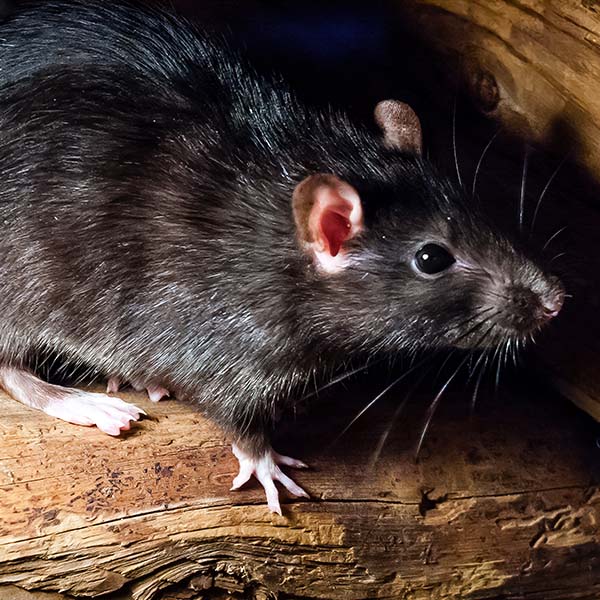
Roof rats are the climbers. Sleeker and darker than the Norway rat, with big ears and a tail longer than its body, it lives up high: attics, rafters, upper floors, trees, and dense vines. If the noises are coming from the ceiling or the attic rather than the basement, a roof rat is the likely culprit.
What You Need To Know About Roof Rats
Frequently Asked Questions
How do I know it’s a roof rat and not a Norway rat?
Roof rats are sleeker and lighter, with a pointed nose, large ears that reach toward the eyes, big eyes, and a tail longer than the head and body. Norway rats are bigger and heavier with a blunt nose, small ears, and a tail shorter than the body. Location is a strong clue: roof rats climb and nest high in attics and trees, while Norway rats stay low and burrow.
Why do I hear noises in my attic or ceiling at night?
Roof rats are excellent climbers and nest in elevated spaces, so scratching, scurrying, and gnawing sounds overhead after dark are a classic sign. They travel along beams, wires, and branches, and they often enter using tree limbs or vines that touch the roof.
Are roof rats dangerous?
Yes. Like all rats they gnaw constantly, and in an attic that often means chewed electrical wiring, which is a fire risk, along with damaged insulation. They contaminate stored items and any accessible food with droppings and urine and can spread disease. Because they nest out of sight, damage can build up before they are noticed.
How do I get rid of roof rats?
Control focuses upward: seal high entry points around the roofline, eaves, vents, and utility lines, trim tree branches and vines back from the roof so they lose their bridges, and trap or bait in the attic and along their elevated runways. Removing fruit and nuts from the yard helps too.
Does the All Seasons Rodent Plan cover roof rats?
Yes. Roof rats are covered under the All Seasons Rodent Plan, including monitoring, scheduled service, and as-needed re-services between visits. Sealing high entry points around the roofline is quoted separately based on your home.
Quick Answer: Roof rats (Rattus rattus) are sleek, dark rats with a pointed nose, large ears, and a tail longer than the body. They are agile climbers that nest high in attics, rafters, trees, and vines, so noises in the ceiling or attic at night are a common sign. They gnaw attic wiring, contaminate food and stored items, and enter using branches that touch the roof.
Most important distinction: The roof rat is the high climber: pointed nose, big ears, tail longer than the body, and a nest up in the attic or trees. That is what sets it apart from the larger, blunt-nosed Norway rat that burrows down low.
Behavior & Biology
The roof rat (Rattus rattus), also known as the black rat or ship rat, is the more agile of the two Pacific Northwest rats. It is smaller and more slender than the Norway rat, with soft dark fur, a pointed muzzle, large thin ears, prominent eyes, and a long, scaly tail that exceeds the length of its head and body.
True to its name, the roof rat is built for height. It is an excellent climber that nests in attics, upper walls, and rafters indoors, and in trees, palm crowns, ivy, and dense vines outdoors. It commonly reaches roofs by way of overhanging branches and utility lines, and it prefers fruit, nuts, and seeds. In the PNW it is most common in milder coastal and urban areas, though it turns up wherever conditions suit it.
Roof rats gnaw continuously like all rodents, and because they nest overhead, their damage often shows up as chewed wiring and soiled insulation in attics, where it can go unnoticed until the signs, sounds, or smells become obvious. Their habit of nesting out of sight is exactly why elevated entry points and overhanging vegetation are the priorities when keeping them out.
What To Do If You Have Roof Rats
Roof rats come in from above, so control aims high: close the openings around the roofline, take away the branches and vines they climb, and reduce the population in the attic and along their overhead runways.
Seal high entry points
Focus on the roofline, eaves, vents, gaps where utility lines enter, and any openings into the attic. Roof rats exploit height, so the openings that matter most are usually up top.
Trim their bridges
Cut tree limbs, vines, and dense vegetation back from the roof and walls. Removing those overhead pathways takes away how roof rats reach the structure in the first place.
Clear yard food
Pick up fallen fruit and nuts, secure garbage and pet food, and thin heavy ground cover and ivy where they shelter and travel.
Call a pro for the attic
Nesting in attics and along elevated runways is best handled by a technician who can place traps safely up high and find the entry points you cannot easily reach.
Plans That Keep Rodents Out
All Seasons Rodent Plan
$39/month
Setup fee $280 for initial service
Ongoing monitoring and control that keeps mice and rats out of your home year-round, with interior and exterior stations serviced on a regular schedule.
- Interior & exterior monitoring
- Scheduled seasonal service
- Re-services included as needed between visits
Pest & Rodent Bundle
$47/month
Setup fee $280 for initial service
The most complete protection for your home: full rodent coverage plus year-round control of the insects and spiders PNW homeowners deal with most. One plan, one team.
- Everything in the Rodent plan
- Full pest coverage too
- Best value for whole-home protection
Sealing and exclusion work (closing the gaps rodents use to get in) is quoted separately based on your home, and is not included in the monthly plan price. Your technician will walk the home and give you a clear estimate.
Get help with roof rats in your area
Interstate Pest Management helps with roof rats across Oregon and Washington. Choose your area to see local plans, pricing and the number for your nearest team.