
Watch: Bugs in Your Flour, Rice or Cereal? Here’s What to Do
Pantry Pests in Oregon & Washington
Reviewed by TJ Jackson, Associate Certified Entomologist · Updated 2026-11-17
Stored product pests | Category: Pantry pests | The fix starts with one bad package
Little moths fluttering in the kitchen, tiny brown beetles on the counter, or webbing in a bag of flour all point to pantry pests. They live and breed inside stored food: flour, cereal, rice, pasta, spices, dried fruit, nuts, birdseed and pet food. The good news is that the fix is mostly in your hands. Find the package they started in, throw it out, clean the shelves and store dry goods in sealed containers.
Moths or beetles in the pantry? We can help find the source.
Family-owned since 1963. 4.96 average from 8,500+ Google Reviews.
| Indian Meal Moth | Small moth, 1/3 to 2/5 in; wings gray near the body and coppery at the tips |
|---|---|
| Cigarette Beetle | About 1/8 in, reddish brown and humped; spices, pet food, cereal |
| Drugstore Beetle | Looks like a cigarette beetle with grooved wing covers |
| Weevils | Snout beetles that develop inside whole grains and seeds |
| Top Sign | Webbing in a package, tiny holes in a box, larvae climbing walls |
| Bite Risk | They do not bite; infested food should go |
| Plan Coverage | Covered on the All Seasons Pest Plan |
Quick Answer: Pantry pests are moths and beetles that breed inside stored dry food. UC IPM says the Indian meal moth is the most common moth on food in the home, and that the sawtoothed grain beetle, red flour beetle, warehouse beetle and cigarette beetle commonly attack stored foods. The first sign is usually moths flying in the kitchen, small beetles on counters or shelves, or caterpillars crawling up walls. The solution is finding and throwing out every infested package, vacuuming the shelves and cracks, and storing dry goods in containers with tight-fitting lids. UC IPM says insecticides are not recommended for pantry pests; pheromone traps help catch stragglers after the source is gone.
Key facts at a glance: Moths and beetles in dry food · Indian meal moth most common · Signs: webbing, holes, larvae on walls · Toss the infested package · Store in sealed containers · Insecticides not recommended · Plan coverage: All Seasons Pest Plan.
Not in the pantry? The University of Kentucky suggests checking decorative items and birdseed when infested food is not in the cupboards. Pet food, dried flower arrangements and Indian corn are common hiding spots.
Pantry Pests in Oregon & Washington Homes

Indian Meal Moth
Most CommonPlodia interpunctella
The little moth flying in your kitchen. Its larvae spin webbing in cereal, flour, dried fruit, birdseed and pet food, then crawl up walls and ceilings to pupate.
- Size:
- 1/3 to 2/5 in long
- Top ID:
- Two-tone wings, coppery tips
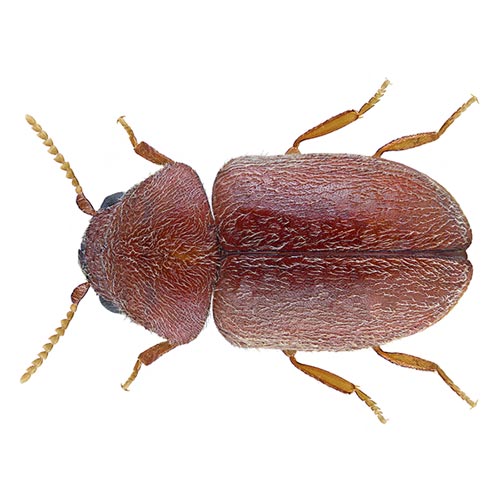
Cigarette Beetle
Spices & Pet FoodLasioderma serricorne
A tiny reddish brown beetle that turns up in paprika, chili powder, pet food and cereal. It flies toward light, so you often see it on windowsills first.
- Size:
- About 1/8 in
- Top ID:
- Humped back, head tucked down
Frequently Asked Questions
What are the little moths in my kitchen?
Most likely Indian meal moths. UC IPM calls the Indian meal moth the most common moth found on food products in the home. Their larvae live in dry food, so the moths you see mean there is an infested package nearby.
What are the tiny brown beetles in my pantry?
Usually cigarette beetles, drugstore beetles or flour beetles. The University of Kentucky notes several of these are about 1/8 inch and reddish brown. Cigarette and drugstore beetles fly and are attracted to light, so they often show up on windowsills.
How do pantry pests get into my house?
Most come in already inside a package from the store or in bulk foods, birdseed or pet food. Once inside, adults spread to other open packages nearby. The University of Kentucky notes the initial source is often a partially used box or bag forgotten at the back of a shelf.
How do I get rid of pantry pests?
Find and throw out every infested item, check everything else on the shelf, and vacuum shelves, cracks and corners thoroughly. Then store dry goods in jars or containers with tight-fitting lids. UC IPM notes plastic bags are not adequate.
Should I spray my pantry?
No. UC IPM says insecticides are not recommended for pantry pests. Removing the infested food and cleaning is what works, and pheromone traps help catch stragglers.
Can I save food that might have eggs in it?
Food you are unsure about can be frozen. The University of Kentucky suggests a non-self-defrosting freezer at 0°F for 4 days for items like birdseed and decorative corn. UC IPM recommends discarding food infested with warehouse beetles, whose hairs can irritate if eaten.
Why do I still see moths after I threw out the food?
Some adults and pupae are still around, and UC IPM notes some pantry pests can live for weeks without food. Keep pheromone traps out and keep food sealed for several months after the cleanup.
Are pantry pests covered on the All Seasons Pest Plan?
Yes. Pantry pests are covered on the All Seasons Pest Plan. We help find the source, treat cracks and shelves where stragglers hide when needed, and come back between visits as needed.
Signs of Pantry Pests
1. Small moths in the kitchen
Little moths flying at night or resting on walls and ceilings near the pantry.
2. Webbing in food
Silky threads or clumps in flour, cereal, rice, nuts, dried fruit or birdseed, often in the corners of a package.
3. Larvae on walls and ceilings
Small whitish caterpillars crawling up walls or across ceilings, leaving the food to pupate.
4. Tiny beetles on shelves or sills
Small brown beetles under cans, on shelves, or on nearby windowsills.
5. Holes in boxes and bags
Pinhole-sized holes in cardboard, paper and plastic packages.
6. Infested pet food or birdseed
Bulk pet food, birdseed and decorative grain stored in garages and closets are common sources.
Local Context: Oregon and Washington
Pantry pests are one of our smallest call types. Most get solved in the kitchen.
Across five years of service records in Portland, Vancouver, Salem, Olympia and Kelso, fewer than 1 in 200 of our visits involved pantry pests. That is not because they are rare in homes. It is because the fix is mostly something people do themselves: find the bad package, toss it and seal everything else.
When we are called, it is mostly summer. Our pantry pest visits peak in June, and 49% fall June through September. The public record lines up: of the 183 verifiable Indian meal moth sightings on iNaturalist in Oregon and Washington over the last five years, June is the busiest month. UC IPM notes the Indian meal moth takes about six to eight weeks to go from egg to adult in warm weather.
Moths drive most of these calls: 74% of our pantry pest visits recorded moths, though that tag also covers clothes moths. And many start as a question rather than a treatment: 23% of new pantry pest customers started with an inspection to find out what they had.
Pantry pests are a year-round problem with a summer bump.
Each series is its share of the annual total. The orange line is visits that recorded moths, anobiid beetles, weevils or grain beetles.
Blue line: verifiable iNaturalist observations of Plodia interpunctella in Oregon and Washington, grouped by the month observed. See the records on iNaturalist. Searches for pantry pests and pantry moths are too rare to chart.
Warm kitchens, faster moths
Pantry pests live indoors all year, but warm weather speeds up their life cycle. That is why a package that was fine in March can be full of webbing by July.
Worth knowing before you book
The best pantry pest tools are a trash bag, a vacuum and sealed jars. Throw out the infested package, check everything near it, vacuum the shelves and cracks, and move dry goods into containers with tight-fitting lids. UC IPM says insecticides are not recommended for any pantry pest.
Call us when the source will not turn up, when moths or beetles keep appearing weeks after a cleanup, or when you are not sure what you are seeing. A moth in the closet and a moth in the pantry are different problems with different fixes.
Pantry pests next to general moth activity
Each row is that source’s share of its own annual total, by month, over the last five years. Darker means a bigger share. Moth searches cover all moths, not just pantry moths.
Blue rows are public data (iNaturalist sightings, Google searches for moths). Orange rows are our records. Values are percent of the year.

“Finding bugs in your cereal is gross, and it makes you want to throw out the whole kitchen. You do not have to. Pantry pests are one of our smallest call types because most people can solve them: find the package they started in, toss it, vacuum the shelves and put dry food in jars with good lids. Most of our pantry calls come in summer, when warm kitchens speed them up. Leave one bad bag and they spread to the next. Get them all and they are gone for good.”TJ Jackson · ACE, Director of Operations, Interstate Pest Management
Pantry pests are covered on the All Seasons Pest Plan. If pests come back between scheduled visits, re-services are included in your plan, as needed. QualityPro certified.
Call your local office
- Portland503-782-1899
- Vancouver360-996-1442
- Salem503-461-0259
- Olympia360-526-8004
- Kelso / Longview360-515-3882
Sources: Interstate Pest Management service records, over the last five years, completed visits with moths, anobiid beetles, weevils or grain beetles recorded, and new pantry pest customers. Sightings: public iNaturalist records of the Indian meal moth for Oregon and Washington, over the last five years. Search interest: Google Trends for moths, Oregon and Washington, over the last five years, combined in proportion to population; searches for pantry pests and pantry moths were too rare to use. Biology: UC Statewide IPM Program, University of Kentucky, WSU PestSense. Updated November 2026.
Pantry Pests vs. Common Look-Alikes
| Feature | Indian Meal Moth | Clothes Moth | Cigarette Beetle | Carpet Beetle |
|---|---|---|---|---|
| Adult | Two-tone wings, coppery tips | Smaller, plain golden, hairier | About 1/8 in, reddish brown, humped | Round, mottled or black |
| Larva feeds on | Dry food: grain, nuts, dried fruit, seed | Wool, fur, feathers | Spices, pet food, cereal | Wool, lint, pet hair, dead insects |
| Where you find it | Kitchen, pantry, near pet food | Dark closets, stored woolens | Pantry, spice rack, windowsills | Windows, carpet edges, closets |
| Telltale sign | Webbing in food | Holes in wool, silk cases | Tiny holes in packages | Shed bristly skins |
| What it means | Toss the infested food | Clean and seal woolens | Toss the infested food | Find the fiber source |
Pantry Pest Help on the All Seasons Plan
All Seasons Pest Plan
$39/month
Setup fee $260 for initial treatment
Pantry pests are covered on the All Seasons Pest Plan. We help find the source, treat the cracks and shelves where stragglers hide, and follow up.
- Help finding the infested package
- Crack and crevice treatment where needed
- Re-services included as needed
- Covers ants, spiders, flies and more
Pest & Rodent Bundle
$47/month
Setup fee $280 for initial treatment
Pantry pests plus mice and rats. Mice and pantry pests often share the same spilled grain and pet food.
- Everything in the All Seasons Pest Plan
- Rodent monitoring and baiting
- Re-services included as needed
- Exclusion quoted separately
What Our Customers Are Saying