Watch: Fruit Flies Won’t Go Away? Check Your Potatoes
Fruit Flies
Reviewed by TJ Jackson, Associate Certified Entomologist · Updated 2026-11-17
Drosophila species | Category: Flies | Something nearby is fermenting
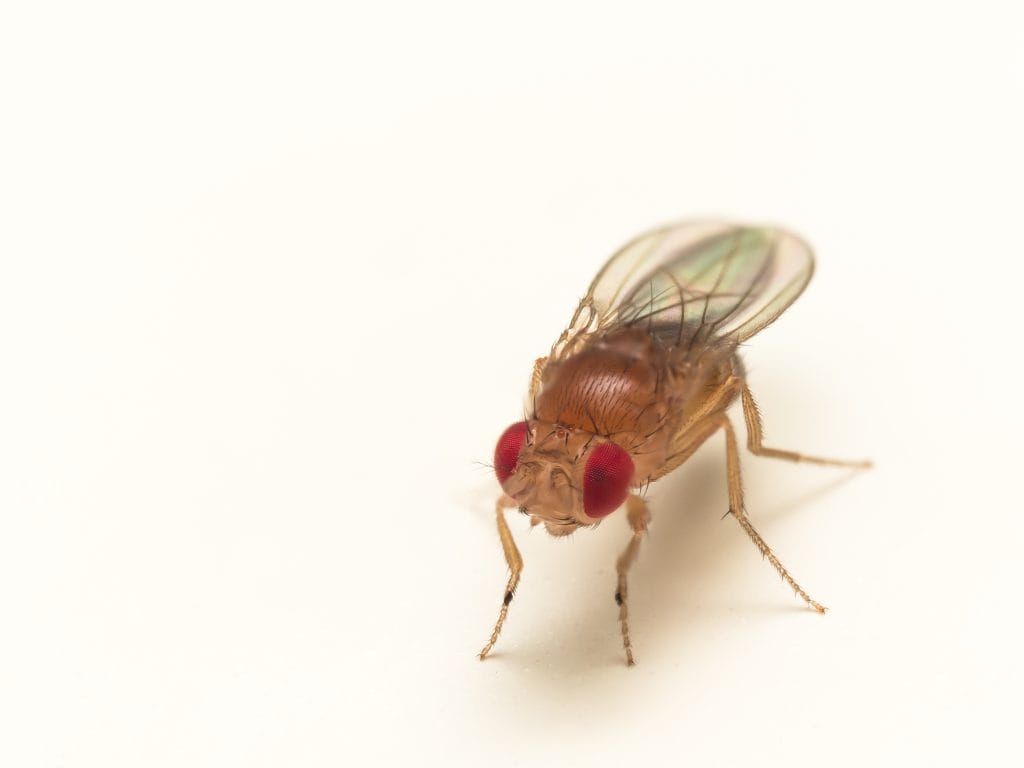
Tiny tan flies with red eyes around the fruit bowl, the sink or the recycling are fruit flies. They breed in anything ripe, fermenting or damp: produce, spilled juice, drains, mops and empty bottles. They go from egg to adult in about a week, so a single forgotten potato or onion can keep a kitchen full of them. Traps catch the adults. Finding the source is what ends it.
Fruit flies that will not quit? We can help find the source.
Family-owned since 1963. 4.96 average from 8,500+ Google Reviews.
| Size | About 1/8 in |
|---|---|
| Color | Tan to brown body, usually bright red eyes |
| Top ID Marker | Small flies hovering over produce, drains or recycling |
| Habitat | Ripe or rotting produce, drains, disposals, trash, empty bottles, mops |
| Activity | Any time of year; worst late summer and fall |
| Bite Risk | Does not bite; can carry bacteria to food |
| Plan Coverage | Covered on the All Seasons Pest Plan |
Quick Answer: Fruit flies are about 1/8 inch long, tan with red eyes, and breed in fermenting produce and other moist organic material. WSU and the University of Kentucky both note they also breed in drains, garbage disposals, empty bottles and cans, trash containers, mops and cleaning rags. A female can lay about 500 eggs and the life cycle takes about a week, so one source can produce thousands of flies. They are a problem any time of year but are most common in late summer and fall, when garden produce comes indoors. The fix is to find and remove every breeding source; spraying or trapping adults without removing the source does not end it.
Key facts at a glance: About 1/8 inch · Red eyes · Breed in ripe produce, drains and recycling · Egg to adult in about a week · Peak September and October · Find the source · Plan coverage: All Seasons Pest Plan.
Check the potatoes and onions. The University of Kentucky notes a single rotting potato or onion forgotten at the back of a closet, or juice spilled under the refrigerator, can breed thousands of fruit flies. Those are the first places we look.
Frequently Asked Questions
Why do I keep getting fruit flies?
Because something nearby is still breeding them. Fruit flies lay eggs on fermenting produce and moist organic material, and WSU says they go from egg to adult in about a week. Until every source is found and removed, new flies keep emerging.
Where do fruit flies come from?
Some ride in on produce that already has eggs or larvae on it, and some fly in through gaps and screens. Once inside, they breed in ripe fruit and vegetables, drains, garbage disposals, recycling, empty bottles and cans, mops and rags.
How do I find where fruit flies are breeding?
Check produce first, including potatoes and onions in a pantry or closet, then the recycling, trash, under appliances and the drains. WSU and the University of Kentucky suggest taping a clear plastic food bag over a drain or disposal overnight: if flies are breeding there, they will be caught in the bag by morning.
Do fruit fly traps work?
They catch adults. The University of Kentucky describes a simple jar trap with a paper funnel and a little cider vinegar. Traps help after the source is gone, but they will not stop flies that are still hatching from a breeding spot.
Why are fruit flies worse in the fall?
The University of Kentucky notes fruit flies are especially common in late summer and fall, when tomatoes, melons, squash, grapes and other produce come in from the garden. In our records, 31% of fruit fly visits came in October alone.
Are fruit flies harmful?
They are mainly a nuisance. The University of Kentucky notes they can contaminate food with bacteria and other organisms, so toss anything they have been breeding in.
Are these fruit flies or drain flies?
Fruit flies are tan with red eyes. Drain flies are fuzzy, gray and moth-like and rest on walls near sinks and tubs. Fungus gnats are slender and dark and hover near potted plants. Each one breeds somewhere different, so it is worth knowing which you have.
Are fruit flies covered on the All Seasons Pest Plan?
Yes. Flies, including fruit flies, are covered on the All Seasons Pest Plan. We help find the breeding source, treat drains and cracks where needed, and come back between visits as needed.
Signs You Have Fruit Flies
1. Tiny flies over the fruit bowl
Small tan flies with red eyes hovering over produce on the counter.
2. Flies at the sink or disposal
Flies rising from the kitchen drain or garbage disposal, especially in the evening.
3. Flies around recycling and trash
Flies on cans, bottles and bins that are not rinsed or emptied often.
4. A sour smell in the pantry
Rotting potatoes or onions in a bin, closet or pantry, often out of sight.
5. Flies that come back after cleaning
New flies days after you cleaned up mean a source you have not found yet.
6. Flies near wine, cider or canning
Containers that are not sealed tight can draw flies and let larvae inside.
Behavior, Biology & Lifecycle
Small and red-eyed
Adults are about 1/8 inch long, tan to brown, and usually have red eyes. UC IPM lists vinegar flies at 1/12 to 1/8 inch.
Eggs on the surface
Females lay eggs near the surface of fermenting food or moist organic material. Larvae feed near the surface, which is why damaged spots on produce can be cut away.
About 500 eggs
Given the chance, a female fruit fly can lay about 500 eggs.
A one-week life cycle
WSU and the University of Kentucky both put the full life cycle at about a week, egg to adult.
Needs only a film of ferment
The University of Kentucky notes all fruit fly larvae need is a moist film of fermenting material, which is why drains, mops and recycling work as well as fruit.
Mostly damaged fruit
UC IPM notes most vinegar fly species feed in damaged or overripe fruit, not sound fruit. The garden pest spotted-wing drosophila is the exception.
Local Context: Oregon and Washington
Fruit fly searches peak in September. Our fruit fly visits peak in October.
Google searches for fruit flies in Oregon and Washington are tightly seasonal: 44% of the year’s searches come in September and October, with September the peak. Of the 342 verifiable fruit fly sightings on iNaturalist in the two states over the last five years, 41% fall in the same two months.
Our records run about a month behind the searches. Across five years of service records in Portland, Vancouver, Salem, Olympia and Kelso, 31% of our fruit fly visits came in October alone, and 57% came September through November. Most people try traps first and call once the flies keep coming.
Fruit flies are also a growing part of our work. Visits where technicians recorded fruit flies nearly quadrupled over the last five years, and fruit flies now make up about a fifth of our fly visits. More than half of those visits (56%) were re-services on the All Seasons plan, which fits a pest that comes back until the last source is found.
Searches peak in September. Our fruit fly visits peak a month later.
Each series is its share of the annual total, so the two are directly comparable. The orange line is service visits where our technicians recorded fruit flies.
Blue line: Google Trends search interest for fruit flies, Oregon and Washington combined in proportion to population. See the search data.
Traps first, then the call
The month between the search peak and our visit peak is the trap-and-vinegar month. When flies are still hatching in October, the source has not been found yet.
Worth knowing before you book
Most fruit fly problems we see come down to one hidden source: a bag of potatoes or onions going soft in a pantry or closet, juice under the refrigerator, a recycling bin in the garage, or the film inside a drain. Traps and sprays only catch adults while new ones keep emerging.
Our gnat and drain fly visits peak in October too, and they get mistaken for fruit flies all the time. Drain flies need the drain cleaned, fungus gnats need the potting soil to dry out, and fruit flies need the fermenting source gone. Identify the fly first.
Small flies in the kitchen, month by month
Each row is that source’s share of its own annual total, by month, over the last five years. Darker means a bigger share.
Blue rows are public data (iNaturalist sightings, Google searches). Orange rows are our records. Values are percent of the year.

“Fruit flies wear people down. You set a trap, you clean the counter, and there they are again the next morning. October is our busiest fruit fly month, and most of the time the answer is a source nobody thought to check: a bag of potatoes in the pantry, a drain, or the recycling in the garage. Find it, clear it out, and catch the stragglers with a trap. Leave it and you are trapping flies until Christmas. Get it, and the kitchen is clear in about a week.”TJ Jackson · ACE, Director of Operations, Interstate Pest Management
Fruit flies are covered on the All Seasons Pest Plan. If pests come back between scheduled visits, re-services are included in your plan, as needed. QualityPro certified.
Call your local office
- Portland503-782-1899
- Vancouver360-996-1442
- Salem503-461-0259
- Olympia360-526-8004
- Kelso / Longview360-515-3882
Sources: Interstate Pest Management service records, over the last five years, completed visits with fruit flies recorded, and visits with gnats or drain flies recorded. Search interest: Google Trends for fruit flies, Oregon and Washington, over the last five years, combined in proportion to population. Sightings: public iNaturalist records of the genus Drosophila for Oregon and Washington, over the last five years. Biology: WSU PestSense, University of Kentucky, UC Statewide IPM Program. Updated November 2026.
DIY Homeowner Steps
Find every source
Check produce on counters and in pantries and closets, especially potatoes and onions. Look under the refrigerator for spills and check recycling, trash and pet food bowls.
Bag-test the drains
Tape a clear food storage bag over each drain and the disposal overnight. Flies in the bag in the morning mean that drain is a source. Clean it thoroughly.
Eat, toss or refrigerate ripe produce
Keep ripe fruit in the refrigerator during fly season and cut away damaged spots. Rinse cans and bottles before they go in the bin.
Set a jar trap
Put a little cider vinegar in a jar with a paper funnel in the top. Use it after the source is gone to catch the stragglers.
Seal canning and brewing
Keep lids tight on home canning, wine, cider and beer, and keep tight-fitting screens on windows.
Fruit Flies vs. Common Look-Alikes
| Feature | Fruit Fly | Drain Fly | Fungus Gnat | Phorid Fly |
|---|---|---|---|---|
| Look | Tan, red eyes | Fuzzy, gray, moth-like wings | Slender, dark, long legs | Small, humpbacked, tan to black |
| Movement | Hovers near food | Rests on walls, short hops | Weak flier near plants | Runs before flying |
| Breeds in | Ripe produce, drains, recycling | Film inside drains | Damp potting soil | Decaying matter, broken drain lines |
| Where you see it | Fruit bowl, sink, trash | Sinks, tubs, floor drains | Windows near houseplants | Kitchens, bathrooms, basements |
| What it means | Find the fermenting source | Clean the drain | Let plant soil dry out | Inspect drains and plumbing |
Fruit Fly Control on the All Seasons Plan
All Seasons Pest Plan
$39/month
Setup fee $260 for initial treatment
Flies are covered on the All Seasons Pest Plan. We treat the outside where flies rest and enter, and look for what is breeding them.
- Exterior treatment where flies rest and enter
- Breeding-source check on every visit
- Re-services included as needed
- Covers spiders, ants, wasps and more
Pest & Rodent Bundle
$47/month
Setup fee $280 for initial treatment
Flies plus mice and rats in one plan. A good fit when flies show up alongside rodents, or when a dead rodent is feeding them.
- Everything in the All Seasons Pest Plan
- Rodent monitoring and baiting
- Re-services included as needed
- Exclusion quoted separately
What Our Customers Are Saying