Watch: Big Slow Flies at a Sunny Window? Meet the Cluster Fly
Cluster Flies
Reviewed by TJ Jackson, Associate Certified Entomologist · Updated 2026-11-17
Pollenia species | Category: Flies | They spent the winter in your walls
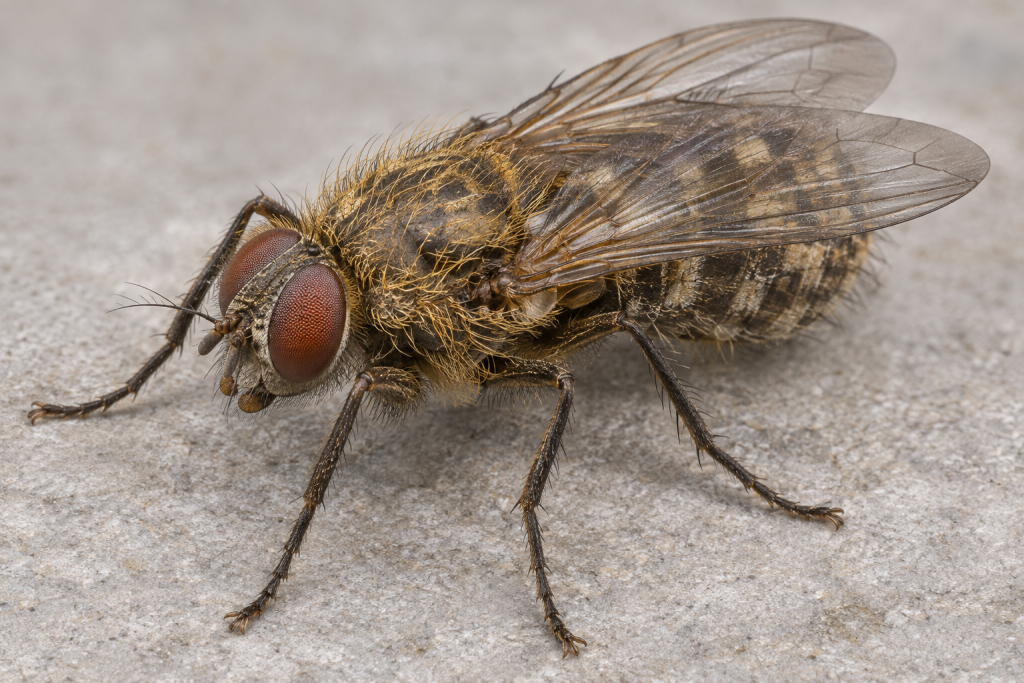
The big, slow flies buzzing at a sunny window in March are usually cluster flies. They moved into the walls and attic last fall to wait out the winter, and on warm days they crawl out toward the light trying to get back outside. They are not breeding in the house and they do not damage anything. The fix is keeping them out before they settle in next fall.
Slow flies at the window every spring? Get ahead of next fall.
Family-owned since 1963. 4.96 average from 8,500+ Google Reviews.
| Size | About 5/16 in, a little larger than a house fly |
|---|---|
| Color | Dull gray with a checkered abdomen and golden hairs on the thorax |
| Top ID Marker | Slow, clumsy flies gathering at sunny windows, often in rooms you rarely use |
| Habitat | Wall voids, attics and upper floors over winter; outdoors in summer |
| Activity | Into walls late summer and fall; out on warm days in late winter and spring |
| Bite Risk | Does not bite; no known disease risk |
| Plan Coverage | Covered on the All Seasons Pest Plan |
Quick Answer: Cluster flies are dull gray flies, a little larger than house flies, with golden hairs on the thorax and a slow, clumsy flight. Their larvae live as parasites in earthworms outdoors. In late summer and fall the adults look for protected places to spend the winter, often inside wall voids and attics, and on warm days in late winter and spring they crawl out into living spaces and gather at sunny windows. They do not breed indoors, do not damage the home and are not known to carry diseases that matter to people. Spraying the flies at the window does not stop more from coming out. The lasting fix is sealing gaps around siding, windows, vents and utility lines before they move in, with an exterior treatment in late summer where sealing is not possible.
Key facts at a glance: About 5/16 inch · Gray, golden hairs on thorax · Slow and sluggish · Overwinter in walls and attics · Out at windows on warm days · Not breeding indoors · Seal before fall · Plan coverage: All Seasons Pest Plan.
Clean up the dead ones. Penn State Extension notes that carpet beetles can feed on dead cluster flies in walls and attics and then move on to woolens and stored goods. Vacuum the window sills and see our carpet beetle guide.
Frequently Asked Questions
What are the big slow flies in my house in spring?
Most likely cluster flies. They spent the winter in your walls or attic and come out on warm days, heading for the light at windows. Penn State Extension says they are not reproducing in the house; they are trying to get back outside.
Why are there cluster flies in rooms I never use?
Cluster flies often gather in upstairs rooms, spare bedrooms and attics, close to where they spent the winter. The University of Kentucky notes they often collect in rooms that are not regularly used.
Are cluster flies harmful?
No. They do not bite and Penn State Extension says they are not known to carry diseases of medical importance to people. They can leave small dark spots on windows and walls.
Where do cluster flies come from?
Outdoors. WSU says cluster fly larvae are parasites of earthworms, which live almost everywhere, so there is no breeding site in the yard you can remove. The adults come inside to spend the winter.
How do I get rid of cluster flies?
Vacuum the ones you see and seal the gaps they use to get in: around siding, window and door frames, vents, utility lines and the fascia. WSU notes that killing adults with sprays will not make the problem go away; they will be back again next year.
When should I treat for cluster flies?
Before they move in. Penn State Extension recommends exterior treatment by a licensed applicator in the autumn just before flies gather on the house, along with sealing. Treating inside the walls after they are in is not recommended.
Why not just spray the attic or walls?
Penn State Extension advises against it: dust in the walls can kill thousands of flies, and carpet beetles can then feed on the dead flies and move on to woolens and stored goods.
Are cluster flies covered on the All Seasons Pest Plan?
Yes. Flies are covered on the All Seasons Pest Plan, and timing the exterior treatment for late summer and fall is what helps most with cluster flies.
Signs You Have Cluster Flies
1. Slow flies at sunny windows
Big, sluggish flies at south- and west-facing windows on warm days in late winter and spring.
2. Rooms you rarely use
The most flies in spare bedrooms, upstairs rooms and near the attic, close to where they spent the winter.
3. Flies on the sunny side of the house in fall
Flies gathering on warm siding in late summer and fall, looking for a way in.
4. Dead flies on sills and in light fixtures
Piles of dead flies in window tracks, light covers and the attic.
5. Flies coming from baseboards and trim
Flies crawling out from cracks behind baseboards, around window trim and around ceiling lights or fans.
6. Small dark spots on windows
Fly specks on glass and walls near where they gather.
Behavior, Biology & Lifecycle
Slightly larger than a house fly
Adults are about 5/16 inch, dull gray with a black and gray checkered abdomen. Golden-yellow hairs on the thorax can give them a golden sheen.
Larvae live in earthworms
Eggs are laid on soil and the larvae burrow into earthworms and feed on them. The young stages are seldom seen.
Several generations a summer
Penn State Extension reports three to four or more generations per season in Pennsylvania. Adults leave their winter sites in spring and lay eggs on soil.
A winter indoors
In late summer and fall adults look for protected spots: under bark, in crevices, and in the walls, attics and voids of houses and outbuildings.
Out on warm days
Warm spells wake them up. They crawl out of walls into living spaces and head for windows, trying to get back outside.
Part of the blow fly family
Cluster flies belong to the blow fly family, Calliphoridae, but unlike bottle flies they do not breed in garbage or carcasses.
Local Context: Oregon and Washington
Cluster fly sightings peak in March. Our cluster fly visits peak in April.
Of the 649 verifiable cluster fly sightings logged on iNaturalist in Oregon and Washington over the last five years, March was the busiest month, with 32% falling February through April. That is when overwintering flies wake up and leave the walls.
Our records follow a month behind. Across five years of service records in Portland, Vancouver, Salem, Olympia and Kelso, about half of our cluster fly visits (52%) came January through April, and April alone was 30%. A smaller second wave, 27%, came August through October, as the flies look for a way back in.
Cluster flies are a small share of our fly work, about 5% of fly visits, and searches for them are too rare in either state to chart. What stands out is how often they come back: 45% of our cluster fly visits were re-services on the All Seasons plan, because flies already in the walls keep coming out until spring is over.
Sightings and our visits both bunch into late winter and spring.
Each series is its share of the annual total. Our cluster fly numbers are small, so single months are noisy; the shape is what matters.
Blue line: verifiable iNaturalist observations of the genus Pollenia in Oregon and Washington, grouped by the month observed. See the records on iNaturalist.
The spring calls start in fall
By the time cluster flies are at the window in April, they have been in the walls since fall. Sealing and treating in late summer is what keeps next spring quiet.
Worth knowing before you book
Cluster flies keep the same calendar as the other fall invaders. They head for the walls in late summer and fall, the same season our stink bug calls peak, and they come out on warm days in late winter and spring.
That makes the timing simple. If you had cluster flies this spring, call before next September. Sealing gaps and treating the outside walls before the flies gather does more than anything you can do once they are inside.
Cluster flies and the other fall invaders
Each row is that source’s share of its own annual total, by month, over the last five years. Darker means a bigger share. Our stink bug calls are included for comparison.
The blue row is public iNaturalist sightings. Orange rows are our records: cluster fly visits, new stink bug customers and all fly visits. Values are percent of the year.

“A window full of slow flies in March is unsettling, and it happens again a few weeks later. Those flies moved in last fall, and our cluster fly visits pile up in April for that reason. What works is getting ahead of them: seal the gaps on the sunny side of the house, and treat the outside in late summer before they gather. Wait until spring and you are vacuuming flies until May. Get ahead of it and next spring is quiet.”TJ Jackson · ACE, Director of Operations, Interstate Pest Management
Cluster flies are covered on the All Seasons Pest Plan. If pests come back between scheduled visits, re-services are included in your plan, as needed. QualityPro certified.
Call your local office
- Portland503-782-1899
- Vancouver360-996-1442
- Salem503-461-0259
- Olympia360-526-8004
- Kelso / Longview360-515-3882
Sources: Interstate Pest Management service records, over the last five years, completed visits with cluster flies recorded and all fly visits; new stink bug customers by month (same series as the stink bug page). Sightings: public iNaturalist records of the genus Pollenia for Oregon and Washington, over the last five years. Google Trends had no usable search volume for cluster flies in either state. Biology: WSU PestSense, Penn State Extension, University of Kentucky. Updated November 2026.
DIY Homeowner Steps
Vacuum, do not swat
Cluster flies are slow and easy to vacuum off windows. Empty the vacuum outside. Vacuuming also removes the dead flies that can feed carpet beetles.
Find where they are coming out
Watch for flies crawling from behind baseboards, window and door trim, ceiling fans and light fixtures. Seal those gaps with caulk.
Seal the outside before fall
In late summer, caulk gaps around siding, window and door frames, utility lines, chimneys and under the fascia.
Fix screens and vents
Repair torn window screens and screen attic and crawl space vents with a mesh small enough to stop flies.
Skip the fogger in the attic
Foggers kill flies in the open attic but not the ones in the walls, and dead flies left in voids can feed carpet beetles.
Cluster Flies vs. Common Look-Alikes
| Feature | Cluster Fly | House Fly | Blow / Bottle Fly | Face Fly |
|---|---|---|---|---|
| Size | About 5/16 in | About 1/4 in | 1/4 to 1/2 in | About 1/4 in |
| Look | Dull gray, golden hairs on thorax | Gray, four dark stripes on thorax | Shiny metallic green or blue | Looks like a house fly |
| Flight | Slow, clumsy | Quick | Loud, fast | Quick |
| Breeds in | Earthworms, outdoors | Garbage, manure | Food waste, carcasses | Fresh cattle manure |
| Indoors when | Fall to spring, warm days | Summer | Any time near a source | Fall to spring, rural homes |
| What it means | Seal before fall | Seal garbage, fix screens | Find the source | Same as cluster flies |
Cluster Fly Control on the All Seasons Plan
All Seasons Pest Plan
$39/month
Setup fee $260 for initial treatment
Flies are covered on the All Seasons Pest Plan. We treat the outside where flies rest and enter, and look for what is breeding them.
- Exterior treatment where flies rest and enter
- Breeding-source check on every visit
- Re-services included as needed
- Covers spiders, ants, wasps and more
Pest & Rodent Bundle
$47/month
Setup fee $280 for initial treatment
Flies plus mice and rats in one plan. A good fit when flies show up alongside rodents, or when a dead rodent is feeding them.
- Everything in the All Seasons Pest Plan
- Rodent monitoring and baiting
- Re-services included as needed
- Exclusion quoted separately
What Our Customers Are Saying