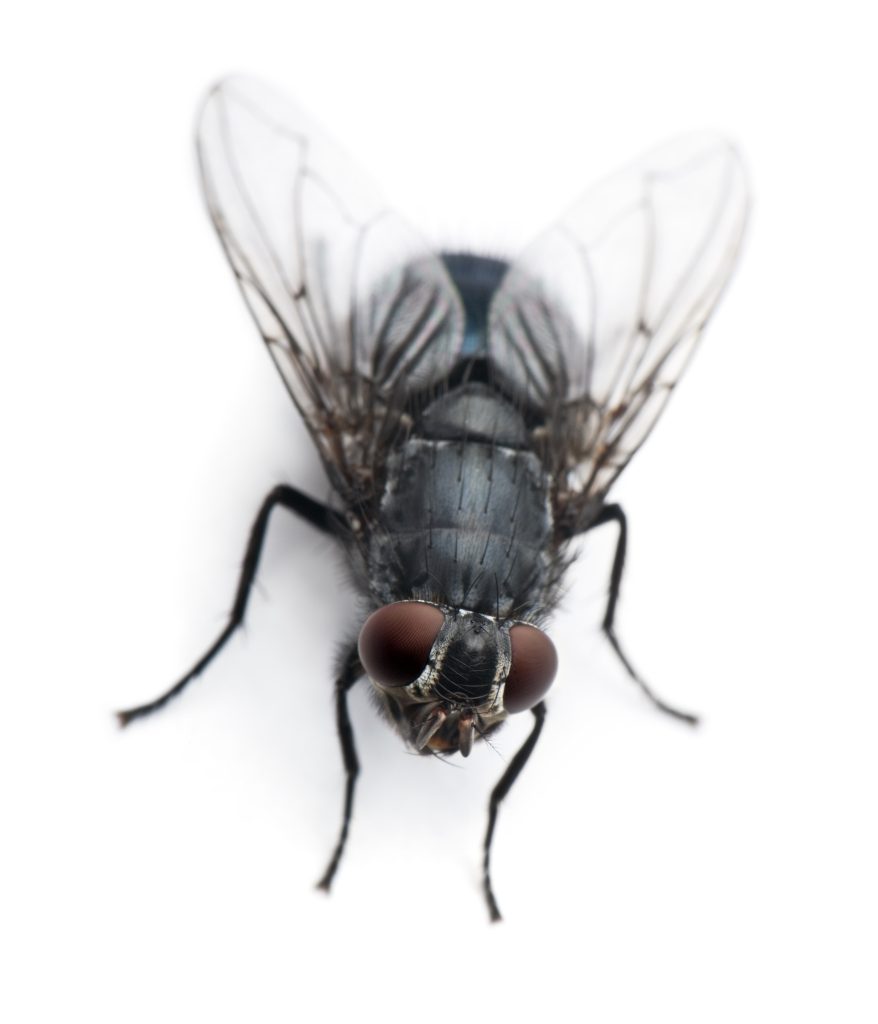
Flies in Oregon & Washington Homes
Reviewed by TJ Jackson, Associate Certified Entomologist · Updated 2026-11-17
Order Diptera | Category: Flies | Which fly it is tells you where it came from
Flies in the house almost always came from somewhere specific. Big, slow flies at a sunny window in March spent the winter in your walls. Shiny green or blue flies in one room are feeding on something nearby. Tiny flies around the fruit bowl are breeding in something ripe or damp. House flies come in from garbage, compost and pet waste outside. Name the fly and you know where to look, and that is most of the fix.
Flies in the house? Find out which one and where it is coming from.
Family-owned since 1963. 4.96 average from 8,500+ Google Reviews.
| House Fly | About 1/4 in, gray, four dark stripes on the thorax; comes in from outside |
|---|---|
| Cluster Fly | A bit larger, slow, golden hairs on the thorax; at windows in fall and spring |
| Blow / Bottle Fly | Shiny metallic green or blue; points to a food source nearby |
| Fruit Fly | 1/8 in, tan with red eyes; breeds in ripe produce and drains |
| Busiest Season | August through October in our records |
| Bite Risk | These flies do not bite; some carry germs from garbage |
| Plan Coverage | Covered on the All Seasons Pest Plan |
Quick Answer: Four kinds of flies account for most fly problems in Oregon and Washington homes. House flies are gray with four dark stripes on the thorax and breed outdoors in garbage, compost and animal waste, then come in through doors and torn screens. Cluster flies are slightly larger and slow, spend the winter inside walls and attics, and show up at sunny windows in fall and on warm days in late winter and spring. Blow flies and bottle flies are shiny metallic green or blue and develop in food waste, pet waste or a dead animal, so several in one room usually mean a source close by. Fruit flies are about 1/8 inch with red eyes and breed in ripe produce, drains and recycling. In every case the lasting fix is removing or blocking the source, not spraying the adults.
Key facts at a glance: House flies: outdoors in, garbage and waste · Cluster flies: walls and attics, windows in spring · Bottle flies: a food or carcass source nearby · Fruit flies: ripe produce and drains · Our fly visits peak August to October · Covered on the All Seasons Pest Plan.
Flies come from somewhere. UC IPM notes that flies found inside a building have entered from outside in almost all cases, and that removing the material larvae develop in breaks the life cycle. That is why our fly visits start with a look for the source.
Flies in Oregon & Washington Homes
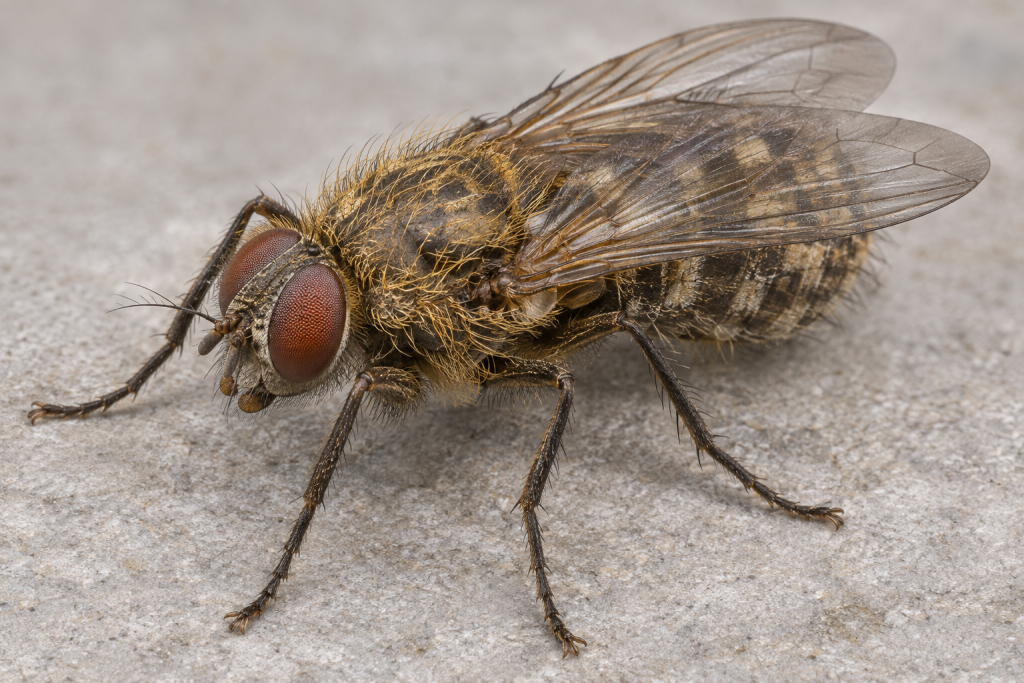
Cluster Flies
Walls & AtticsPollenia species
Big, sluggish flies that crawl out of the walls on warm days in late winter and spring, then pile up at windows. They do not breed indoors. Sealing gaps in late summer is the fix.
- Size:
- Slightly larger than a house fly
- Top ID:
- Golden hairs on the thorax
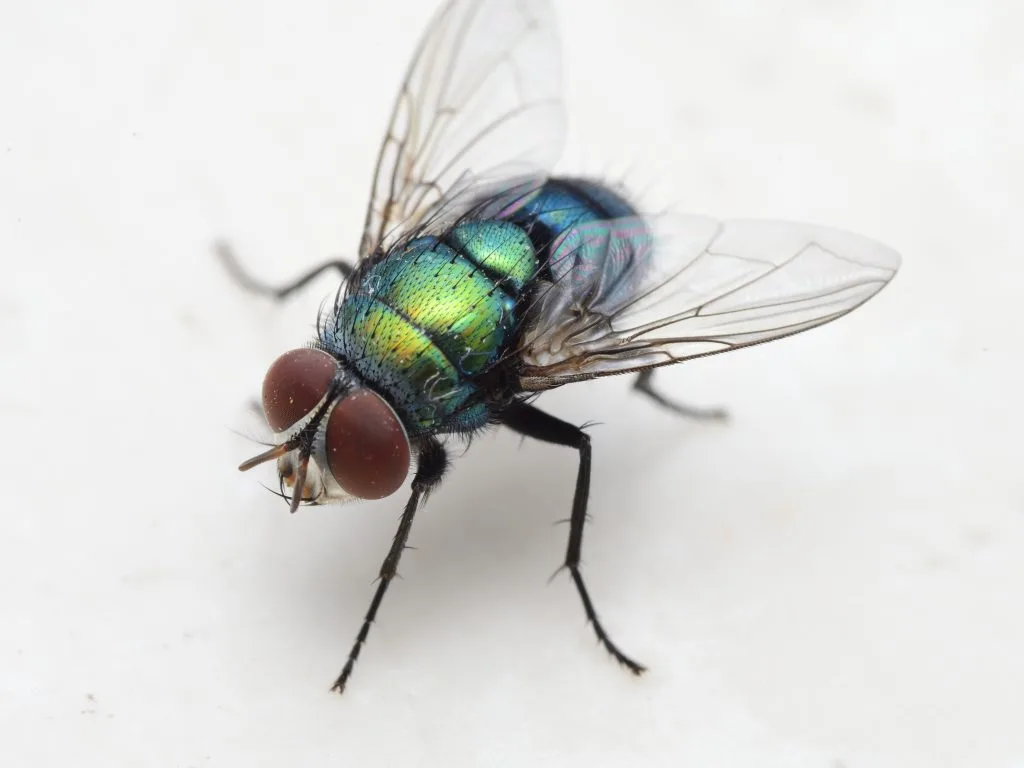
Blow Flies & Bottle Flies
Find the SourceFamily Calliphoridae
Shiny green or blue flies that develop in garbage, pet waste or a dead animal. A sudden group in one room usually means a source close by, often a dead mouse or forgotten food.
- Size:
- About 1/4 to 1/2 in
- Top ID:
- Metallic green or blue body
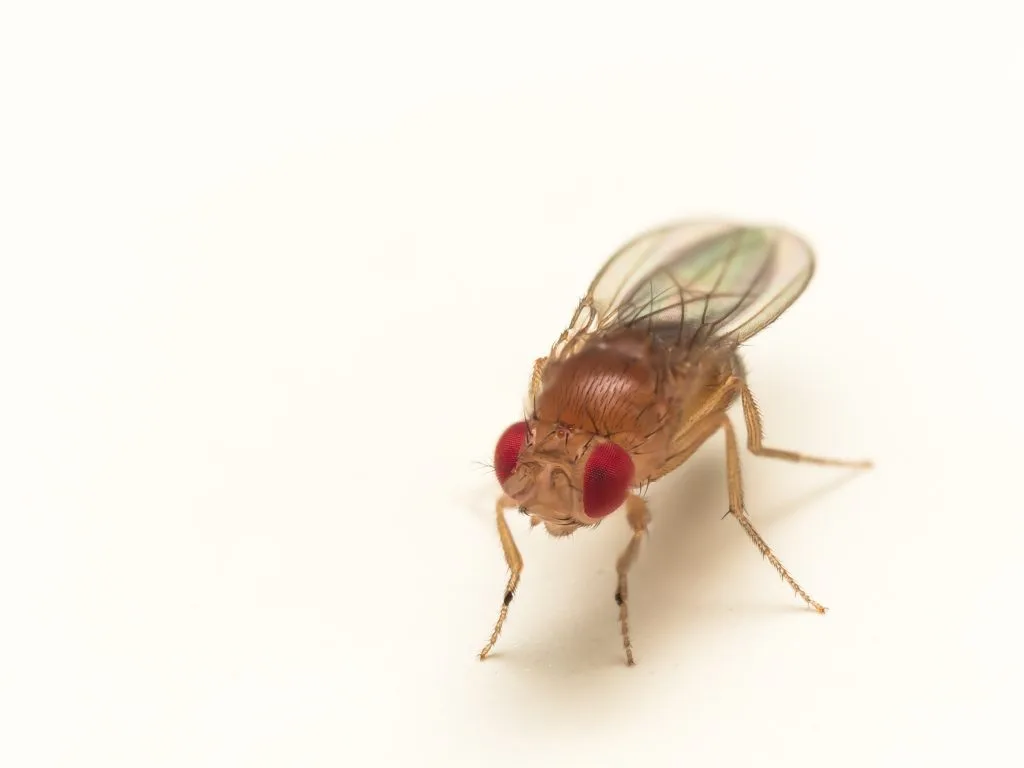
Fruit Flies
KitchenDrosophila species
Tiny tan flies with red eyes around fruit bowls, drains and recycling. One forgotten potato or onion can breed thousands. Our fruit fly visits peak in October.
- Size:
- About 1/8 in
- Top ID:
- Red eyes, hovering over produce
Frequently Asked Questions
Why do I have so many flies in my house?
Flies breed where their larvae can feed: garbage, pet waste, compost, ripe produce, drains or a dead animal. A sudden increase usually means a source close by or a gap letting them in. The type of fly tells you which, so start by identifying it.
What are the big slow flies at my windows in spring?
Usually cluster flies. They move into walls and attics in late summer and fall to spend the winter, then crawl out on warm days in late winter and spring trying to get back outside. They are not breeding in the house.
What do shiny green or blue flies mean?
Those are blow flies or bottle flies. UC IPM says their most common development site around homes is human food waste, though some lay eggs on dead animals. Several in one room usually point to a source nearby, such as a dead mouse in a wall or food left in a trash can.
Where do fruit flies come from?
Fruit flies breed in fermenting produce and other moist organic material, including drains, garbage disposals, recycling and mops. WSU says they can go from egg to adult in about a week, so one source can produce a lot of flies fast.
Do house flies carry disease?
They can. UC IPM says house flies pick up disease agents while feeding on animal feces and kitchen waste and can deposit them on human food. That is a reason to keep garbage sealed and screens tight.
Will a bug bomb or spray get rid of flies?
Not for long. Spraying adults does nothing about the source, and UC IPM notes house flies are now resistant to many insecticides. Removing breeding sites and blocking entry points are what last.
When are flies worst in Oregon and Washington?
In our records, 43% of fly visits over the last five years came August through October, with October the busiest single month. That is when fruit flies peak indoors and cluster flies head into walls.
Are flies covered on the All Seasons Pest Plan?
Yes. Flies are on the All Seasons Pest Plan. Our technicians treat where flies rest and get in, check for breeding sources, and come back between visits as needed.
Signs of a Fly Problem
1. Flies in one room, day after day
A cluster of flies in a single room points to a source in or near that room: a trash can, a drain, stored produce or a dead animal in a wall.
2. Shiny green or blue flies indoors
Bottle flies inside, especially several at once, usually mean food waste or a carcass close by.
3. Slow flies at windows on warm days
Big, sluggish flies at sunny windows in late winter and spring are cluster flies leaving the walls.
4. Tiny flies over the fruit bowl or sink
Fruit flies and drain flies hover near produce, drains and recycling.
5. Dark specks on walls and lights
House flies leave small dark spots where they rest, often on light-colored walls and ceilings.
6. Maggots in a trash can or under a bin
Larvae mean flies are breeding there now. Clean it out and keep lids tight.
Local Context: Oregon and Washington
People search for flies all summer. Our fly visits peak in October.
Google searches for flies in Oregon and Washington build through the warm months: 54% of the year’s searches fall June through October, with the peak in September. Our fly visits come later and sharper.
Across five years of service records in Portland, Vancouver, Salem, Olympia and Kelso, 43% of our fly visits came August through October, and October was the busiest month at 17%. Outdoors, flies are winding down by then. Indoors, fruit flies are peaking and cluster flies are moving into the walls.
What the calls turn out to be matters too. Over the last five years, 54% of our fly visits were recorded as general flies, 21% as fruit flies, 19% as gnats or drain flies and 5% as cluster flies. About half of all fly visits (51%) were re-services on the All Seasons plan, because a fly problem often takes a second look once the source is found.
Fly searches rise through summer. Our fly visits peak in fall.
Each series is its share of the annual total, so the two are directly comparable. The orange line is visits that recorded any fly.
Blue line: Google Trends search interest for flies, Oregon and Washington combined in proportion to population. See the search data.
Fall flies are indoor flies
The flies people search about in July are mostly outside. The ones that get a phone call in October are inside: fruit flies in the kitchen and cluster flies heading for the walls.
Worth knowing before you book
Each fly keeps its own calendar. Cluster fly sightings peak in March, when they leave the walls. Blow fly sightings run April through September. Fruit fly sightings and our fruit fly visits both bunch into September and October.
So the month you see them is a clue. Big slow flies at a window in March: cluster flies, and the time to seal is late summer. Shiny flies in one room in July: look for a source nearby. Tiny flies over the fruit bowl in October: find the forgotten produce or the drain.
Which fly, which month
Each row is that source’s share of its own annual total, by month. Darker means a bigger share.
Blue rows are public iNaturalist sightings for Oregon and Washington. Orange rows are our service records. Values are percent of the year.

“Nobody wants flies buzzing around the kitchen, and swatting them one at a time feels like a losing game. The first thing I do is figure out which fly it is, because each one points somewhere different. October is our busiest fly month, and most of those calls are flies that are breeding or hiding inside. We find the source, get rid of it or seal it off, and treat where they rest and get in. Leave the source and the flies keep coming. Take it away and they stop.”TJ Jackson · ACE, Director of Operations, Interstate Pest Management
Flies are covered on the All Seasons Pest Plan. If pests come back between scheduled visits, re-services are included in your plan, as needed. QualityPro certified.
Call your local office
- Portland503-782-1899
- Vancouver360-996-1442
- Salem503-461-0259
- Olympia360-526-8004
- Kelso / Longview360-515-3882
Sources: Interstate Pest Management service records, over the last five years, completed visits with any fly recorded. Search interest: Google Trends for flies, Oregon and Washington, over the last five years, combined in proportion to population. Sightings: public iNaturalist records of cluster flies (genus Pollenia), blow flies (family Calliphoridae) and fruit flies (genus Drosophila) for Oregon and Washington, over the last five years. Biology: UC Statewide IPM Program, WSU PestSense, Penn State Extension, University of Kentucky. Updated November 2026.
Which Fly Is It?
| Feature | House Fly | Cluster Fly | Blow / Bottle Fly | Fruit Fly |
|---|---|---|---|---|
| Size | About 1/4 in | Slightly larger than a house fly | About 1/4 to 1/2 in | About 1/8 in |
| Look | Gray, four dark stripes on thorax | Dull gray, golden hairs on thorax | Shiny metallic green or blue | Tan, red eyes |
| Flight | Quick | Slow, sluggish | Loud, strong flier | Hovers near food |
| Breeds in | Garbage, manure, compost | Earthworms in soil (outdoors) | Food waste, pet waste, carcasses | Ripe produce, drains, recycling |
| When you see it | Summer | Fall and late winter to spring | Spring to fall, any time near a source | Late summer and fall |
| What it means | Seal garbage, fix screens | Seal gaps before fall | Find the source nearby | Find and remove the breeding spot |
Fly Control on the All Seasons Plan
All Seasons Pest Plan
$39/month
Setup fee $260 for initial treatment
Flies are covered on the All Seasons Pest Plan. We treat the outside where flies rest and enter, and look for what is breeding them.
- Exterior treatment where flies rest and enter
- Breeding-source check on every visit
- Re-services included as needed
- Covers spiders, ants, wasps and more
Pest & Rodent Bundle
$47/month
Setup fee $280 for initial treatment
Flies plus mice and rats in one plan. A good fit when flies show up alongside rodents, or when a dead rodent is feeding them.
- Everything in the All Seasons Pest Plan
- Rodent monitoring and baiting
- Re-services included as needed
- Exclusion quoted separately
What Our Customers Are Saying