House Centipedes
Reviewed by TJ Jackson, Certified ACE · Updated 2026-08-11
Scutigera coleoptrata | Category: Nuisance Pests | ✓ Covered: All Seasons Pest Plan
That fast, many-legged bug darting across your basement floor looks like something out of a horror movie, but the house centipede is one of the good guys. It is a predator that spends its whole life hunting the pests you actually want gone: spiders, silverfish, cockroaches, and ants. Finding one is less a reason to panic and more a clue that your home has the dampness and the insect supply that drew it in.
What You Need To Know About House Centipedes
Frequently Asked Questions
How do I know it’s a house centipede?
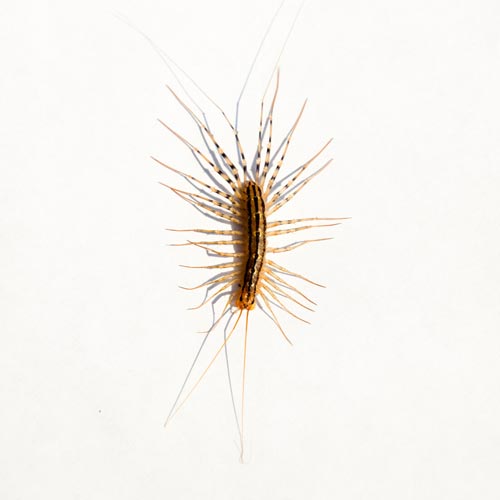
The 15 pairs of long, banded legs and the blazing speed are the giveaways. The body is yellowish-gray with three dark stripes running down the back. Nothing else in a PNW home moves quite like it: a house centipede can cross a wall in a blink, which is exactly why they startle people.
Are house centipedes dangerous?
No. They can technically bite if you grab one, but bites are rare and usually can not even break skin. House centipedes do not damage your home, do not spread disease, and do not get into food. They are beneficial, spending their time hunting the pests you would rather not have around.
Why are they in my house?
Moisture and food. They need damp conditions, so they gather in basements, bathrooms, and crawlspaces, and they follow their prey. A house centipede indoors usually means there is enough humidity and enough other insects to support it, so it is often a clue to a hidden moisture or pest issue.
Should I get rid of them?
Your call. Because they eat other pests, plenty of people leave them be. If you would rather not share the basement with them, the lasting fix is not squashing them one by one but removing what draws them: dry out damp areas and control the insects they are eating. Take away the moisture and the food, and they leave on their own.
Does the All Seasons Pest Plan cover house centipedes?
Yes. Since centipedes are a symptom of moisture and other pests, our treatment targets those root causes, which brings centipede activity down at the source. Coverage includes the initial treatment, scheduled seasonal service, and free re-service visits if activity returns between visits.
Quick Answer: House centipedes (Scutigera coleoptrata) are fast, many-legged predators with 15 pairs of long legs and a yellowish-gray, dark-striped body. They look alarming but are harmless to people and actually beneficial, hunting spiders, silverfish, cockroaches, and other household pests. They favor damp spots like basements and bathrooms, and their presence usually points to moisture plus a supply of other insects to eat.
Most important distinction: A house centipede is not the problem, it is a sign of one. Rather than chasing the centipede, address the moisture and the other pests drawing it in, and it will move on.
Behavior & Biology
The house centipede, Scutigera coleoptrata, is built for hunting. An adult carries 15 pairs of legs, and the back pairs are so long the animal can look far bigger than it is. Those legs make it one of the fastest arthropods you will ever see indoors, able to sprint across a wall or ceiling the instant a light flips on. Long antennae and delicate, banded legs give it an unsettling appearance that does not match its harmless nature.
These are ambush and pursuit predators. A house centipede uses its speed and its front legs, modified into venomous fangs strong enough for insects but not for people, to catch and subdue prey. On the menu: spiders, silverfish, cockroaches, ants, firebrats, and other soft-bodied pests. In other words, they eat many of the same insects homeowners call us about, which is why entomologists generally count them as beneficial.
House centipedes need humidity to survive, so indoors they concentrate in the dampest rooms: basements, bathrooms, laundry rooms, and crawlspaces. Unlike many pests, they do not build nests, swarm, or reproduce explosively inside a home, and a single individual can live for several years. Because they follow both moisture and prey, a house centipede is best read as an indicator that conditions somewhere in the home are supporting other insects.
What To Do If You Have House Centipedes
Since house centipedes chase moisture and prey, the fixes that discourage them are the same ones that make a home less friendly to pests in general. Go after the conditions, not the individual bug.
Dry out the damp spots
Run a dehumidifier in the basement, fix plumbing leaks, and improve ventilation in bathrooms and crawlspaces. Lower humidity is the single biggest deterrent.
Cut off their food
Centipedes stay where the hunting is good. Controlling silverfish, cockroaches, ants, and other prey insects removes the reason they came inside.
Seal and declutter
Caulk gaps around foundations, pipes, and vents, and clear damp cardboard and clutter from basements and closets to remove hiding spots.
Call a pro for the root cause
If centipedes keep showing up, it usually means another pest population is feeding them. A technician can find and treat that source so the centipedes clear out too.
Plans That Keep PNW Homes Pest-Free
All Seasons Pest Plan
$39/month
Setup fee ~$260 for initial treatment
Year-round protection from the pests Pacific Northwest homeowners deal with most: the silverfish, cockroaches, ants, and spiders that draw centipedes in, plus wasps, box elder bugs, and more.
- Recurring exterior treatments
- Seasonal pest coverage
- Free re-service between visits
Pest & Rodent Bundle
$47/month
Setup fee ~$280 for initial treatment
The most complete protection for your home. Full pest coverage plus active rodent monitoring. One plan, one team, one less thing to worry about.
- Everything in Pest & Rodent plans
- Best value for whole-home protection
- Free re-service guarantee