Hymenoptera · Order-Level Field Guide
Ants of the Pacific Northwest: A Field Guide
Reviewed by TJ Jackson, Certified ACE · Updated 2026-05-18
Educational guide | Family group: Ants (Formicidae) | ~14,000 species worldwide | 8 PNW species covered
Ants share the Hymenoptera order with wasps and bees, but they are easy to spot from the others. Wingless workers, an obvious knot segment in the waist, sharply elbowed antennae, and a habit of trailing through your kitchen in single file. All ants are social. That fact alone shapes why store-bought sprays do not work on them and why bait does. This page is the biology background. For active treatment, the Ants section in our Pest Library has individual species pages and the response plan for each.
Quick Answer: Ants are wingless social Hymenoptera in the family Formicidae. About 14,000 species are known worldwide, with biologists estimating around 20 quadrillion individual ants alive at any moment, a biomass that rivals all of humanity. The Pacific Northwest hosts 8 commonly encountered species: odorous house ants (the #1 indoor caller), carpenter ants (the only structurally damaging species), moisture ants (an indicator of hidden water damage), pavement ants (driveway dwellers), little black ants (tiny sugar lovers), Argentine ants (invasive supercolony formers), thatch ants (aggressive biters), and velvety tree ants (rancid-butter biters). All are social. Most have multiple queens. That is why bait works and sprays do not.
Most important distinction: Only carpenter ants and moisture ants damage homes. The other six species are nuisance or biting pests, annoying but not structurally harmful. Identification determines treatment.
What Makes an Ant an Ant
Four traits separate ants from their wasp and bee cousins, and from termites (a common confusion). Get these straight and ant ID becomes much easier.
1. Wingless workers and that distinctive knot waist
The ants you see foraging are wingless females (workers). Between thorax and abdomen, they have one or two visible bead-like segments called the petiole and postpetiole. Worker wasps have a smooth pinched waist with no knot. Termites have no waist at all, just a thick rectangular body. The knot is the easiest ant ID in the field.
2. Sharply elbowed antennae
Ant antennae bend at a clear right angle in the middle, like a bent finger. No other Hymenoptera has this. Termite antennae, by contrast, are straight strings of small beads. If you are looking at a small dark insect and trying to decide whether it is an ant or a termite, check the antennae before anything else.
3. Social by default, with multiple queens in many species
All ants are social. There are no solitary ant species. What varies wildly is colony size and queen count. A small odorous house ant colony might have a few dozen queens. A mature Argentine ant supercolony can stretch across an entire neighborhood with millions of workers and thousands of queens that all cooperate. This is the structural reason bait works on ants and sprays mostly do not. Killing foragers does almost nothing if the queens are untouched.
4. Reproductives have wings, briefly
Male ants and new queens grow wings to leave the colony for a mating flight, then either shed the wings (queens) or die shortly after (males). The piles of identical winged ants you sometimes find on windowsills in late summer are reproductives from a mature local colony. Termites also swarm with winged reproductives but their wings are equal length and shed easily, leaving little wing piles. Ant front wings are larger than back wings.
How Ants Become a Problem
Ants in the PNW cause three different kinds of trouble. The right treatment depends on which kind you have.
Nuisance Pests
Annoying but not damaging
The classic kitchen invader. They trail along countertops and into pantries looking for sweet, greasy, or starchy food, but they do not damage your house and do not bite humans. The volume can still be staggering.
PNW examples:
- Odorous house ants
- Pavement ants
- Little black ants (“sugar ants”)
- Argentine ants
Wood-Affecting
Structural risk
Two species damage wood, in different ways. Carpenter ants actively excavate galleries inside structural beams, siding, and window frames. Moisture ants do not damage sound wood but accelerate decay in wood that is already wet and rotting.
PNW examples:
- Carpenter ants (active wood excavation)
- Moisture ants (indicator of hidden rot)
Aggressive Biters
Painful, sometimes alarming
A few PNW ant species will bite humans, sometimes with chemical sting accompaniment. Usually only when their colony is disturbed, but for kids playing barefoot in the yard the risk is real.
PNW examples:
- Thatch ants (bite plus formic acid spray)
- Velvety tree ants (bite plus rancid-butter odor)
- Pavement ants (rarely, only when crushed against skin)
Why Ants Actually Matter
Strip away the kitchen invasions and ants do an enormous amount of ecological work. PNW forests and gardens would look very different without them.
Reason 01
Soil aeration and nutrient cycling
Ants move more soil than earthworms in many ecosystems. Their tunnel networks bring oxygen down into the root zone, mix surface organic matter into deeper layers, and accelerate decomposition. PNW forest soils in particular benefit from year-round ant activity from thatch ants and several native Formica species. Soil productivity drops measurably where ants are removed.
Reason 02
Seed dispersal for native plants
Around 11,000 plant species worldwide rely on ants to disperse their seeds. The ants carry the seeds back to the colony to eat the nutritious outer coat, then discard the seed itself in a chamber where it germinates protected. PNW trillium, bleeding heart, and several violet species depend on this relationship. Lose the ants, lose the wildflowers.
Reason 03
Predation on other insects
Most ant species are predators on smaller arthropods. A typical thatch ant mound can take in thousands of insects per day during peak season. Cumulatively across all PNW ant species, this is a major silent pest control service. For PNW-specific guidance on ant identification and habitat factors, WSU Hortsense’s Common Problems guide from the Washington State University Extension is a useful starting point.
The PNW ant story to watch The Argentine Ant Supercolony Problem
Most ant species in the world are territorial. Two colonies of the same species meeting on the same trail end in a fight, which keeps any one population in check. Argentine ants (Linepithema humile) are different. In their introduced range outside South America, separate Argentine ant colonies recognize each other as the same colony and cooperate instead of fighting. The result is a “supercolony” that can stretch across entire neighborhoods, sharing workers and resources across miles of territory.
Argentine ants arrived in California in the late 1800s and have steadily expanded north. They are now well established in the Willamette Valley and the Portland metro area, with reports continuing to creep into southern Washington. Where they take hold, they displace the native ant species that PNW ecosystems depend on. They also exploit moisture and warmth in ways that drive them into homes year round.
The control challenge is that the supercolony structure makes Argentine ants extremely difficult to eliminate with conventional treatments. Local suppression around your home is possible. Eradication usually is not. The pragmatic approach is sustained bait pressure on the foragers entering your structure, combined with exterior perimeter treatment to slow the rate of re-entry.
A note from TJ Jackson, Pest Nerd and DOO (Director-of-Operations)
“The single most common question I get is ‘why don’t my sprays work?’ The answer is that most PNW ant species have dozens of queens, sometimes hundreds. You can spray and kill every single forager you can see, and within a week new foragers will be back from the queens you never touched. Worse, repellent sprays often trigger budding, which splits the colony into smaller colonies that move deeper into your walls. Slow-acting bait, carried back to the queens by the same ants you wanted to kill, is the only thing that actually works on most of these species.”
TJ Jackson, Certified ACE · Interstate Pest Management
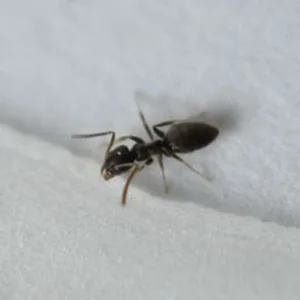
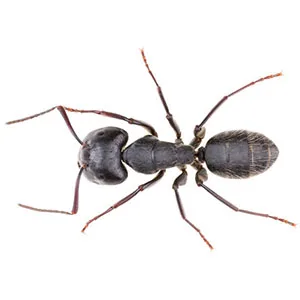
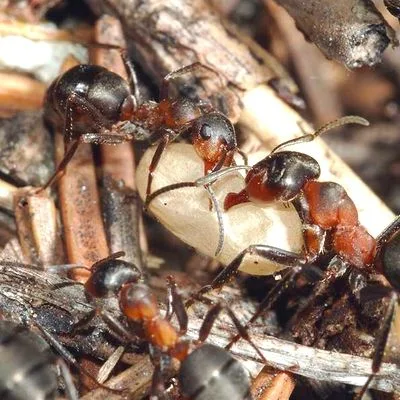
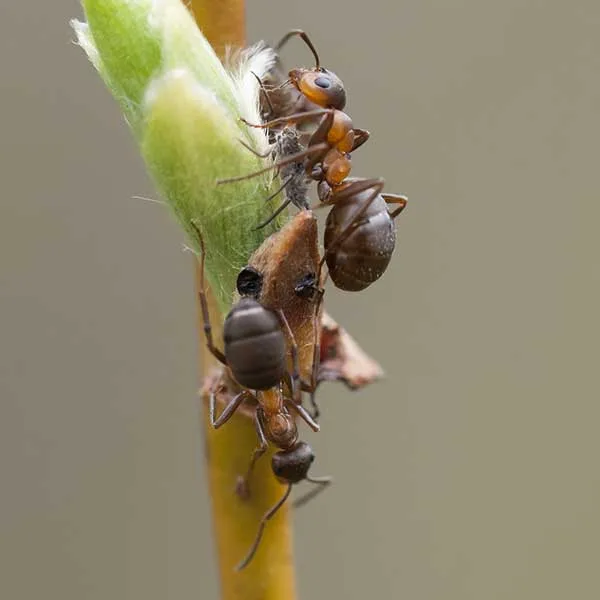
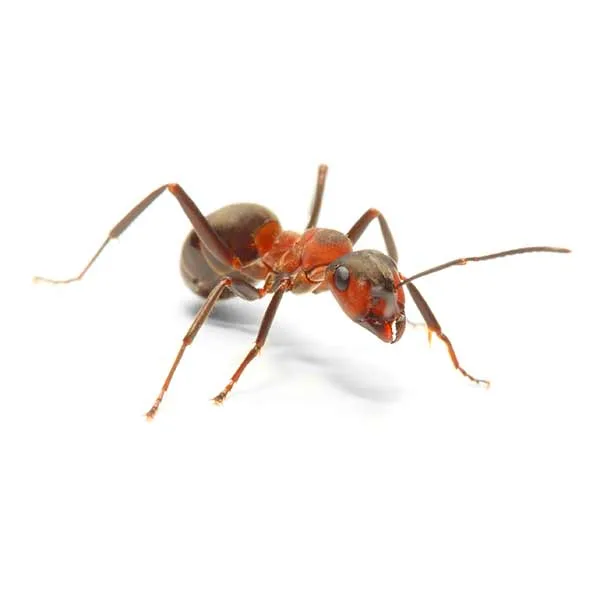
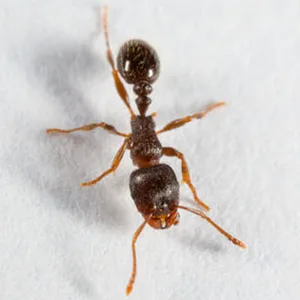
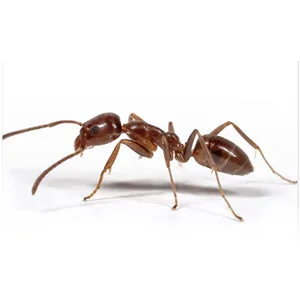
The Eight Ants PNW Homeowners Meet Most
Each card links to a full species page with identification, behavior, and treatment guidance.
PNW Ants FAQ
The biology and pest control questions we get most often.
Frequently Asked Questions About PNW Ants
What is the difference between an ant and a termite?
Three quick differences. First, the waist. Ants have a sharply pinched waist with a visible knot segment. Termites have no waist, with a thick straight body from front to back. Second, the antennae. Ant antennae are elbowed (bent at a sharp angle in the middle). Termite antennae are straight, like little strings of beads. Third, the wings (when winged). Both sets of an ant’s wings are different sizes, with shorter back wings. Termite wings are all the same size, longer than the body, and shed easily. If you find a pile of identical wings on a windowsill, that is termites, not ants.
Why don’t store-bought ant sprays work long-term?
Because most PNW ant species have multiple queens and respond to spray pressure by “budding,” which means splitting the colony into smaller satellite colonies that scatter deeper into your home. Repellent sprays kill the foragers you can see but leave the queens alive, and worse, they accelerate the spread. A typical odorous house ant colony can have hundreds of queens. Killing a few hundred workers does almost nothing. Slow-acting bait, carried back to the queens by the same foragers, is the only reliable elimination strategy for most species.
Which ants in the PNW actually damage homes?
Only two groups. Carpenter ants are the big one. They excavate wood for nest galleries, hollowing out structural beams, siding, and window frames. They prefer wood that has been softened by moisture, but mature colonies will tunnel into sound wood as the colony grows. Moisture ants do not damage sound wood, but they nest in already-rotting wood and accelerate the decay. Finding moisture ants in your home is a warning sign that you already have hidden water damage. All other common PNW ants (odorous house, pavement, little black, Argentine, thatch, velvety tree) are nuisance or biting pests, not structural pests.
Which ants in the PNW bite?
Three species are real biters. Thatch ants (Formica spp.) are aggressive defenders of their dome-shaped mounds, with a painful bite plus a formic acid spray that adds a chemical burn to the experience. Velvety tree ants bite when handled or when their trails are disturbed, and emit a strong rancid-butter odor as part of the alarm. Pavement ants can bite when crushed against skin, but rarely otherwise. The other common PNW ants (odorous house, carpenter, moisture, little black, Argentine) rarely bite and pose no real bite risk to humans.
When are ants most active in the Pacific Northwest?
Outdoor ants peak from April through October. Spring rains drive outdoor colonies indoors as their nests flood. Summer warmth maximizes foraging activity. Late summer brings winged reproductives (swarmers) leaving mature colonies to start new ones. The pile of winged ants on your windowsill in late August is a perfectly normal annual event. In heated indoor environments, odorous house ants, little black ants, and Argentine ants can be active year round once they have established inside a building.
Are Argentine ants really a problem in the PNW?
Yes, increasingly. Argentine ants are an invasive species from South America that has spread across much of the world. They are now well established in the Willamette Valley and metro Portland and continue to expand northward into Washington. Unlike most ants, Argentine ant colonies in their introduced range do not fight each other. They form a single massive “supercolony” that can stretch across entire neighborhoods, allowing huge populations and rapid spread. They displace native ants, disrupt local ecosystems, and are notoriously difficult to control because the colony has no clear boundary.
What is the most common ant call you get?
Odorous house ants, by a wide margin. They are the #1 ant call in OR and WA homes year after year, especially during spring rains. Carpenter ants are a strong second, particularly in older homes with moisture issues. Pavement ants are also extremely common, especially around homes with concrete driveways and patios. If you crush a small dark ant and it smells like rotten coconut or blue cheese, you have odorous house ants.
I have an ant problem at my house. Where do I go?
This is the biology page. For species level ID, treatment guidance, and the full PNW ant rogue’s gallery, head to our Ants guide in the Pest Library, or call us at 360.382.2451 for same-week visits throughout OR and WA. Send us a photo if you can. Identification first, treatment second.
Plans That Cover All 8 PNW Ant Species
All Seasons Pest Plan
$39/month
Setup fee around $260 for initial treatment
Year round protection from the pests Pacific Northwest homeowners deal with most. All 8 ant species above, plus spiders, wasps, box elder bugs, and more. Bait based, slow acting, and effective against budding species.
- Recurring exterior treatments
- Seasonal pest coverage
- Re-services included as needed between visits
Pest and Rodent Bundle
$47/month
Setup fee around $280 for initial treatment
The most complete protection for your home. Full pest coverage plus active rodent monitoring. One plan, one team, one less thing to worry about.
- Everything in Pest and Rodent plans
- Best value for whole home protection
- Re-service guarantee