If you’ve spotted tiny bugs jumping around your bathroom floor, clustering near a houseplant, or piling up around a foundation drain, there’s a good chance you’re dealing with springtails. They’re one of the most common insects in the Pacific Northwest – and one of the least understood.
Good news first: springtails aren’t dangerous. They don’t bite, they don’t damage your home, and they won’t infest your food. But when you’re seeing them by the hundreds, it means something else is going on – and that something is almost always moisture.
We’ve been helping Pacific Northwest families deal with pests since 1963, and springtail season in Oregon and Washington runs from late winter through early summer. Here’s what homeowners should know, what you can do this week, and when it makes sense to bring in a professional.
Short answer: Springtails are harmless, moisture-loving insects that invade Oregon and Washington homes when conditions get wet. They don’t bite, sting, or damage property. The most effective fix isn’t chemical treatment – it’s finding and correcting the moisture source driving the infestation. If populations keep coming back, the problem is usually a crawl space, a hidden plumbing leak, or persistent drainage issue around the foundation.
What Are Springtails?
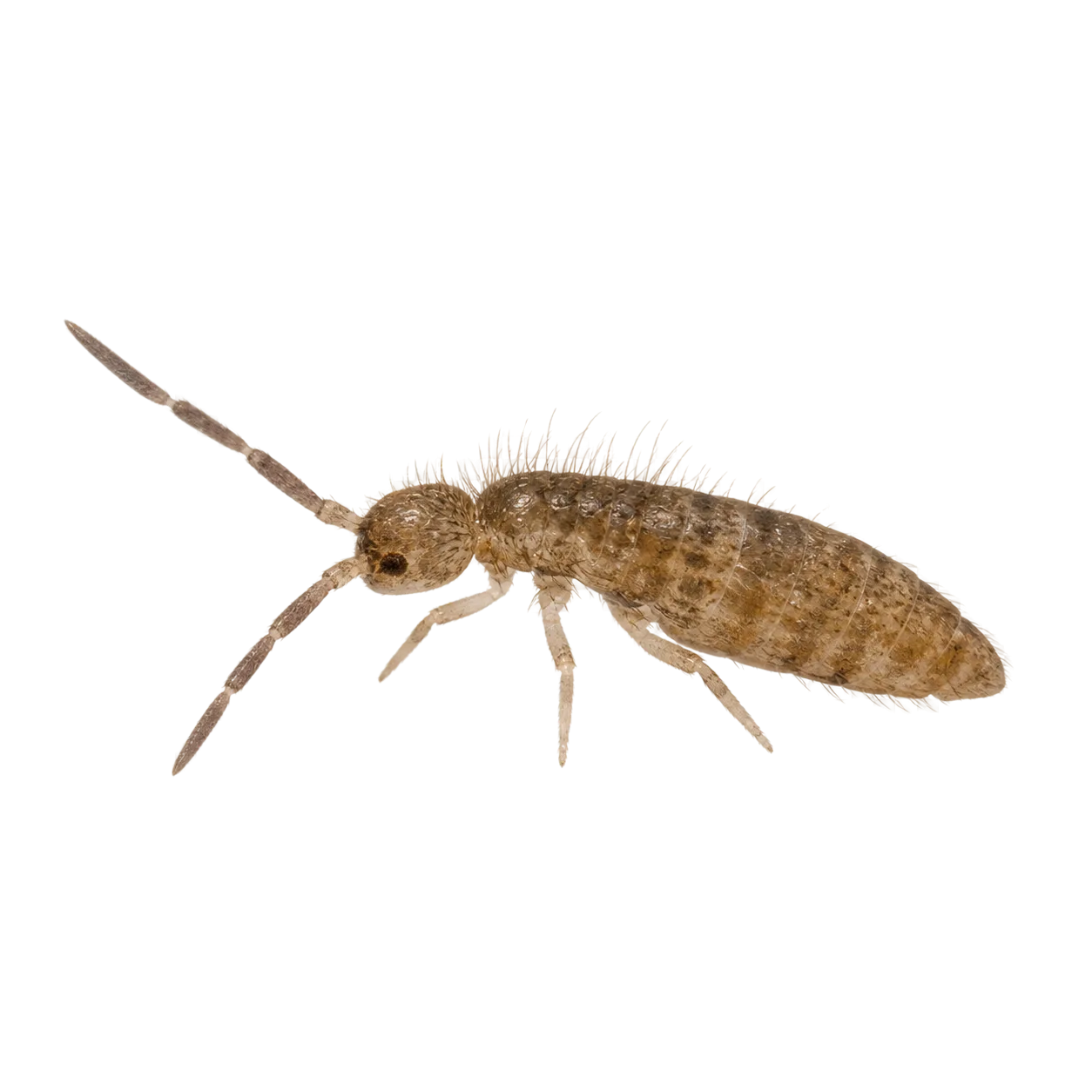
Short answer: Springtails are tiny, soft-bodied insects – usually less than 1/8 of an inch – that jump when disturbed using a forked structure under their abdomen. They’re harmless to people, pets, and property, and are found in nearly every yard in the Pacific Northwest.
Springtails belong to a group called Collembola, and there are roughly 700 species across North America alone. Most are gray, brown, or black – though some appear white, orange, or even metallic green. They’re nearly impossible to spot individually. You typically notice them because they show up in numbers.
The “spring” in springtail comes from a forked tail-like structure called a furculum. Under normal conditions it’s tucked under the body, but when the insect feels threatened it releases like a spring – launching the bug an inch or more into the air. That’s why a disturbed cluster of them looks like a tiny, chaotic explosion of jumping specks.
They don’t have wings and cannot fly. But they’re surprisingly mobile, and in the Pacific Northwest – with our wet winters, heavy spring rains, and damp crawl spaces – they have no shortage of places to thrive. A single cubic foot of moist Pacific Northwest soil can harbor thousands of them.
Are Springtails Harmful?
Short answer: No. Springtails do not bite, sting, or carry disease. They don’t damage wood, fabric, food, or household items. Their presence is annoying – but the only real concern is what their presence tells you about moisture levels in your home.
It’s worth being direct about this: springtails are not a health threat. They feed on decaying plant material, fungi, and algae – not on your home, your pantry, or you. In the soil outside, they’re actually beneficial, breaking down organic matter and helping maintain healthy ground. In the Pacific Northwest, they’re doing that work in virtually every yard and garden bed year-round.
Inside, they’re a nuisance. And if you’re seeing them in large numbers, they’re essentially acting as an early warning system. Springtails need moisture to survive. A heavy indoor infestation almost always points to a moisture problem worth addressing – whether that’s a dripping pipe under the sink, an overwatered houseplant, condensation around windows, or a wet crawl space.
Why Are Springtails in My House?
Short answer: Springtails enter homes in search of moisture. In Oregon and Washington, activity peaks from late winter through early summer as heavy rains saturate the soil. Common indoor entry points include gaps around windows, doors, utility penetrations, and foundation walls – and once inside, they survive wherever moisture persists.
A few conditions consistently bring springtails indoors across the Pacific Northwest:
Wet weather and saturated soil. In Oregon and Washington, springtails are most active from late winter through early summer. Heavy rains saturate the soil and send them looking for relief – including up the side of your house and through any gap they can find. After a prolonged wet stretch, even homes with no prior history can see sudden large numbers.
Mulch and organic debris near your foundation. Springtails thrive in mulch. If you’ve got a thick bed right up against your foundation, you’ve essentially created a staging area – high moisture, plenty of decaying material, and direct access to gaps in the structure.
Moisture inside the home. Plumbing leaks, high humidity, condensation under sinks, overwatered houseplants – any persistent damp spot can sustain a springtail colony. They’ve been found living in wet insulation inside wall voids, toilet tank bases, floor drains, and damp basement corners.
Crawl spaces. This is the big one in the Pacific Northwest. If your crawl space has moisture issues – poor drainage, no vapor barrier, or inadequate ventilation – it can become a springtail hotspot that feeds populations throughout the home. A damp crawl space doesn’t just invite springtails; it also creates the conditions for rot, mold, and rodents. If you’re seeing persistent springtails and haven’t had your crawl space evaluated, that’s the place to start.
One thing worth knowing: springtails that wander indoors without an ongoing moisture source typically die out on their own within a few days. The ones that stick around have found something to live on.
How Do I Get Rid of Springtails? (6 Steps to Try This Week)
Short answer: Moisture control is the real solution. The six highest-impact steps are – find the moisture source, pull mulch back from your foundation, fix drainage issues, let houseplants dry out between waterings, seal gaps around doors and windows, and vacuum up any active clusters. Pesticides alone rarely produce lasting results for springtails.
You don’t need a technician to start making meaningful progress on springtails. Most of the highest-impact steps cost nothing and take an afternoon.
1. Find the Moisture Source
Start here – everything else is secondary. Check for leaking pipes, dripping faucets, and condensation issues under sinks and in bathrooms. Pull the washing machine out and check behind it. Inspect window frames for moisture intrusion. If you’re seeing springtails concentrated in a specific area of the house, that area has a moisture problem. Eliminate it and the population follows.
2. Pull Mulch Back From Your Foundation
Clear mulch at least 12 inches back from the base of your house. This removes the primary springtail habitat closest to your entry points and significantly reduces the population pressure against your foundation perimeter. It also helps with moisture – mulch holds water against your siding and foundation, compounding the problem.
3. Adjust Your Irrigation and Drainage
Downspouts that drain too close to the house, landscapes that slope toward the foundation, and overwatering all contribute to the saturated soil conditions that drive springtail populations. Extend downspouts to carry water further from the structure, grade soil away from the foundation where you can, and pull back irrigation coverage near the house.
4. Let Houseplants Dry Out
If springtails are in your potted plants, they’re living in the soil. Let the soil dry more thoroughly between waterings – watering deeply and less frequently is better for the plant and eliminates the springtail habitat at the same time. Soil mixes high in peat are especially attractive to springtails; repotting into a better-draining mix can help with chronically infested plants.
5. Seal Gaps Around Doors, Windows, and the Foundation
Caulk cracks in your foundation, replace worn door sweeps, and use foam weatherstripping where needed. For utility penetrations – gas lines, water lines, dryer vents – steel wool packed tightly into the gap and sealed with caulk is a reliable fix. Reducing entry points matters most during wet stretches when outdoor populations are high and looking for a way in.
6. Vacuum Them Up
For an active indoor cluster, vacuuming works fine. It won’t solve the underlying issue, but it handles the immediate annoyance and lets you monitor whether populations are growing or declining as you address the moisture sources. Empty the vacuum outside immediately after.
When Should I Call a Professional for Springtails?
Short answer: Call a professional if springtails keep coming back after you’ve addressed obvious moisture sources, if you suspect a crawl space moisture problem, or if you’re not confident in what you’re dealing with. Persistent springtail pressure in Oregon and Washington homes typically points to a hidden moisture issue that’s worth finding – not just managing around.
DIY moisture control and exclusion work handle the majority of springtail problems. But a few situations call for a trained technician – and the reasons usually come down to access, hidden moisture sources, and the cost of leaving a crawl space problem unaddressed.
- Springtails keep appearing after you’ve addressed the obvious moisture sources – suggesting a hidden issue like wet insulation in a wall cavity, a slow slab leak, or a drainage problem under the foundation
- You’re seeing activity throughout multiple rooms, not just near one damp spot
- You haven’t had your crawl space inspected and you’re in an older Oregon or Washington home – crawl space moisture is one of the most common drivers of persistent springtail problems in the region
- You’re not sure what you’re dealing with – springtails are sometimes confused with fleas or other biting insects; if something is actually biting your family or pets, it isn’t springtails and you’ll want an accurate identification before treating
- You want a professional evaluation of your foundation perimeter, crawl space, and entry points before a home sale or major renovation
A thorough inspection typically covers the full perimeter, the crawl space, and every utility penetration. If there’s a moisture issue driving the springtails, finding it early is almost always less expensive than dealing with what moisture problems become over time – rot, mold, and structural damage.
Frequently Asked Questions About Springtails
No. Springtails have no biting mouthparts capable of breaking human or pet skin. If something is biting you or your pets, it isn’t springtails. Common culprits to investigate include fleas, bed bugs, carpet beetles, and mites – all of which require different treatment approaches.
Activity peaks in the Pacific Northwest from late winter through early summer as heavy rains saturate the soil. Indoor populations sustained by home moisture can persist year-round, however. Interestingly, snow fleas – a type of springtail – are active on the surface of snow in late winter as the ground begins to thaw, and are a common sight in wooded areas of the region.
No. Springtails do not eat wood, fabric, food, or structural materials. The moisture conditions that attract them can cause serious damage over time – rot, mold, and structural deterioration – but the springtails themselves are harmless to the structure.
Bathrooms provide exactly what springtails need: moisture, humidity, and organic residue in drains. Check for slow drips under the sink, condensation around the toilet base, and grout or caulk that has deteriorated and is trapping moisture behind tile. Floor drains and overflow drains are common harborage points.
Pesticides alone are rarely effective for springtails and are generally not recommended for indoor use. Because populations are sustained by moisture conditions – not by a harborage you can spray – chemical treatments without moisture control just delay the problem. The University of Minnesota Extension notes that pesticides should not be used indoors for springtails. Addressing the moisture source is the only lasting fix.
They crawl through gaps around doors, windows, utility penetrations, and foundation walls. Saturated soil following heavy Pacific Northwest rains, snowmelt, or over-irrigation pushes springtails toward and into structures. Mulch beds against the foundation, deteriorated door sweeps, and unsealed utility penetrations are the most common entry points we find during inspections.
A Dry Home, One Step at a Time
Springtails are one of those pests that respond almost entirely to one thing: moisture management. Fix the wet conditions and the problem resolves. Leave them unaddressed and no amount of treatment will hold. If you’re seeing persistent activity and can’t identify the source, or you just want a second set of eyes on your crawl space and foundation, we’re here to help. Our team serves homeowners across Oregon and Washington, and an inspection is always a good place to start.
The best solution, as always, is just down the road.
Trusted Pest Control Across Oregon and Washington
Interstate Pest Management has been serving Pacific Northwest homeowners since 1963. Our teams cover Vancouver, Portland, Olympia, Kelso, and Salem – and if springtails, moisture issues, or any other pest are giving you trouble, we’d love to meet you.
Give us a call or schedule online to get started. We’ll take a look and tell you exactly what’s going on.