Odorous House Ants
You crush one of those tiny black ants on your counter, and a strange smell hits you—like rotten coconut or weird blue cheese. You’re not imagining it. You have just met the Odorous House Ant, and that signature scent is the first clue to understanding the world they’ve built inside your walls.
That distinct aroma is a chemical defense, a tiny alarm bell released when the ant is threatened. Their primary targets are moisture and, above all, the sugary sweets found in almost every kitchen. Understanding their behavior is the first step to managing an infestation.
What Are Odorous House Ants?
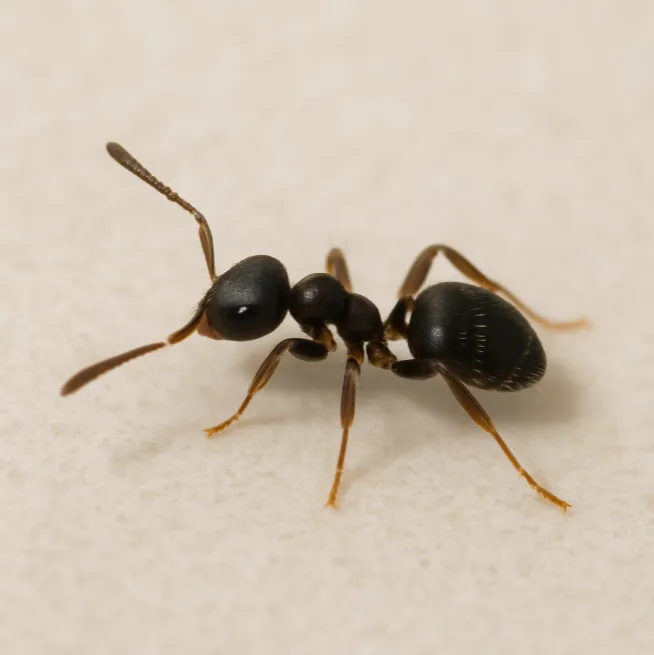
If you’ve spotted tiny, dark ants darting across your kitchen counter, you’ve likely met the Odorous House Ant. At just 2.4 to 3.3 millimeters long, these dark brown or black insects are defined by their behavior: instead of marching in a perfect line, they often move erratically when disturbed. Their name comes from the distinct, rotten coconut-like smell they release when crushed—a key clue for identifying them without a magnifying glass.
These ants are often mistaken for another tiny invader, the Pharaoh ant. While Odorous House Ants are dark and have a powerful sweet tooth, Pharaoh ants have pale, yellowish bodies and prefer greasy or high-protein foods. Correctly identifying your tiny trespasser is crucial because it tells you exactly what they’re after and helps pinpoint the source of the invasion.
How One Ant Becomes an Army: Inside the “Superorganism”
Unlike the single-monarch kingdoms of many ant species, Odorous House Ant colonies operate more like a sprawling empire with multiple queens. Having dozens of egg-layers makes the nest an incredibly resilient baby-making factory. This structure is a key part of what scientists call a “superorganism,” where the colony itself, not the individual ant, is the true entity.
When these colonies feel threatened—say, from a spray of cleaner—they don’t just die off; they multiply. This survival tactic is called “budding.” A queen will grab a group of workers and young, then split off to start a new, fully-functional nest nearby. Your one colony problem can suddenly become three or four, often just feet away inside a wall void or under a floorboard.
This is why squishing a few foragers does little good. You’re merely swatting at the scouts of a much larger, more complex operation. The real challenge isn’t the handful of ants you can see, but the thousands you can’t.
The Invisible Highways Ants Use to Find Your Crumbs
Ever wonder how a single ant can become a full-blown invasion in under an hour? The secret lies in an invisible language of scent. When a scout stumbles upon a food source, it lays down a trail of chemicals called pheromones on its way back to the nest. Think of it as leaving scented breadcrumbs that only its siblings can follow.
At first, that trail is just a whisper. But as more recruits follow it to the food, they reinforce the path with their own pheromones. With each new ant, the whisper becomes a shout, creating a bustling, invisible highway leading directly from the colony to your kitchen. This is also why simply wiping a counter with soapy water is so effective—it doesn’t just remove the food; it completely erases the road map.
Are They Damaging My House? Carpenter Ants vs. Odorous Ants
Seeing a trail of ants often sparks one big question: are they damaging my house? For Odorous House Ants, the answer is no. They are a “nuisance pest”—annoying, but harmless to your home’s structure. Carpenter ants, however, are a different story. These larger ants don’t eat wood, but they chew through it to carve out smooth tunnels for their nests, which can weaken beams over time.
The tell-tale sign of carpenter ants isn’t the ants themselves, but what they leave behind: small piles of what looks like fine sawdust, often mixed with insect parts. This material, called frass, is the debris they push out of their tunnels. You might find it on window sills, in basements, or along baseboards.
Sometimes, you might see winged insects swarming. Here’s how to tell if it’s an ant mating flight or a more destructive termite swarm:
Waist: Ants have a pinched waist; termites have a broad one.
Antennae: Ants have bent (“elbowed”) antennae; termites’ are straight.
Wings: Ants have two pairs of unequal length; termites have two equal pairs.
How to Find Their Hidden Pheromone Highway in Your Home
Finding where the ants are coming from is key. Instead of just cleaning the trail, use it to your advantage. Place a small drop of honey or jelly on a piece of foil near the ants. Before long, they’ll establish a strong pheromone highway to the prize. Now you can easily follow this bustling route back to the source.
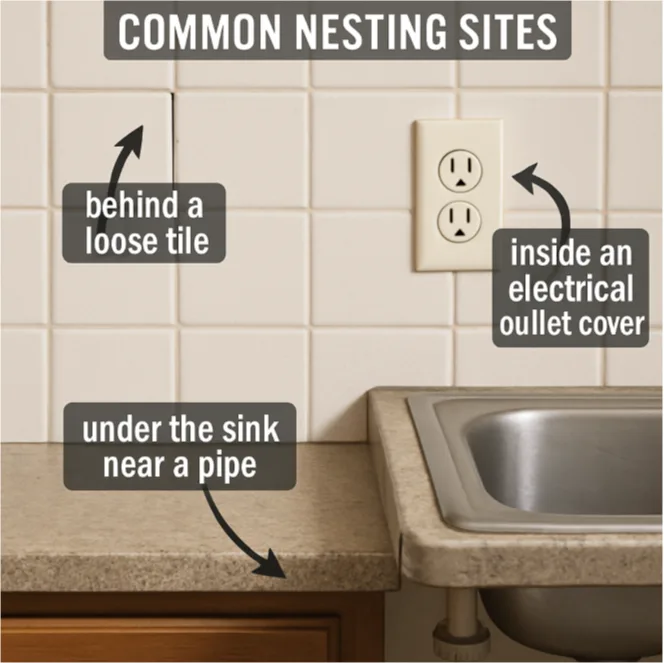
Often, the trail won’t lead outside but to a secret hideout inside your walls. Nuisance ants love cozy, undisturbed spots with a bit of moisture. Check under a sink where pipes enter the wall, behind a loose backsplash tile, or even inside the cover of an electrical outlet. The surest sign of a nest is seeing a steady, two-way traffic of ants on their pheromone highway disappearing into a tiny crack.
Reclaiming Your Kitchen: 3 Natural Ways to Discourage Ants
Now that you know their entry point, the most powerful tactic isn’t a spray—it’s sanitation. Since ants seek food and water, the best defense is to remove their supply. Thoroughly wiping counters, sweeping floors, and storing food in sealed containers makes your kitchen uninteresting.
With food sources gone, you can bar the door. Sealing the tiny crack you found with a simple line of caulk creates an impenetrable wall. This exclusion method is one of the most permanent natural ways to get rid of household ants.
Finally, to prevent a new party from starting, you must erase their invisible road map. Wiping your surfaces with a 50/50 solution of white vinegar and water destroys the pheromone scent trails, leaving future scouts lost.
From Pest to Planet
Seeing an ant on your counter is no longer a mystery, but a message. By understanding what the colony seeks along their pheromone highway, you can effectively manage your space. While a nuisance indoors, these same ants are allies outside, aerating garden soil and defending plants. The tiny intruder becomes a fascinating glimpse into a vast world operating just beneath your feet, a world you can now see with new eyes.
Professional Help for Odorous House Ants
Odorous house ant infestations are persistent, durable, and will be made worse by treating them incorrectly.
It is also important to ensure you are treating the correct species, because each species in the Northwest is treated a little differently.
Interstate Pest Management will inspect your home, identify the species, and apply targeted control methods designed to truly solve your ant problem.
Check out our Tech Talks for more information about living pest free. And if you want help from a pro, give us a call at 360.382.2451