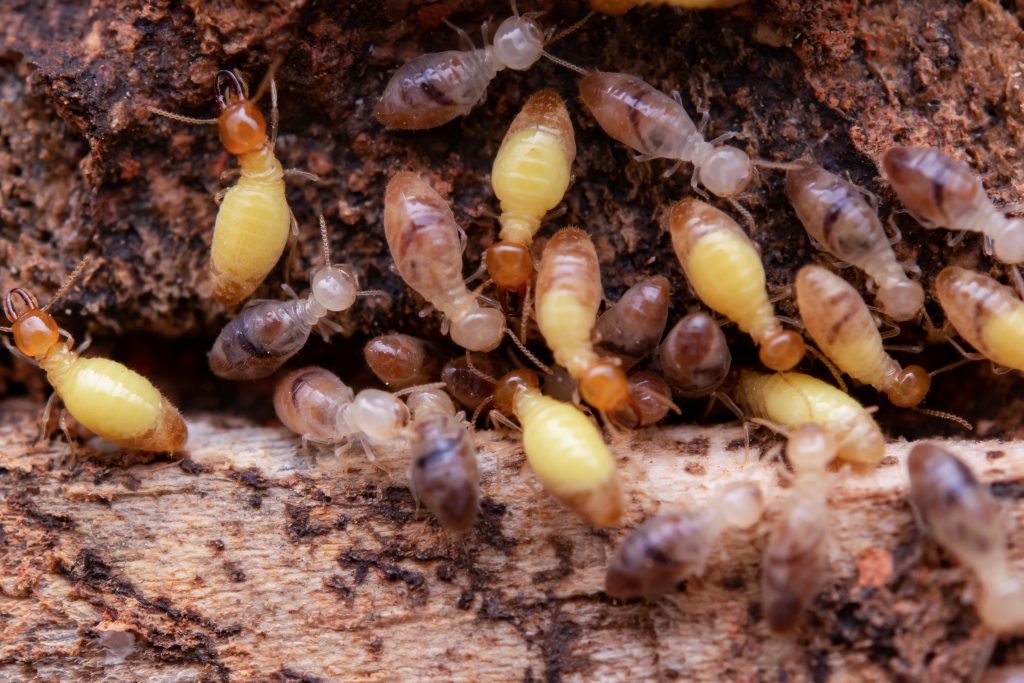
Termites in Oregon & Washington
Reviewed by TJ Jackson, Associate Certified Entomologist · Updated 2026-10-09
Category: Termites | 3 termites covered | Inspection first, treatment quoted separately
Seen winged termites or found soft wood? Oregon and Washington have three termites worth knowing, and each one has a different fix. The Pacific dampwood termite is the one people here see most, a big termite that lives in wet wood and swarms to porch lights in late summer. The subterranean termite lives in the soil, builds mud tubes, and can eat dry framing. The drywood termite is a California pest that only shows up here now and then in furniture or lumber brought from southern states. Knowing which one you have tells you whether you need a carpenter, a treatment, or nothing at all.
Not sure which termite you have? Start with an inspection.
4.96 stars from 8,394 Google reviews · Family-owned since 1963
| Pacific Dampwood | Large, 3/4 to 1 in with wings; lives in wet wood; swarms August and September |
|---|---|
| Subterranean | Small, about 3/8 in with wings; lives in soil; builds mud tubes |
| Drywood | Rare here; dry wood; six-sided pellets below tiny holes |
| Termite or Ant? | Termites: straight antennae, thick waist, four equal wings |
| Busiest Season | August through October in our records |
| Risk | No risk to people; real risk to wood |
| Plan Coverage | Inspection first; termite work quoted separately from the All Seasons Plan |
Quick Answer: Oregon and Washington have two common termites and one rare one. The Pacific dampwood termite is the largest, and the most prevalent west of the Cascades; it lives in wet or decaying wood, swarms in late summer and fall, and is usually solved by fixing moisture and replacing damaged wood. The western subterranean termite lives in soil colonies, reaches wood through mud tubes, can attack dry wood, and is more common east of the Cascades; it calls for professional treatment. The western drywood termite is a California pest found only occasionally in the Northwest, usually in imported furniture or lumber, with no evidence it is established. Termites have straight antennae, a thick waist and four wings of equal length, which separates them from flying ants. A swarm alone does not prove a house is infested; mud tubes, pellets and damaged wood do.
Key facts at a glance: Dampwood: big, wet wood, most common west of the Cascades · Subterranean: soil, mud tubes, treat professionally · Drywood: rare imports · Swarms peak August and September · Treatment: inspection first, quoted separately.
Most termite calls start with an inspection. In our records, 58% of termite visits were inspections, and about 3 in 4 new termite customers started with one.
Termites in Oregon & Washington Homes
The Northwest’s largest termite
Pacific Dampwood Termite
Most Common HereZootermopsis angusticollis
The big brown termite at the porch light in August and September. It lives in wet or rotting wood and points to a moisture problem. Fix the water and replace the wood, and it is done.
- Size:
- 3/4 to 1 in with wings
- Top ID:
- Large size, wet wood
Subterranean Termite
Needs TreatmentReticulitermes hesperus
Lives in soil and travels up into wood through mud tubes. It can eat sound, dry framing and rarely goes away on its own. More common east of the Cascades, but found on the west side too.
- Size:
- About 3/8 in with wings
- Top ID:
- Mud tubes
Drywood Termite
Rare HereIncisitermes minor
A California termite that lives in dry, sound wood. In the Northwest it shows up only now and then in furniture or lumber from the South, with no evidence it is established.
- Size:
- Small colonies
- Top ID:
- Six-sided pellets
Frequently Asked Questions
What kind of termites live in Oregon and Washington?
Two are common: the Pacific dampwood termite and the western subterranean termite. The PNW Pest Management Handbook says dampwood termites are more prevalent in western Oregon and Washington and subterranean termites more common east of the Cascades. The western drywood termite has been found occasionally, in imported furniture or lumber, with no evidence it is established.
I saw flying termites. Is my house infested?
Not necessarily. Oregon State University says swarms of flying termites are not a sign of an infestation in a structure. Here, most late-summer swarmers are dampwood termites, which live in stumps, logs and other wet wood. Signs of an infestation are mud tubes, pellets, and soft or damaged wood. If you see termites coming from inside a wall or floor, get an inspection.
How do I tell termites from flying ants?
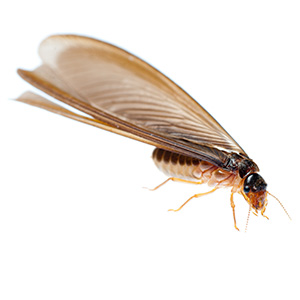
Termites have straight antennae, a thick waist, and four wings all the same length. Ants have elbowed antennae, a pinched waist, and hind wings shorter than the front wings.
When do termites swarm in the Pacific Northwest?
Dampwood termites swarm in late summer and fall, and public sightings peak in August and September. Subterranean termites can swarm any time of year, and public sightings for them cluster in September and spring.
Do I need to treat for termites?
It depends on the termite. Dampwood termites are usually solved by fixing the moisture and replacing the wet wood; Washington State University says pesticides are rarely needed. Subterranean termites call for professional treatment with a soil barrier or bait stations. That is why we inspect before quoting.
What is a WDO or WDI inspection?
A wood destroying organism (or insect) inspection checks a home for termites, carpenter ants, moisture ants, wood-boring beetles, wood decay fungi and the conditions that invite them. In Washington, a complete WDO inspection for a sale, exchange or refinance must be done by a WSDA-licensed structural pest inspector working for a licensed inspection company, and comes with a written report.
What attracts termites to a house?
Moisture and wood touching soil. Washington’s conducive-condition rules list things like earth-to-wood contact, blocked gutters, debris and bare soil in the crawl space, standing water and leaks. Those are the same things we look for on an inspection.
Is termite work part of the All Seasons Pest Plan?
No. Termite work starts with an inspection and is quoted separately, because the right fix depends on which termite you have and what is drawing it in.
Signs of Termites
1. Swarmers or shed wings
Winged termites at lights or windows, or piles of wings on sills. Big brown swarmers in late summer are usually dampwood termites.
2. Mud tubes
Tunnels of soil on foundations, piers or pipes. These point to subterranean termites.
3. Pellets near damaged wood
Small pellets in or below damaged wood. Rounded pellets in wet wood point to dampwood termites; six-sided ones to drywood.
4. Soft or hollow wood
Wood that a screwdriver sinks into, sounds hollow, or looks blistered under the paint.
5. Wet wood and leaks
Rotting sills, trim and posts, and long-term leaks. Dampwood termites only live in wood that is or has been wet.
6. Wood touching soil
Siding, posts or form boards in contact with soil or mulch, and scrap wood in the crawl space.
Local Context: Oregon and Washington
8 in 10 termites found in Oregon and Washington are dampwood termites. Most of our termite work starts with an inspection.
Of the 2,143 verifiable termite sightings logged on iNaturalist in Oregon and Washington from 2021 to 2025, 80% were dampwood termites, 12% were subterranean termites, and none were drywood termites. Sightings bunch tightly into late summer: 63% fall in August and September, when the big dampwood swarmers fly to lights.
Our records follow the same calendar. Across five years in Portland, Vancouver, Salem, Olympia and Kelso, 52% of the visits where we recorded termites came August through October. Most of our records say termites without naming the species, so this line covers all termites.
What our records show most clearly is how much of the job is finding out. 58% of our termite visits were inspections, and about 3 in 4 new termite customers started with one. With dampwood termites so common here, and WSU noting pesticides are rarely needed for them, the first answer is often a moisture fix.
Termite sightings and our termite visits both peak in late summer.
Each series is its share of the annual total, so the two are directly comparable. The orange line is our visits that recorded any termite.
Blue line: verifiable iNaturalist observations of all termites (Termitoidae) in Oregon and Washington, grouped by the month observed. See the records on iNaturalist.
Swarm season is inspection season
Our visits hold up into October, after most swarms have passed, as people go looking for the source. Recorded termite sightings grew from 255 in 2021 to 642 in 2025, though some of that is more people using the app.
Worth knowing before you book
Home sales add a second wave of termite checking. Our wood destroying insect (WDI) inspections peak in August, with 57% falling August through October, and WSDA says nearly all complete WDO inspections in Washington are part of a sale, exchange or refinance. Fewer than 1 in 50 of those inspections led to a termite treatment visit in the next four months.
So if you are worried about termites, start with an inspection. The answer is usually one of three: dampwood termites in a wet spot that needs repair, subterranean termites that need treatment, or something else entirely, like carpenter ants, beetles or old damage.
Who sees termites when
Each row is that source’s share of its own annual total, by month. Darker means a bigger share. Our WDI inspections run 2022 to 2025; the rest run 2021 to 2025.
Blue rows are public data (iNaturalist sightings, Google searches). Orange rows are our records. Values are percent of the year. Weekly search volume is low, so single months are noisy.

“Finding winged termites or soft wood in the house is unsettling, and the first thing everyone asks is how bad it is. About 4 in 5 termites people report seeing in Oregon and Washington are dampwood termites, and those only live in wood that stays wet. That is why most of our termite visits start as inspections. We figure out which termite you have, show you where it is living, and tell you what fixes it, whether that is a carpenter, a treatment or nothing at all. Waiting a few years to find out is what gets expensive.”TJ Jackson · ACE, Director of Operations, Interstate Pest Management
Termite work starts with an inspection and is quoted separately from the All Seasons Plan. QualityPro certified.
Call your local office
- Portland503-782-1899
- Vancouver360-996-1442
- Salem503-461-0259
- Olympia360-526-8004
- Kelso / Longview360-515-3882
Sources: Interstate Pest Management service records, 2021 to 2025, completed visits with termites recorded, new termite customers and WDI inspections. Sightings: public iNaturalist records of termites for Oregon and Washington, 2021 to 2025. Search interest: Google Trends for termites, Oregon and Washington, 2021 to 2025, combined in proportion to population. Biology and rules: PNW Pest Management Handbooks, WSU PestSense, Oregon State University, UC Statewide IPM Program, UC IPM ant key, Washington State Department of Agriculture, WAC 16-228-2025. Updated October 2026.
Termite Swarmers vs. Flying Ants
| Feature | Termite Swarmer | Flying Ant |
|---|---|---|
| Antennae | Straight | Elbowed (bent) |
| Waist | Thick, no pinch | Pinched, narrow |
| Wings | Four, all the same length | Hind wings shorter than front wings |
| Most common here | Dampwood (big, brown) and subterranean (small, dark) | Carpenter ants, moisture ants and others |
| What it means | Inspection to find the source | Identify the ant and find the nest |
How Termite Inspections and Treatment Work
Step 1
Inspection
We find out whether you have termites, which kind, and what is drawing them in: wet wood, wood touching soil, crawl space moisture or debris. In Washington, a complete wood destroying organism (WDO) inspection for a home sale comes with a written report.
Schedule a Termite InspectionStep 2
A plan that fits what we find
Dampwood termites are usually solved by fixing the moisture and replacing the damaged wood. Subterranean termites call for professional treatment, such as a soil barrier or bait stations. You get a quote after the inspection. Termite work is separate from the All Seasons Plan.
Book NowWhat Our Customers Are Saying