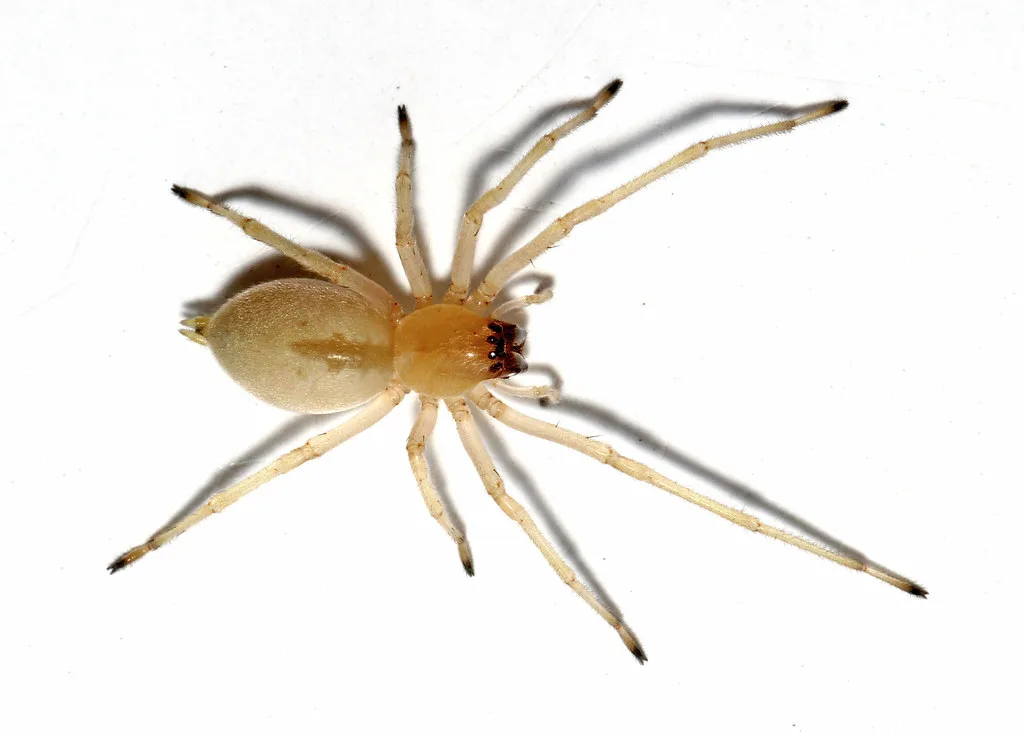
Long-Legged Sac Spider
Reviewed by TJ Jackson, Certified ACE · Updated 2026-07-24
Cheiracanthium spp. | Also called the yellow sac spider | ✓ Covered: All Seasons Pest Plan
The long-legged sac spider is small, pale, and easy to overlook — right up until it becomes one of the most common indoor biters in the Pacific Northwest. Named for its noticeably long front legs and the silk tube it hides in during the day, this is the spider most likely to end up in your bedsheets or a towel left on the floor. The good news: despite an old and stubborn reputation, its bite is far less serious than the myths suggest.
What You Need To Know About Long-Legged Sac Spiders
Our ACE Certified Technician TJ breaks down long-legged sac spiders — how to spot the silk retreat, why they bite more than other spiders, and what a bite actually does.
Frequently Asked Questions
Why do long-legged sac spiders bite more than other spiders?
Behavior, not aggression. They wander at night to hunt, so they’re far more likely than web-bound spiders to end up in bedding, clothing, or a towel. Nearly every bite happens when the spider gets pressed against skin and has nowhere to go. They don’t seek people out.
Are the bites actually dangerous?
No. They were blamed for years for necrotic wounds, but current research doesn’t support it. Verified bites cause mild local stinging, redness, and sometimes slight swelling that clears in a few days. The only PNW spider with real medical risk is the black widow.
How do I know it’s a long-legged sac spider?
Small, pale cream or yellow, with a long first pair of legs and darker mouthparts. The easiest tell is the small silk tube retreat where the wall meets the ceiling — with no capture web attached.
How do I keep them out of the bedroom?
Keep bedding off the floor, shake out clothing left out overnight, and vacuum the silk retreats along wall-ceiling joints. Reducing the insects they hunt and sealing entry gaps cuts down how many make it inside.
Does the All Seasons Pest Plan cover them?
Yes — including treatment of active infestations, exterior web and retreat removal, and free re-service visits if activity returns between appointments.
Quick Answer: The long-legged sac spider (Cheiracanthium spp.), also called the yellow sac spider, is a small, pale cream or yellowish spider about 1/4″ to 3/8″ long with a long first pair of legs. It builds no capture web — it hunts at night and rests by day in a small silk tube retreat, usually at a wall-ceiling joint. It accounts for more indoor bites than almost any other PNW spider, simply because it wanders into bedding and clothing. The bite itself is mild: local stinging and redness that clears in a few days.
Most important distinction: The necrotic-wound reputation is outdated. Long-legged sac spiders are not medically significant. The only PNW spider that poses a real medical risk is the black widow.
Behavior & Biology
The long-legged sac spider belongs to the genus Cheiracanthium, a group of small, pale hunting spiders found throughout North America. It’s often called the yellow sac spider for its coloring. In the Pacific Northwest it’s present year-round but becomes noticeably more common indoors from late summer through fall, when cooling weather pushes it in from gardens, leaf litter, and exterior siding.
Its defining feature is that long first pair of legs, which it uses to feel its way across surfaces as it hunts after dark. Unlike web-building spiders, it produces silk only for its retreat — a small tube-shaped sac, roughly the size of a grain of rice, tucked into a wall-ceiling seam, a corner, or a curtain fold. During the day the spider seals itself inside. Females also use these retreats to guard egg sacs, which is why you may find several clustered together.
Long-legged sac spiders account for a disproportionate share of verified indoor spider bites in the region, but that’s a function of proximity rather than temperament. Because they roam at night, they wind up in bedsheets, folded laundry, and shoes far more often than spiders that stay put in a web. A bite happens only when the spider is trapped against skin with no way out.
What To Do If You Have Long-Legged Sac Spiders
Because these are the spiders most likely to bite indoors, a few simple habits go a long way — the goal is removing their retreats and keeping them out of the places you sleep and dress.
Vacuum the silk retreats
Run a vacuum along wall-ceiling joints, corners, and behind furniture. This removes both the spiders and any egg sacs. Empty the canister outside afterward.
Keep bedding and laundry off the floor
Since nearly every bite happens when one is trapped against skin, keeping bedding elevated and shaking out clothing left on the floor removes most of the risk.
Reduce their food source
They follow insects. Cutting down interior gnats, flies, and other small insects — and the exterior lights that draw them — removes the reason sac spiders stay.
Seal entry points
Window screens, door sweeps, and gaps around siding and utility lines are the main routes in. Sealing these reduces sac spiders along with everything else that wanders inside in fall.
Plans That Cover All PNW Spider Species
All Seasons Pest Plan
$39/month
Setup fee ~$260 for initial treatment
Year-round protection from the pests Pacific Northwest homeowners deal with most — spiders, ants, wasps, box elder bugs, and more. Includes exterior web removal with every visit.
- Recurring exterior treatments
- Exterior web removal
- Free re-service between visits
Pest & Rodent Bundle
$47/month
Setup fee ~$280 for initial treatment
The most complete protection for your home. Full pest coverage plus active rodent monitoring — one plan, one team, one less thing to worry about.
- Everything in Pest & Rodent plans
- Best value for whole-home protection
- Free re-service guarantee