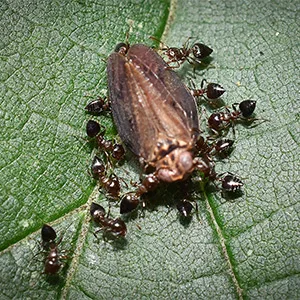
Acrobat Ants
Reviewed by TJ Jackson, Certified ACE · Updated 2026-07-24
Crematogaster spp. | Category: Ants | ✓ Covered: All Seasons Pest Plan
Acrobat ants earn their name with a party trick: when disturbed, they hoist a distinctive heart-shaped abdomen up over the rest of their body, almost like a scorpion’s tail. It’s the fastest way to recognize them. They’re small, common across Oregon and Washington, and mostly a nuisance. But because they like to nest in wood that’s already damp or damaged, an acrobat ant indoors can occasionally point to a hidden moisture problem worth a closer look.
What You Need To Know About Acrobat Ants
Frequently Asked Questions
How do I know it’s an acrobat ant?
The heart-shaped abdomen raised up over the body is the giveaway, most visible when the ant is agitated. They’re small, about an eighth of an inch, and often bicolored with a darker rear. If you see a small ant flag its heart-shaped back end into the air, that’s an acrobat ant.
Are acrobat ants dangerous?
Not to people in any serious way. They can bite and can give off a defensive odor when disturbed, but they’re not a medical threat. The bigger concern is what they signal: they like to nest in wood already damaged by moisture or past carpenter ant or termite activity, so finding them inside can point to a hidden problem.
Why are acrobat ants in my house?
They follow food and moisture, traveling along wires, tree branches, and pipes that touch the house. Indoors they go after sweets and proteins. Because they favor damp or damaged wood, an indoor trail sometimes leads back to a roof leak or a moist wall void.
How do I get rid of them?
Trim branches and vegetation away from the house, seal gaps around wires and pipes, and fix any moisture or wood-damage source drawing them in. Baiting helps, but because acrobat ants often nest in concealed damaged wood, finding and treating the nest is usually a job for a pro.
Does the All Seasons Pest Plan cover acrobat ants?
Yes, including the initial treatment, scheduled seasonal service, and free re-service visits if activity returns between visits.
Quick Answer: Acrobat ants (Crematogaster spp.) are small ants, about an eighth of an inch long, named for raising a distinctive heart-shaped abdomen up over the body when disturbed. They range from light brown to black and are often bicolored. They nest in moist or previously damaged wood, foam insulation, and outdoors under bark. They’re mostly a nuisance, but because they favor damaged wood, an indoor acrobat ant can be a clue to a hidden moisture or wood-damage problem.
Most important distinction: Acrobat ants don’t initiate wood damage the way carpenter ants do. They move into wood that’s already compromised, so they’re an indicator, not the original cause.
Behavior & Biology
Acrobat ants belong to the genus Crematogaster, a widespread group named for the heart-shaped abdomen that gives them their acrobatic look. When a worker is threatened, it lifts that abdomen up and over the rest of its body, a posture that’s both a defensive display and the single most reliable way to identify the species in the field.
Outdoors, acrobat ants nest under bark, in dead tree limbs, in old logs, and in wood softened by moisture. When they move toward structures, they gravitate to the same conditions: damp framing, wood damaged by a leak, and even foam insulation, which they’ll hollow out to create galleries. They frequently travel along tree branches, utility wires, and pipes that bridge from the yard to the house.
Colonies are moderate in size and tend to relocate readily when disturbed. Workers forage for sweets, proteins, and the honeydew produced by aphids and other insects, which is why you’ll often see them trailing up shrubs and trees. Because their preferred nesting wood is already compromised, an acrobat ant infestation indoors is worth treating as a prompt to check for the underlying moisture source.
What To Do If You Have Acrobat Ants
Acrobat ants are manageable, and the fixes double as good home maintenance. The key is cutting off their travel routes and removing the damp wood that draws them.
Trim the bridges to your house
Cut tree limbs and shrubs back from the roof and walls. Acrobat ants routinely travel branches and wires to reach the structure, so removing those bridges cuts off the main route in.
Fix the moisture source
Since they nest in damp, damaged wood, tracking down and repairing a leak or damp wall void removes the reason they moved in and prevents a repeat.
Seal entry points
Caulk gaps around utility lines, pipes, and wiring where they enter the home. These penetration points are common acrobat ant highways.
Call a pro for the nest
Because the nest is often hidden in concealed damaged wood or insulation, locating and treating it directly is usually best handled by a technician.
Plans That Cover PNW Ant Species
All Seasons Pest Plan
$39/month
Setup fee ~$260 for initial treatment
Year-round protection from the pests Pacific Northwest homeowners deal with most: acrobat ants and every other common PNW ant, plus spiders, wasps, box elder bugs, and more.
- Recurring exterior treatments
- Seasonal pest coverage
- Free re-service between visits
Pest & Rodent Bundle
$47/month
Setup fee ~$280 for initial treatment
The most complete protection for your home. Full pest coverage plus active rodent monitoring. One plan, one team, one less thing to worry about.
- Everything in Pest & Rodent plans
- Best value for whole-home protection
- Free re-service guarantee