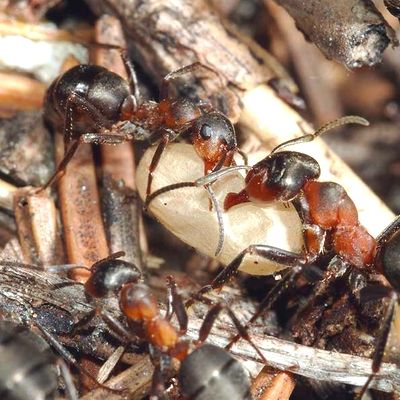
Moisture Ants
Reviewed by TJ Jackson, Certified ACE · Updated 2026-05-06
Lasius spp. | Category: Ants | ✓ Covered: All Seasons Pest Plan
Moisture ants are exactly what their name suggests — ants drawn to wet, decaying wood. Finding them inside your home is more than a pest problem: it’s a flashing warning light that water has been damaging your structure long enough for an ant colony to move in. They look harmless (small, yellowish-brown, slow-moving), but their presence means you have rotting wood somewhere, and they will accelerate the damage. The fix is two-part: eliminate the colony, and just as importantly, find and stop the moisture source feeding it.
| Size | 1/8″ – 3/16″ |
|---|---|
| Color | Yellow to light brown; queens darker brown |
| Top ID Marker | Lemon or citronella smell when crushed; nests in damp wood |
| Active Season | Year-round in PNW; swarmers appear August–October |
| Nest Sites | Rotten wood: deck joists, sill plates, leaky window frames, crawl space wood |
| Colony Size | Up to 10,000 workers; one queen per colony |
| Plan Coverage | ✓ Covered under All Seasons Pest Plan |
Quick Answer: Moisture ants (Lasius species) are small (1/8″–3/16″), yellow-to-light-brown ants found exclusively in wet, decaying wood. They emit a faint lemon or citronella smell when crushed. Unlike carpenter ants, moisture ants are typically secondary invaders — meaning they only enter wood that’s already rotting from a water leak or chronic moisture exposure. Their presence inside a home is a strong indicator of an underlying water damage problem that needs to be fixed alongside the ant treatment. They do not chew sound wood and do not bite, but they accelerate decay in already-compromised lumber.
Key facts at a glance: Size: 1/8″–3/16″ · Color: yellow/light brown · Tell-tale sign: citronella smell + rotting wood · Bites: no · Treatment timeline: 2–3 weeks · Plan coverage: Yes — All Seasons Pest Plan.
What You Need To Know About Moisture Ants
Our Certified ACE technician TJ Jackson breaks down ant identification and why store-bought sprays usually make infestations worse. (Pest-specific video coming soon.)
Frequently Asked Questions
What do moisture ants look like?
Moisture ants are small (1/8″ to 3/16″) and yellow to light brown — much paler than the dark carpenter and odorous house ants. They have a single petiole node between the thorax and abdomen, and emit a distinctive lemon or citronella smell when crushed.
Are moisture ants the same as carpenter ants?
No. Moisture ants are smaller (under 3/16″) and yellow-brown, while carpenter ants are larger (1/4″+) and black. Both nest in damp wood, but carpenter ants can excavate sound damp wood, while moisture ants almost always invade wood that’s already been weakened by rot.
Are moisture ants dangerous?
Not directly — they don’t bite or sting. But finding them inside is a serious warning sign that you have hidden moisture damage and rotting wood somewhere in the structure. The ant problem is a symptom; the moisture problem is the real issue.
Where do moisture ants nest?
In wood that’s been softened by water exposure: deck ledger boards, sill plates with foundation moisture, window frames with failed caulk, bathroom subfloors, around leaky pipes, and crawl space wood that has had water intrusion. Outdoors, they nest in old stumps and rotting logs.
Why do moisture ants smell like lemons?
When threatened or crushed, moisture ants release formic acid from glands in their abdomen — the same compound that gives lemons and citronella their citrusy scent. This is a defense mechanism and a useful identification trick.
Does the All Seasons Plan cover moisture ants?
Yes. Moisture ant treatment is fully included in the All Seasons Pest Plan. Because they indicate underlying moisture problems, our technicians will also point out the structural issue you’ll want to address — leaky gutters, plumbing drips, damaged flashing — to keep them from coming back.
Will moisture ants damage my house?
They accelerate damage in wood that’s already rotting, but they don’t initiate damage in sound wood. Once the wood is dried out and the moisture source is fixed, the colony loses its habitat and dies. Treatment plus moisture remediation is the only permanent solution.
How are moisture ants different from termites?
Termites eat wood as food and can attack sound wood; moisture ants only nest in wood that’s already rotting. Termites have straight antennae and no waist; moisture ants have elbowed antennae and a clear waist constriction. Termites leave mud tubes; moisture ants do not.
Signs You Have Moisture Ants
Most homeowners don’t see a single ant — they see a hundred. Here’s what to look for, in the order it usually shows up:
1. Soft, spongy wood
Push a screwdriver into suspect wood. If it sinks in easily — especially in deck joists, window frames, or sill plates — the wood is rotting and likely hosts a moisture ant colony.
2. Yellow-brown ants near plumbing
Small, pale yellowish ants under sinks, around water heaters, or in bathroom corners. Moisture ants almost always appear near a water source first.
3. Lemony smell
Crush one ant. A faint citrus or citronella odor confirms the species. This is the fastest field ID and rules out odorous house ants (which smell like rotten coconut) and carpenter ants (which have a faint vinegar smell).
4. Late-summer swarms indoors
August through October, winged moisture ants emerge from mature colonies. If you find dozens of small winged ants by windows in late summer, especially in bathrooms or basements, you almost certainly have an established colony in the structure.
5. Mud-like material in wood crevices
Some moisture ants build “carton” nests — a chewed wood-and-soil mixture they use to expand galleries. Look for dirty-looking material in wood seams and joints.
6. Mushrooms or fungi nearby
Where moisture ants thrive, so does wood-rot fungus. Visible mushrooms, fungal staining, or musty odors near the ant activity confirm advanced decay.
Behavior, Biology & Lifecycle
Understanding how moisture ants live is the single biggest reason professional treatment succeeds where DIY fails. Here’s what makes this species different:
Secondary invaders, not initiators
Moisture ants almost never attack sound, dry wood. They wait for water damage to soften wood, then move in. This is why repairing the moisture source is essential — without it, treatment is temporary.
Build carton-like nests
Some species mix chewed wood fibers with soil and saliva to build internal “carton” nests inside wood galleries. This material can fill voids and accelerate further decay by holding moisture.
Single queen per colony
Unlike odorous house ants, moisture ants have just one queen — meaning the colony cannot bud when threatened, and elimination is more straightforward once the queen is reached. Bait carried back to the nest is highly effective.
Diet: aphid honeydew and dead insects
Workers feed mainly on honeydew secreted by aphids and small dead insects. They tend aphid colonies on nearby plants and trees, much like dairy farmers tend cows.
Mating flights in late summer
Per OSU Extension, mature colonies release winged reproductives August–October. Indoor swarms inside the house are diagnostic — they don’t fly through windows, they emerge from a colony already inside.
PNW climate is ideal habitat
Western Oregon and Washington’s wet winters, mild summers, and abundant rotting forest debris give moisture ants year-round suitable habitat. Older homes with crawl spaces, decks, and wood-frame windows are at highest risk.
DIY Homeowner Steps
Find the moisture source first
Treating ants without fixing the water problem is futile. Check for roof leaks, gutter overflow, plumbing drips under sinks, failed window caulking, and crawl space humidity. Use a moisture meter on suspect wood if available.
Replace damaged wood
Once you’ve identified rotted wood — sill plates, deck boards, window frames — have it replaced. The ants need this wood to live; remove their habitat and you’ve done most of the work.
Improve crawl space ventilation
Vapor barriers, working vents, and dehumidification keep crawl space wood dry. PNW homes often need crawl space encapsulation to permanently solve moisture issues.
Don’t spray and walk away
Surface sprays kill foragers but leave the colony intact in the wood. Without addressing the rotted wood, ants return within weeks. Call a pro to combine targeted treatment with moisture remediation guidance.
Moisture Ants vs. Other PNW Ants
Not sure which species you have? Here’s a side-by-side of the four ants we get called about most often in Oregon and Washington homes:
| Feature | Odorous House Ant | Carpenter Ant | Pavement Ant | Moisture Ant |
|---|---|---|---|---|
| Size | 1/16″–1/8″ | 1/4″–1/2″ | 1/8″ | 1/8″–3/16″ |
| Color | Dark brown/black, uniform | Black, sometimes red & black | Brown to black with darker abdomen | Yellow to light brown |
| Smell when crushed | Rotten coconut | Slight formic acid (vinegar) | None distinctive | Lemony / citronella |
| Damages structure? | No | Yes — excavates wood | No | Often follows existing wood damage |
| Typical nest site | Wall voids, near pipes, baseboards | Damp/damaged wood, attics, decks | Cracks in driveways, sidewalks, foundations | Rotting wood, wet crawl spaces |
| Sawdust piles? | No | Yes (frass) | No | Sometimes |
| DIY spray response | Buds & spreads | Workers die, queens unaffected | Some kill, recurring | Buds & spreads |
| Plan coverage | ✓ All Seasons | ✓ All Seasons | ✓ All Seasons | ✓ All Seasons |
Plans That Cover Moisture Ants
All Seasons Pest Plan
$39/month
Setup fee ~$260 for initial treatment
Year-round protection from the pests Pacific Northwest homeowners deal with most — ants, spiders, wasps, box elder bugs, and more.
- Recurring exterior treatments
- Seasonal pest coverage
- Free re-service between visits
- No contracts
Pest & Rodent Bundle
$47/month
Setup fee ~$280 for initial treatment
The most complete protection for your home. Full pest coverage plus active rodent monitoring — one plan, one team, one less thing to worry about.
- Everything in Pest & Rodent plans
- Best value for whole-home protection
- Free re-service guarantee
- No contracts
What Our Customers Are Saying