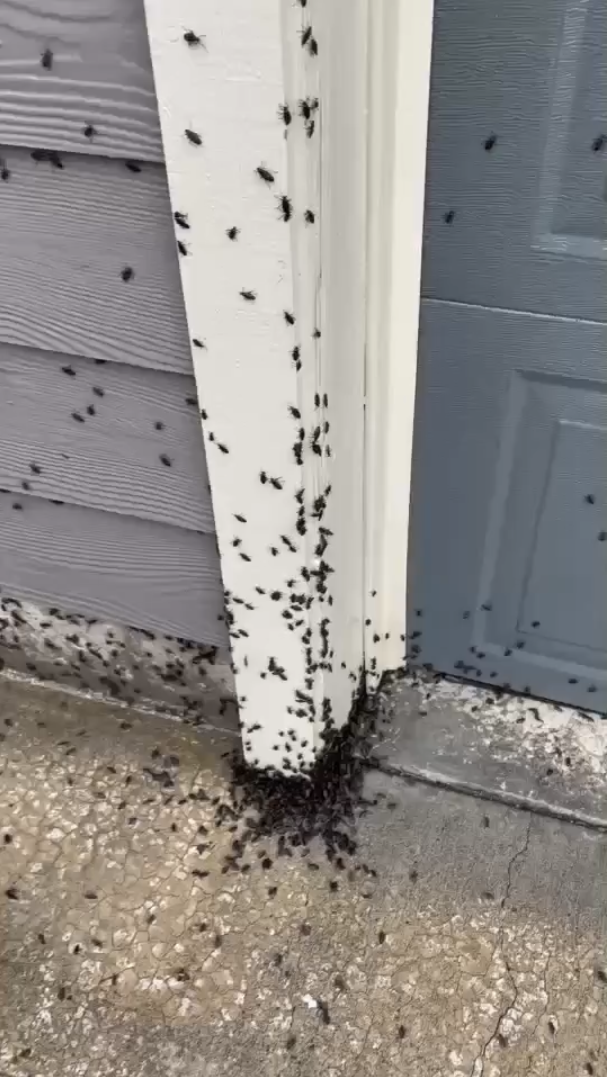
If you’ve ever walked out your front door on the first warm day of spring and found your south-facing wall covered in bugs — you’re not imagining things. And you’re definitely not alone. Every year around this time, our phones start ringing with the same two questions: “What are all these bugs on my house?” and “Why are there so many spiders inside all of a sudden?”
The short answer: spring. The longer answer is actually pretty interesting.
The Box Elder Bug Spring Emergence
Those dark, red-marked bugs clustering on warm walls in early spring are western box elder bugs (Boisea rubrolineata). And here’s the thing — they were probably already inside your house. All winter.
Box elder bugs overwinter in the protected spaces of buildings: wall voids, beneath siding, inside attic spaces. When temperatures rise, they don’t arrive — they emerge. That first warm week of spring essentially triggers a mass wake-up, and they congregate on sun-warmed exterior walls before dispersing to find food and mates.
They’re drawn to female boxelder trees — a type of fast-growing maple common throughout the Pacific Northwest — where they feed on the seeds. They’ll also feed on ash and other maple species, and they’re attracted to the south- and west-facing sides of buildings because those walls absorb the most heat.
They don’t bite, sting, or cause structural damage. But they stain fabrics and surfaces if crushed, and nobody wants thousands of bugs staging a reunion on their porch.
Why Box Elder Bugs Are Getting Worse in the PNW
This is something we hear a lot: “We never had this problem when I was growing up here.” And it’s true. Box elder bugs have become increasingly common in urban and suburban areas of Washington and Oregon over the past few decades, and the main reason is tree coverage.
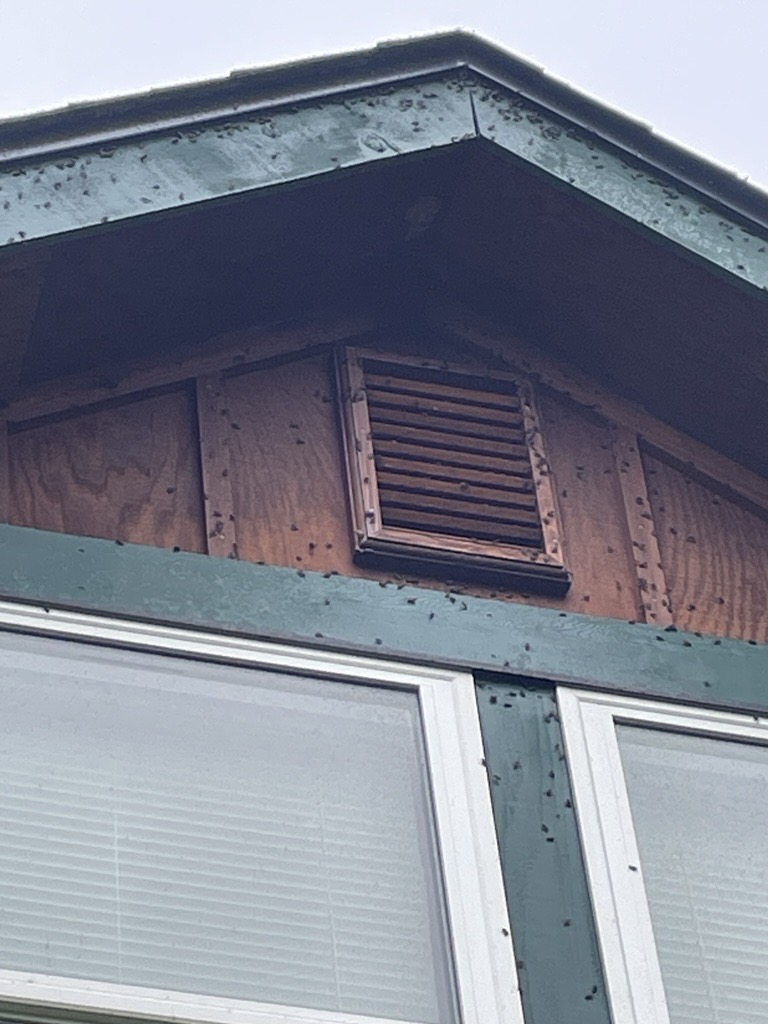
Boxelder trees are incredibly hardy — fast-growing, drought-tolerant, and adaptable to poor soils, riverbanks, and disturbed urban landscapes. As neighborhoods have developed and boxelder trees have naturalized throughout the region (including in landscaping and along waterways), the food supply for box elder bugs has expanded significantly. More trees, more bugs.
If you had a large cluster on your home last fall, there’s a good chance the same population will return this spring — because they overwintered in or around your structure and will lay their eggs in the same nearby trees. The Pacific Northwest Pest Management Handbook notes that box elder bug populations vary considerably year to year depending on environmental conditions — which is why some springs feel much worse than others.
What About All the Spiders?
Spring is also spider mating season in the Pacific Northwest. Adult male spiders — particularly giant house spiders, hobo spiders, and common house spiders — become noticeably more active as they search for mates. That’s why you might suddenly see larger, faster-moving spiders in your home during March and April.
The males are the wanderers. Females tend to stay in their established webs. So the spiders boldly crossing your bathroom floor at 10pm? Almost certainly a male on the move.
Most of what you’re seeing is harmless. Giant house spiders — which many people confuse with the hobo spider — are actually beneficial predators that eat other insects. That said, spiders inside your home are often a signal worth paying attention to: they’re eating something. A high spider population usually indicates a higher general insect population in or around the structure.
What You Can Do Right Now
For box elder bugs:
- Vacuum them up rather than crushing them — crushed bugs stain
- Seal cracks around windows, doors, siding, and soffit vents (most effective in summer when they’re away from the building, but worth starting now)
- Avoid smashing them against walls or fabric surfaces
- Contact a pest professional for exterior perimeter treatment where they’re congregating
For spiders:
- Knock down and remove exterior webs regularly
- Reduce clutter and debris stacked against the home’s exterior
- Seal gaps around doors, windows, and utility entry points
- Address the insect population they’re feeding on — this is the most effective long-term approach
The Best Time to Prevent Is Right Now
Spring is actually the most important treatment window of the year for Pacific Northwest homeowners. Box elder bug populations are just beginning their cycle. Spider activity is picking up. Ant colonies are waking up. Getting ahead of these pests now — before populations build — is far more effective than waiting until they’re a visible problem.
Our All Seasons Pest & Rodent quarterly plan is specifically designed around the PNW’s seasonal pest patterns. The spring treatment alone can make a significant difference in what you experience the rest of the year.
If you’re in the Portland, Vancouver, Longview/Kelso, or Olympia area and you’re already seeing spring pest activity — give us a call. We’ve been solving pest problems in this region since 1963, and we’re just down the road.