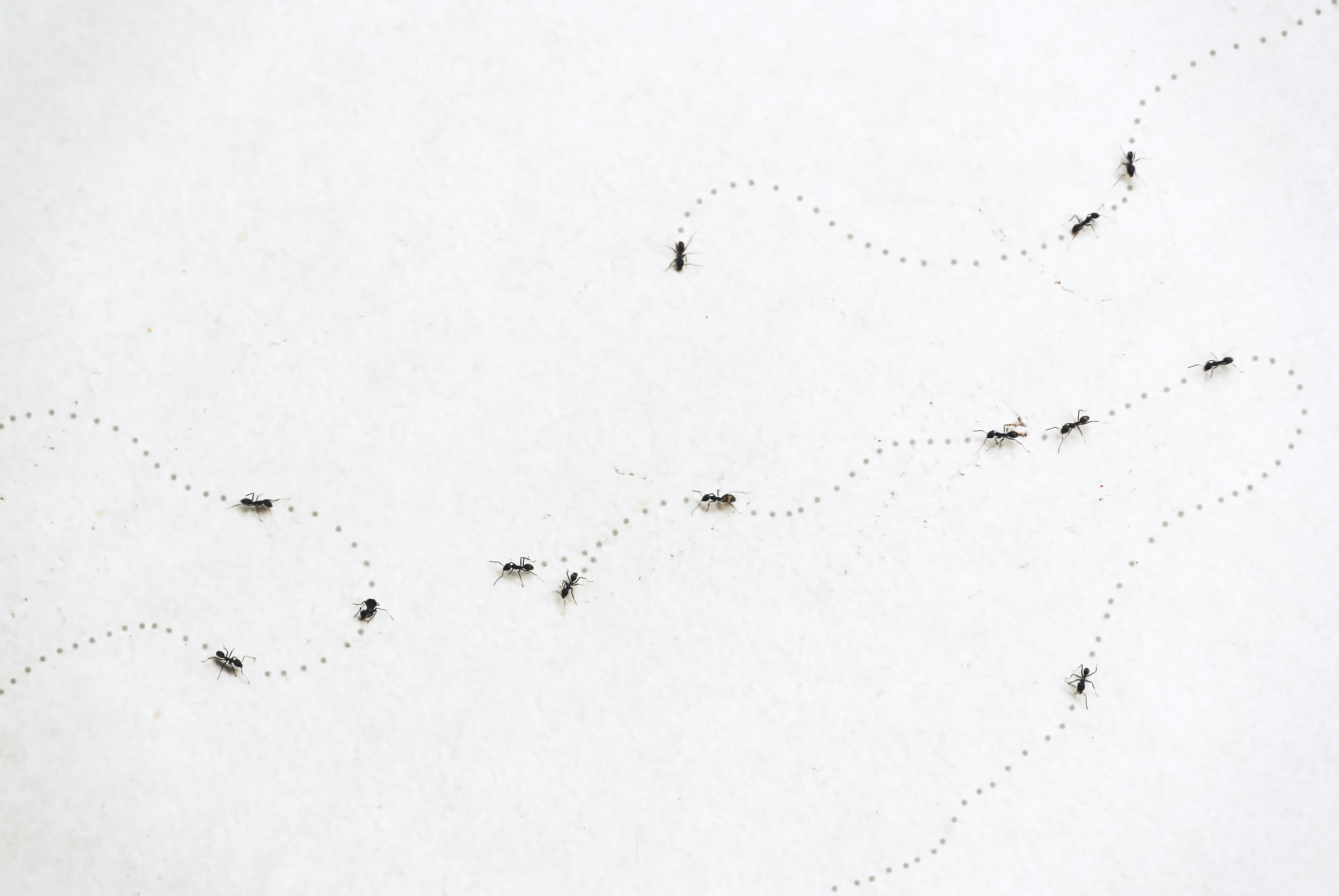
In This Guide:
- 📍 What Are Odorous House Ants?
- 📍 Identifying Odorous House Ants
- 📍 Why They’re a Bigger Problem Than You Think
- 📍 Where Odorous House Ants Nest
- 📍 Why Your DIY Control Isn’t Working
- 📍 Preventing Odorous House Ant Infestations
- 📍 How We Actually Get Rid of Odorous House Ants
- 📍 When to Call Interstate Pest Management
- 📍 Year-Round Protection Program
- 📍 Frequently Asked Questions
Ever crushed a tiny black ant in your kitchen and immediately regretted it? That smell—somewhere between rotten coconut and old gym socks—means you’ve just met an odorous house ant. And if you’re seeing one, there are probably hundreds more you’re not seeing.
We’ve been dealing with these ants in Pacific Northwest homes since 1963, and honestly? They’re probably the most frustrating pest we treat. Not because they’re dangerous—they’re not. But because homeowners try everything to get rid of them, and nothing seems to work. The ants just keep coming back, sometimes in even greater numbers than before.
Here’s the thing about odorous house ants: they don’t play by the normal rules. Kill the ones you see, and the colony just splits up and spreads out. Spray a repellent, and you’ve basically just told thousands of ants to relocate to different parts of your house. It’s maddening, and it’s why we get so many calls from frustrated homeowners throughout Portland, Vancouver, and the rest of our service area.
What Are Odorous House Ants?
Odorous house ants (Tapinoma sessile) go by “sugar ants” around here, though that name gets thrown around for pretty much any small ant that shows up in your kitchen. These guys are tiny—we’re talking 1/16 to 1/8 of an inch, about the size of a sesame seed. They’re usually dark brown or black.
The Smell Test
The smell is really the dead giveaway. When you crush one (and let’s be honest, you probably already have), it releases this weird odor. Most people say rotten coconut, but we’ve also heard blue cheese, nail polish remover, even “like a Sharpie marker.” Once you’ve smelled it, you’ll never forget it. It’s their defense mechanism, and it’s your best identification tool.
Why Everyone Calls Them “Sugar Ants”
These ants will make a beeline for anything sweet. Spilled juice? They’re on it. Forgot to put the honey away? Trail city. Cookie crumbs on the counter? Might as well have put out a welcome mat. That’s why the name stuck, even though it’s not technically accurate—plenty of ant species like sugar.
Identifying Odorous House Ants in Your Pacific Northwest Home
Unlike carpenter ants, which vary significantly in size within a colony, odorous house ants are monomorphic—meaning all the worker ants you see are roughly the same small size. This uniformity is one way to distinguish them from other common Pacific Northwest ant species.
Key identification features:
- Size: 1/16 to 1/8 inch long (2.4-3.3 mm)
- Color: Dark brown to black, with a smooth, shiny appearance
- Body shape: Unevenly shaped thorax with a single node between thorax and abdomen
- Movement: Quick, erratic movements when alarmed
- Odor: Distinctive rotten coconut smell when crushed
- Trail behavior: Form visible trailing lines to and from food sources
If you’re seeing multiple ants of the same small size trailing along your kitchen counter or bathroom sink, especially if they seem to appear out of nowhere in large numbers, you’re likely dealing with odorous house ants. For more detailed identification information, the Oregon State University Extension Service provides comprehensive resources on household ants in the Pacific Northwest.
Why Odorous House Ants Are a Bigger Problem Than You Think
Beyond “Just a Nuisance”
Look, we get it. When pest control folks call something a “nuisance pest,” it sounds like we’re downplaying the problem. These ants don’t eat your house like carpenter ants, and they won’t bite you (well, almost never, and it doesn’t hurt when they do). But if you’ve ever dealt with them, you know “nuisance” doesn’t quite capture the frustration.
They contaminate everything. Once they find food in your pantry, they’re in the cereal boxes, the flour, the pet food—anything they can get into. And they forage 24/7, so you’ll go to bed with a clean kitchen and wake up to ant highways across your counters.
They move in, not just visit. These aren’t ants that pop by from outside. They’ll set up satellite nests in your walls, under your floors, in your insulation. We’ve found them living inside electrical outlets, in computer towers, even in smoke detectors. When they’re nesting indoors, you’ve got a whole different problem.
They multiply fast. Really fast. A single colony can have multiple queens, which means the population explodes. What looks like a few scouts on Monday morning can turn into a full-scale invasion by the weekend.
Why They Love the Pacific Northwest
Our weather is basically perfect for these ants. All that rain we get? They love moisture. Our mild winters? They stay active year-round instead of going dormant like ants do in colder climates.
Peak season hits in late February through spring, right when you’re starting to enjoy the warmer weather. That’s why we call them Valentine’s Day Crashers—they’re the uninvited guests who show up just when you thought winter was finally over. But honestly, we see them in every month of the year. December, January, doesn’t matter. If there’s a warm spot in your house with access to food and water, they’ll find it.
Where Odorous House Ants Nest in Oregon & Washington Homes
Understanding where these ants live is crucial to controlling them effectively.
Outdoor Nesting Sites
In their natural habitat, odorous house ants nest in:
- Shallow soil mounds
- Under rocks and landscaping stones
- Beneath mulch and leaf litter
- Inside rotting logs and firewood piles
- Under landscape timbers and pavers
- Around tree roots and stumps
- In compost piles
Indoor Nesting Sites
When they move indoors—especially during heavy rain, extreme temperatures, or when outdoor food sources become scarce—odorous house ants establish satellite nests in:
- Wall voids and gaps
- Under flooring
- Inside insulation (particularly in crawl spaces and attics)
- Near hot water pipes and heaters
- Around leaking plumbing
- Behind kitchen appliances
- In electrical outlets and junction boxes
- Under bathtubs and in bathroom wall voids
These indoor satellite nests remain connected to outdoor parent colonies through the worker ants that constantly travel back and forth, which is why simply spraying the ants you see rarely solves the problem.
Why Your DIY Ant Control Isn’t Working (And Might Be Making Things Worse)
If you’ve already tried to get rid of these ants yourself, you probably noticed something weird: they seemed to get worse. Or they disappeared for a few days, then came back with reinforcements. Or they moved from the kitchen to the bathroom to the bedroom, like they were playing some kind of terrible game of whack-a-mole.
You’re not doing anything wrong. It’s just that odorous house ants have this survival trick that makes most DIY methods completely backfire.
The Budding Problem (Or Why Spraying Makes Everything Worse)
Here’s what happens: when an odorous house ant colony feels threatened, it doesn’t fight back or try to protect the nest like other ants do. Instead, the colony breaks apart. Queens grab some workers and larvae and just… leave. They set up shop in a different part of your house. Now instead of one colony, you’ve got three. Or five. Or more.
This is called budding, and it’s their superpower. It’s also why your ant problem seemed to spread through your entire house after you sprayed that first trail in the kitchen. According to the Pacific Northwest Pest Management Handbook, pesticide baits are the most effective control method for odorous house ants specifically because they avoid triggering this budding response.
Why Store-Bought Sprays Are Actually the Problem
Most ant sprays you buy at the store are repellents. The ants can smell them (way better than we can), and when they detect these chemicals, alarm bells go off. The colony thinks it’s under attack and triggers that budding response.
You thought you were killing ants. What you actually did was tell them to evacuate and spread out. It’s like trying to get rid of a house fire by opening all the windows and doors.
The Bait Situation
Ant baits from the store are better than sprays—at least they won’t make things worse. But they’ve got limitations:
The ants might not even find them if you don’t place them right. Even if they do, store-grade baits are weak compared to what professionals use. And you’re playing the long game—we’re talking weeks or months, if it works at all. Most people give up and call us after wasting a month watching ants march past their little bait stations.
Why Killing Every Ant You See Doesn’t Work
Some people take the direct approach: hunt down and kill every ant they spot. We’ve had customers tell us they’ve killed hundreds, even thousands of ants this way. And yet the ants keep coming.
That’s because the workers you’re seeing are replaceable. The queens are safely tucked away in the walls or under the house, constantly producing more workers. You’re fighting an army that has unlimited reinforcements. You’ll never catch up.
Preventing Odorous House Ant Infestations: What Really Works
While complete prevention is challenging in the moisture-rich Pacific Northwest, these strategies significantly reduce your risk of infestation. These prevention methods align with research-based recommendations from the Oregon State and Washington State University Extension Services on effective ant management.
Eliminate Food Sources
Odorous house ants are primarily motivated by food. Removing their access to meals makes your home far less attractive:
- Wipe down counters and tables daily with soapy water to remove crumbs and sticky residues
- Store food in airtight containers, including pet food, cereals, sugar, flour, and baked goods
- Don’t leave dirty dishes in the sink overnight—ants are most active in the evening and early morning
- Clean up spills immediately, especially sweet liquids like juice, soda, or honey
- Take out garbage regularly and use trash cans with tight-fitting lids
- Rinse recyclables before placing them in bins
- Don’t leave pet food bowls out overnight; feed pets at designated times and remove bowls when finished
Manage Moisture
These ants are attracted to moisture, making water management crucial:
- Fix leaky pipes and faucets promptly
- Repair roof leaks that allow water into attics or wall spaces
- Ensure proper drainage around your home’s foundation
- Clean gutters regularly to prevent overflow that creates moisture near your home
- Use dehumidifiers in damp basements and crawl spaces
- Ventilate bathrooms properly to reduce humidity
- Fix any standing water issues in crawl spaces
Seal Entry Points
While tiny, these ants still need access points to enter your home:
- Caulk cracks and gaps around windows, doors, and foundations
- Seal pipe and wire penetrations where they enter your home
- Install door sweeps on exterior doors
- Repair damaged window screens
- Seal gaps around electrical outlets and light switches
- Check where utilities enter your home and seal any openings
Outdoor Prevention
Managing the area immediately around your home reduces ant populations near your structure:
- Keep mulch, bark, and soil at least 6 inches away from your foundation
- Trim vegetation so it doesn’t touch your home’s exterior
- Remove debris such as rotting wood, leaf piles, and old firewood
- Store firewood at least 20 feet from your home and elevated off the ground
- Eliminate aphids on plants near your home—ants farm them for honeydew
- Maintain a vegetation-free zone of 12-18 inches around your foundation
How We Actually Get Rid of Odorous House Ants
After dealing with these ants for 60+ years, we’ve figured out what works. And honestly, it’s not magic—it’s just understanding how these ants think and using that against them.
Our Approach: Work With the Ants, Not Against Them
Every house is different, every infestation is different. That’s not just something we say—it’s actually true. We’ve seen odorous house ant colonies nesting in the weirdest places, attracted to different things, behaving in ways that surprised even our most experienced techs. So we don’t show up with a one-size-fits-all treatment plan.
First, we figure out what’s actually going on.
Our techs do a real inspection—inside and outside. We’re looking for where they’re coming in, where they’re nesting, what’s attracting them, and how bad the infestation is. Sometimes it’s obvious (ant highway across the kitchen counter), sometimes we have to do some detective work (following trails back to hidden nests in the walls).
Then we build a plan specific to your situation.
This is where professional treatment is completely different from DIY. We’re using products these ants can’t detect—non-repellent insecticides that they walk through and carry back to the nest without knowing it. They spread it to other workers, to the larvae, to the queens. The colony eliminates itself without triggering that budding response.
We also use professional-grade baits—way more effective than anything you’ll find at Home Depot. And we put them where the ants are actually foraging, not just where the package says to.
For outdoor colonies, we treat around your foundation and any nesting sites we find. The goal is to reduce the source population before they even think about coming inside.
If we find indoor nests (and we usually do with established infestations), we treat those specific areas. Wall voids, spaces under sinks, anywhere we’ve confirmed nesting activity.
Finally, we make sure it actually worked.
Treatment isn’t over after one visit. We come back to check progress, do follow-up treatments if needed, and make sure we’ve actually eliminated the colonies—not just pushed them somewhere else in your house. You’ll get a detailed report of what we did, what to expect, and how to keep them from coming back.
Why This Works When DIY Doesn’t
Simple: better products, better application, and knowledge that comes from doing this thousands of times. We know where to look for nests. We know how to treat without triggering budding. We have access to commercial products that are specifically designed for odorous house ants.
And maybe most importantly, we know what doesn’t work. We’ve seen every DIY method fail, so we know exactly what to avoid.
When to Call Interstate Pest Management for Odorous House Ant Control
Don’t wait until your ant problem becomes overwhelming. Contact us if you notice:
- Visible ant trails on countertops, walls, or floors
- Consistent ant activity that persists despite DIY efforts
- Multiple small black ants that appear suddenly in large numbers
- Ants in food storage areas or pantries
- The characteristic odor when ants are crushed
- Year-round ant activity suggesting indoor nesting
- Previous DIY treatments that failed or made the problem worse
Early intervention is easier and more cost-effective than waiting until a massive infestation develops.
Year-Round Protection: All Season Pest & Rodent Service
Here’s the thing about odorous house ants: you can eliminate a current infestation, but there’s nothing stopping another colony from moving in next month. Or next year. That’s just life in the Pacific Northwest.
Our All Season Pest & Rodent Service is for people who’d rather not deal with this every spring. We come out quarterly and treat your property before pest problems start. It covers odorous house ants, carpenter ants, spiders, wasps, rodents—basically everything we deal with regularly in this area.
It runs $47 a month, includes priority scheduling if something does pop up, and honestly? Most of our long-term customers are on this plan. Not because we push it, but because dealing with ants every February gets old fast.
Why Work With Us
We’ve been doing this since 1963—that’s three generations of our family dealing with Pacific Northwest pests. Our techs live here, their kids go to school here, they shop at the same grocery stores you do. When we say we understand local pest problems, it’s because we have them in our own houses too.
We’re not the cheapest option, and we’re not trying to be. But we are the ones who’ll show up when we say we will, do the job right, and actually return your calls. Small thing, maybe, but apparently not that common in this industry.
Every tech is licensed and trained—not just in how to spray pesticides, but in understanding pest biology and behavior. We use Integrated Pest Management, which is a fancy way of saying we think about why you have pests and how to fix that, not just how to kill what’s already there. Our IPM approach follows EPA’s Integrated Pest Management principles, using the most effective methods with the least environmental impact.
And yeah, we guarantee our work. If the ants come back during the warranty period, so do we. No extra charge.
Frequently Asked Questions About Odorous House Ants in Washington & Oregon
It depends on how bad the problem is and how big your property is. Most treatments in Vancouver run between $200-$400 for the initial service, and that includes follow-ups if they come back during the warranty period. If you want ongoing protection, the All Seasons Pest & Rodent Service is $47/month. Give us a call for a free inspection and we’ll give you an actual quote instead of a range.
Not really. They don’t bite (or if they do, you won’t feel it), and they don’t spread diseases like some other pests. The main issue is they get into your food, which is gross and potentially a health concern if they’ve been walking through who-knows-what before they got into your pantry. Mostly they’re just incredibly annoying and hard to get rid of.
In Longview and throughout Washington, odorous house ants are attracted by three main factors: food (especially sweets, but also proteins and fats), moisture (from leaks, humidity, or rain), and shelter (particularly during our rainy winter months). Our wet climate makes homes especially attractive to these moisture-loving ants. Even the cleanest homes can experience infestations if moisture issues exist or if outdoor colonies are nearby.
While odorous house ants can remain active year-round in Oregon’s mild climate, peak activity occurs from late February through early summer (approximately May). This is when you’re most likely to notice them invading homes. However, indoor colonies established in wall voids or near heat sources may be active throughout the year. The fall also sees increased indoor activity as outdoor temperatures begin to drop.
Complete, permanent elimination of odorous house ants is challenging because new colonies can always move in from neighboring properties or outdoor areas. However, professional treatment combined with proper prevention can keep your Kelso home ant-free for extended periods. Our All Seasons Pest & Rodent Service is a year-round program that provides ongoing protection and prevents re-infestations before they become problems, which is the most effective long-term solution.
Odorous house ants enter Olympia homes through incredibly small openings—they can squeeze through cracks as narrow as 1/16 of an inch. Common entry points include gaps around doors and windows, cracks in foundations, pipe and wire penetrations, gaps in siding, and openings around utility meters. They also travel along branches and shrubs that touch your home’s exterior. Once scouts find entry and food sources inside, they leave pheromone trails for thousands of other ants to follow.
The main differences are size, damage potential, and colony structure. Carpenter ants are much larger (1/4 to 1/2 inch) and vary in size within the colony, while odorous house ants are uniformly small (1/16 to 1/8 inch). Carpenter ants tunnel through wood and can cause structural damage; odorous house ants don’t damage structures. Carpenter ants typically have a single queen per colony; odorous house ants can have multiple queens, making them harder to eliminate. Both are common in our region, but they require different treatment approaches.
Because the spray triggered their survival instinct and they split up. It’s called budding—when they sense danger (like your repellent spray), the colony breaks apart into multiple smaller colonies. Each one has its own queen and workers, and they scatter to different parts of your house. So congratulations, you turned one ant problem into three or four ant problems. It’s not your fault—the spray companies don’t exactly put “WARNING: May cause ants to multiply and spread” on the label.
Yes. We prioritize the health and safety of your family and pets while effectively eliminating pest problems. We use products registered with the EPA and approved for use in residential settings. Our technicians are trained in the proper application methods that minimize exposure while maximizing effectiveness. We’ll provide you with specific instructions for your treatment, including any brief periods to keep pets or children away from treated areas. Most treatments allow normal household activity to resume within a few hours.
The timeline varies depending on the size and extent of the infestation. Visible ant activity typically decreases within a few days of treatment as worker ants begin transferring the treatment back to nests. Complete colony elimination usually takes 2-4 weeks as the treatment works its way through the entire colony structure, including the queens. More severe infestations with multiple satellite nests may require follow-up treatments. We’ll provide a realistic timeline during your initial inspection based on what we find.
Get Your Free Ant Inspection
Don’t let odorous house ants take over your home.
📞 Call 360-382-2451 Book Online