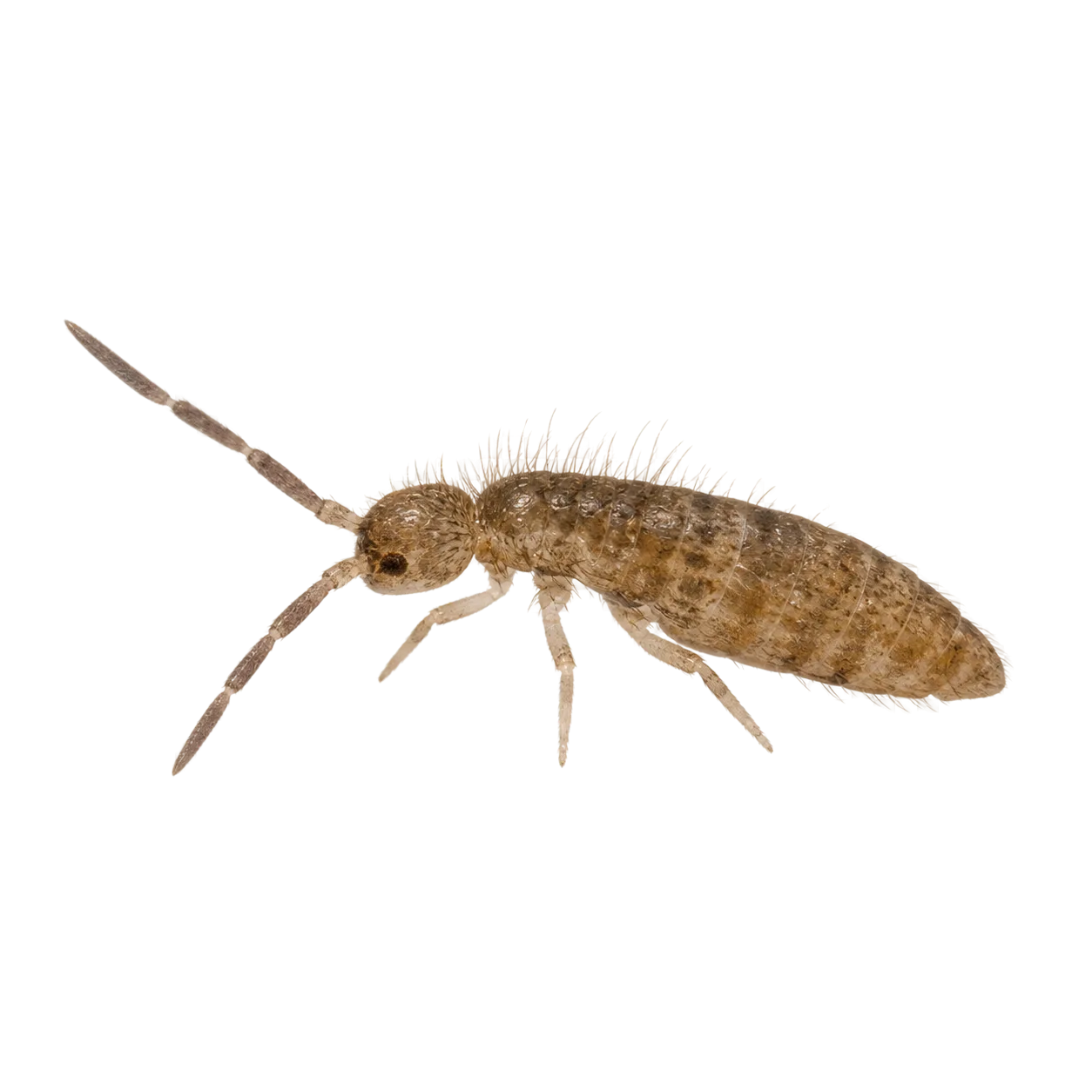
Springtails
Reviewed by TJ, A.C.E., Director of Operations · Updated 2026-05-19
Collembola | Category: Moisture Pests | ✓ Covered: All Seasons Pest Plan
If you’ve spotted tiny bugs jumping around your window sills, on bathroom floors, clustering near a houseplant, or piling up around the foundation, there’s a good chance you’re dealing with springtails. They’re one of the most common household pests in the Pacific Northwest and are one of the least understood. The good news is springtails don’t bite, don’t damage your home, and aren’t likely to infest your food. But seeing hundreds of them can signal underlying moisture issues that must be addressed.
| Size | Less than 1/8″ (1–3 mm, smaller than a pinhead) |
|---|---|
| Color | Gray, brown, or black, sometimes white, orange, or metallic green |
| Top ID Marker | Jumps an inch or more when disturbed (forked “spring” tail / furcula) |
| Active Season | Late winter through early summer in the PNW; year-round indoors if moisture persists |
| Where Found | Window sills, bathrooms, basements, crawl spaces, houseplant soil, mulch beds, foundations |
| Population | Thousands per cubic foot of moist PNW soil with over 700 species in North America |
| Plan Coverage | ✓ Covered under All Seasons Pest Plan |
Need help with this pest?
Get A QuoteQuick Answer: Springtails (Collembola) are tiny (less than 1/8″), jumping, soft-bodied insects most often found in damp areas of Pacific Northwest homes, including window sills, bathrooms, crawl spaces, basements, and houseplant soil. They do not bite, sting, or damage property. When you see hundreds at once, it’s almost always a signal of a moisture problem. The fix isn’t spray, it’s finding and correcting the moisture source. Persistent infestations in Oregon and Washington homes typically trace back to a wet crawl space, plumbing leak, or drainage issue around the foundation.
Key facts at a glance: Size: under 1/8″ · Color: gray/brown/black · Tell-tale sign: jumps when disturbed · Harm to humans/pets: none · Damage to structure: none · Real fix: moisture control, not pesticide · Plan coverage: Yes, All Seasons Pest Plan.
What You Need To Know About Springtails
Our A.C.E. Certified Technician TJ breaks down springtails, how to identify them in your home, and the role of moisture in controlling them indoors.
Frequently Asked Questions
What do springtails look like?
Tiny, under 1/8″, soft-bodied, usually gray, brown, or black. The dead giveaway: they jump an inch or more when disturbed using a forked, spring-loaded tail tucked under their body.
Do springtails bite?
No. They have no biting mouthparts capable of breaking skin. If something is biting you or your pets, it isn’t springtails, likely fleas, bed bugs, carpet beetles, or mites. Get an accurate ID before treating.
Why do they come inside?
Moisture. Heavy PNW rains saturate soil and push them toward your foundation. They enter through gaps around windows, doors, utility penetrations, and crawl spaces, and stick around wherever moisture sustains them.
Will pesticides get rid of them?
Rarely, and they’re not recommended indoors. Springtails are sustained by moisture, not by something you can spray. Treatment without moisture control just delays the problem. Fix the moisture source and the population follows.
Does my All Seasons Plan cover them?
Yes, fully covered. Includes scheduled seasonal treatments, moisture-source assessment, and free re-service visits if they return between appointments. No extra charge.
Why are they in my bathroom?
Moisture, humidity, and organic residue in drains. Check for slow drips under sinks, condensation around the toilet base, and deteriorated grout or caulk. Floor and overflow drains are common harborage points.
Can springtails damage my home?
No, they don’t eat wood, fabric, food, or structural materials. But the moisture they signal can: persistent damp conditions lead to rot, mold, and structural deterioration over time. Springtails are the warning, not the cause.
Are they seasonal in OR & WA?
Outdoor activity peaks late winter through early summer with heavy PNW rains. Indoors, populations sustained by home moisture can persist year-round. Snow fleas (a type of springtail) even show up on snow surfaces during late-winter thaw.
Signs You Have Springtails
Springtails rarely show up alone, you usually notice the cluster, not the individual. Here’s what to look for, in the order it typically shows up in PNW homes:
1. Tiny jumping specks in the bathroom
Clusters near the tub, shower, sink, or floor drain. Touch them and the whole group launches an inch into the air, the signature springtail behavior.
2. Activity around houseplant soil
Tiny bugs hopping out when you water, or living in the top layer of potting soil. Most common in plants kept consistently moist or in peat-heavy mixes.
3. Piles around the foundation
Dark patches in mulch, on patios, or around foundation drains that look like dirt, until they move. Common after heavy rain.
4. Clusters in basements & crawl spaces
If you spot them on damp concrete, wet insulation, or around a sump pump, you almost certainly have a crawl space or basement moisture issue worth investigating.
5. Sudden indoor surge after rain
A multi-day PNW downpour saturates outdoor nests and drives springtails inside in hours. If they appeared overnight after a storm, this is the cause.
6. Activity that returns after you spray
If you treated chemically and they came back within a week or two, you have an active moisture source. Stop spraying and find the leak, that’s the actual fix.
Behavior, Biology & Habitat
Understanding springtails is the fastest way to understand why they keep coming back, and why moisture control, not pesticide, is the only durable fix:
The famous “spring”: the furcula
Under their abdomen sits a forked, tail-like structure called a furcula. When threatened, it releases like a spring and launches them an inch or more, the chaotic explosion of jumping specks that gives the order its name.
700+ species across North America
Springtails belong to a class of hexapods called Collembola, with roughly 700 species in North America alone. Most are gray, brown, or black; some are white, orange, or even metallic green.
Diet: fungi, algae, decaying plant matter
Springtails feed on the microscopic things that grow in damp soil and decaying organic matter. They don’t eat your home, your pantry, or you, they’re actually beneficial outdoors, breaking down organic material in healthy ground.
Moisture is non-negotiable
Springtails dry out and die quickly without moisture. The ones wandering into your home that don’t find a damp spot typically die within days. The ones that stick around have found something, that something is what you’re looking for.
Crawl spaces: the PNW hot spot
A damp crawl space, poor drainage, missing vapor barrier, or weak ventilation, can feed springtail populations into the rest of the home. It’s also where rot, mold, and rodents start. If your crawl space hasn’t been evaluated, that’s the place to begin.
Snow fleas: winter springtails
A type of springtail called the snow flea is active on the surface of snow during late-winter thaw, a common sight in wooded areas of Oregon and Washington. They’re harmless and not actually fleas.
DIY Homeowner Steps
Find the moisture source
Leaking pipes, dripping faucets, condensation under sinks, wherever springtails concentrate, that area has a moisture problem. Eliminate it and the population follows.
Pull mulch back from the foundation
Clear mulch at least 12″ back from the base of your house. Removes the primary outdoor habitat closest to your entry points.
Fix drainage & irrigation
Extend downspouts away from the structure, grade soil away from the foundation, and pull back irrigation near the house. Saturated soil is the biggest driver.
Let houseplants dry out
Water deeply, less frequently. Peat-heavy mixes hold moisture, repot chronically infested plants into better-draining soil.
Seal gaps and entry points
Caulk foundation cracks, replace worn door sweeps, pack steel wool into utility penetrations. Most important during wet stretches.
Skip the indoor pesticide
Vacuum visible clusters and address moisture instead. If activity persists after two weeks of moisture work, it’s time to call a pro.
Springtails vs. Other Tiny PNW Bugs
Springtails are routinely confused with fleas, drain flies, mites, and booklice. Here’s a side-by-side of the tiny indoor bugs we get called about most often in Oregon and Washington homes:
| Feature | Springtail | Flea | Drain Fly | Booklice |
|---|---|---|---|---|
| Size | Under 1/8″ | 1/12″–1/8″ | 1/16″–1/4″ | 1/16″ or smaller |
| Color | Gray/brown/black (sometimes white or orange) | Dark reddish-brown | Gray to black, fuzzy/moth-like | Pale tan to translucent |
| Jumps? | Yes, springs from forked tail | Yes, powerful jumps | No, weak fluttering flight | No, crawls slowly |
| Bites people/pets? | No | Yes | No | No |
| Typical location | Damp areas, plant soil, crawl spaces | Carpets, pet bedding, pet fur | Drains, sewage lines | Damp paper, books, food packaging |
| Tied to moisture? | Strongly, primary driver | Indirectly (via host animals) | Strongly, needs drain slime | Strongly, needs humidity |
| DIY spray response | Returns until moisture fixed | Partial, needs flea-specific protocol | Returns until drains cleaned | Returns until humidity drops |
| Plan coverage | ✓ All Seasons | ✓ All Seasons | ✓ All Seasons | ✓ All Seasons |
Plans That Cover Springtails
All Seasons Pest Plan
$39/month
Setup fee ~$260 for initial treatment
Year-round protection from the pests Pacific Northwest homeowners deal with most, springtails, ants, spiders, wasps, box elder bugs, and more.
- Recurring exterior treatments
- Moisture-source assessment
- Free re-service between visits
Pest & Rodent Bundle
$47/month
Setup fee ~$280 for initial treatment
The most complete protection for your home. Full pest coverage plus active rodent monitoring, one plan, one team, one less thing to worry about.
- Everything in Pest & Rodent plans
- Best value for whole-home protection
- Free re-service guarantee
What Our Customers Are Saying